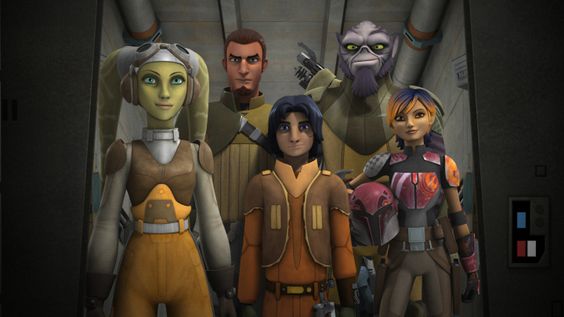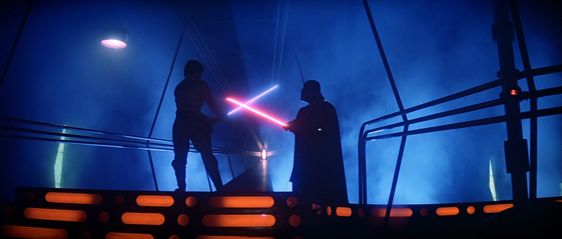
Happy May the Fourth!

Hello friends, and Happy May the Fourth! I’m planning on watching Tales of the Empire tonight, as well as catching The Phantom Menace in the local theater some time this weekend to celebrate.

I also have a special post today: a collaboration post with Jessica Bingham of Storytime Truth. We wrote about the nature of the Force; Jessica described the Light Side and the Jedi, while I explored the Dark Side and the Sith. Enjoy!

The Light Side of the Force, by Jessica Bingham

The Jedi Council

I have always thought of the Jedi Council as the representation of wisdom. The Jedi temple is a place where stillness, peace, and inner consultation resides. Even the structure of the council is one of invitation, that no one Jedi is above another. They sit in circle fashion, conversing. Contrast this to a speaker at a podium, or even Emperor Palpatine addressing the congress during the special session in Episode III. Palpatine speaks at people, the Jedi speak with each other. They each bring their inner stillness and knowledge of the force to bear on a situation. As Yoda says in Episode V, “a Jedi uses the force for knowledge and defense, never for attack.” In the times of the Republic, these sessions were primarily knowledge seeking, with some focus on defense against the dark side.

Common Jedi Force Practices

Meditation

Something you will see Jedi Master Yoda do often is meditate. This is a great way to become inwardly still. Sometimes his meditations are seconds long, other times we are led to believe they are dedicated sessions as part of his routine to remain in a state of enlightenment. He also becomes still before engaging in an action of importance such as lifting Luke’s ship out of the water in Episode V.

Qui-Gon Jinn also does this in Episode I during his fight with Darth Maul. Ultimately he loses the battle, but he gave himself a chance to reconnect with the force through purposeful stillness.

Feeling Before Action

When I say feeling I do not mean giving into impulsive emotions. This is more Sith-like and a sign of the dark side emerging. I mean prioritizing feeling over thinking by letting the heart guide the mind. The heart being the word for wisdom and stillness and the mind being the word for action. Qui-Gon Jinn tells this to young Anakin before his pod race in Episode I and Obi-Wan Kenobi tells this to Luke at the beginning of his training in Episode IV and again at the end of the same episode when Luke successfully destroys the Death Star. Kenobi cautions Luke about the dangers of impulsive feelings in Episode VI. He warns Luke that his fear for his loved ones could be used against him as it was for his father. This does not mean that the Jedi are hostile towards emotions, they just make it a point to distinguish between feeling states that serve them versus those that serve the Emperor (or ego).

Defense and Never Attack

The Jedi do the least amount of response necessary to combat a threat. This is a crucial guideline because it prevents enjoyment when faced with the temptation of ego. We see Anakin succumb to this multiple times in Episode II and Episode III before fully becoming Darth Vader. He takes pleasure in slaughtering the entire community where he mother was held, for example. He attempts to exact revenge on Dooku after the death of his mother and gets electrocuted. He gives into the desire to behead Count Dooku the next time they meet.

We also see Obi-Wan Kenobi flirt with crossing the line in Episode I when he watches his master fall to Darth Maul at the end.

Luke Skywalker has a brief moment in Episode VI where he enters into the domain of attack. He viciously strikes his father’s saber and severs his hand before pulling himself back, sheathing his sword and casting it away. A Jedi must remain in a state of peace, passivity, and calm in order to refrain from the dark side.

Learning About Oneself Through the Force

We see a great deal of Jedi using the force for knowledge in Episode V. Much of this episode is dedicated to Luke’s training with Yoda. In this episode Luke learns that the greatest challenge is to overcome his own mind. He discovers this in the cave when he confronts himself as Darth Vader, reminding all of us that absent knowledge and the accompaniment of wisdom, we are all susceptible to our dark side selves.

Later on in Episode V, Luke loses his connection to the force, to his centeredness and fails to balance the stones in his practice session. He is ambivalent about his ship sinking further into the water and makes the mistake of believing that moving stones is radically different from moving a large-scale object like a ship. This is a crucial lesson of the force for Jedi to learn: its application is the same in all situations. Yoda proves this in the series by being the most enlightened and most powerful Jedi. One of the smallest but the most fierce and powerful. He has the highest midichlorian count of all Jedi, aside from Anakin Skywalker. This is why Anakin’s departure from Jedi to Sith was so catastrophic to the galaxy. He had the deepest, most promising connection to the living force and he fell into darkness. It is also why his one action through knowledge of himself as one with the force and defense of his son at the end of Episode VI was enough to tip the force back into balance. 

The Dark Side, by Tina Williams

The dark side of the Force deals in raw, powerful emotions: anger, fear, passion, hatred, jealousy, greed, bitterness, selfishness. You get the idea. These are emotions that are seductive and easy to access, as Yoda warns Luke in Episode V. Powerful, yes, but also a trap: fear leads to anger, anger leads to hate, hate leads to suffering. One can tap into great power through the dark side, but it’s never enough, and it will never be enough. In the end, it consumes you.

Consider the fate of these prominent dark-side users in the Star Wars universe:

Darth Vader: Ultimate Suffering

“Anakin is gone. I am what remains.” Vader in the Obi-Wan Kenobi series.

Darth Vader is the most iconic dark side figure in Star Wars, and perhaps the most tragic. Once Anakin Skywalker, he was one of the most powerful force-wielders in the Jedi Order. Through the light, he could have done amazing things for the galaxy. Instead, that power became focused through the lens of the dark side.

Anakin falls to the dark through his intense fear of loss: he loses his mother in Episode 2, and in Episode 3 fears he will lose his wife, Padme. Sidious makes sure Anakin believes the only way to save her is through him and the dark side. Because of his emotional attachments, Anakin doesn’t trust in the Force—and literally burns in “hell” on Mustafar as a result of his duel with Obi-Wan.

The suit that encompasses him for the next few decades keeps him alive but in constant pain. His injuries, both physical and emotional, will never fully heal. Vader draws strength in the Force through this pain—anger, grief, hate, as well as self-hatred—but that power will never ease his suffering.

It is only through love for his son, Luke Skywalker, that his pain ends. When Sidious tries to kill Luke with Force-lightning (after Luke had shown Vader compassion, after everything he’d done), it’s Anakin who picks him up and throws him down that shaft. It ends his life, but not before saving his son, and his soul as well.

Darth Sidious: The Emptiness of Hate

Darth Sidious, aka Chancellor, and then Emperor, Palpatine, is the paradigm of the dark side in Star Wars. A Sith Lord who rose to power during the prequel era, he is a master manipulator who orchestrates the Clone Wars to destroy the Jedi Order and becomes Emperor.

Sidious is pure evil, defined by hate and anger. There is no in-between with him, no struggling with who or what he is. He cackles with glee at the suffering of others, taking pleasure in their pain. Clearly, he draws great strength in the Force from all this hatred, Force lightning being one of his favorite weapons. But there’s one thing he does fear: death.

The Sith have a great fear of death, believing it to be the annihilation of the soul; they do not want to give up their physical attachments. Unlike the Jedi, they are denied the opportunity to become force ghosts after death, since its requirements are to face the darkness in themselves and defeat it, give up preconceived notions, and let go of what they fear to lose.

“The dark side of the Force is a pathway to many abilities some consider to be unnatural.” Sidious in The Rise of Skywalker.

Sidious’ obsession with prolonging his own life is evident in the lengths he goes for supposed immortality. We see it in his Project Necromancer in the Bad Batch, as he tries to use cloning technology (and, presumably, Sith magic) to attain that goal. He only partially succeeds in this, as, thirty years later in the Sequel trilogy, he returns, but in a rapidly degrading clone body. Only in his granddaughter Rey does he truly have the opportunity to successfully live on and continue to spread his evil.

Luckily, the galaxy didn’t have to endure that, as, once again, Light defeats the Dark.

Count Dooku: Righteous Anger

Count Dooku (Darth Tyrannus), the Separatist leader during the Clone Wars, and secret apprentice to Darth Sidious, came to the dark side through disillusionment and righteous anger. As a Jedi, he became disappointed with how the Order had become beholden to the Senate and the Republic, moving away from their role as guardians of peace and justice. He eventually leaves the Order, believing they’d become puppets to a corrupt system. Darth Sidious uses this to his advantage, turning him to the dark side and making him the leader of the Separatist forces.

As a young Jedi, Dooku lets his anger get the better of him in Tales of the Jedi.

Dooku, like Sidious, can use Force lightning, and uses it against both Anakin and Yoda in Episode 2. His arrogance causes him to believe that he is indispensable to Sidious, when in fact Sidious orders Anakin to kill him, thus replacing him with a new apprentice. The Sith are governed by the Rule of Two: there is ever only two Sith, a Master and an Apprentice. By the very nature of the dark side, the apprentice will always seek to usurp their master, coveting all the power for themselves. Dooku replaced Maul as Sidious’ apprentice and was then replaced himself by Anakin.

Darth Maul: The Futility of Revenge

Darth Maul, former Sith apprentice to Darth Sidious, is fueled mostly by rage and the need for revenge against Obi-Wan Kenobi. Since Obi-Wan “killed” him in The Phantom Menace, he has relentlessly pursued the Jedi throughout the animated series Clone Wars. His burning need for vengeance consumes him for years, coming to a head in the animated series Rebels, when Ezra Bridger unwittingly leads him to Obi-Wan on Tatooine as he watches over Luke Skywalker.

While Obi-Wan’s trials and his solitude on Tatooine leads to his character’s growth, Darth Maul’s consuming focus on revenge leads him to stagnate; he experiences no growth at all, as he’s been stuck in an endless loop of rage and bitterness. Even as he dies in Obi-Wan’s arms, his mind is still on vengeance, though not against Obi-Wan anymore, but ostensibly against Darth Sidious.

Obi Wan holds a dying Maul in “Twin Suns” from Rebels.

“Is he the Chosen One?” he asks Obi-Wan, referring to who he was protecting on Tatooine.

“He is,” Obi-Wan answers, at this point convinced the Chosen One was not Anakin.

“He will avenge us,” Maul says, referring to the suffering they’d both endured at the hands of Darth Sidious (Order 66 for Obi-Wan, and the death of his brother Savage Opress for Maul).

Even with his dying breath, Maul cannot let go of the idea of vengeance.

Kylo Ren: The Dichotomy of Dark and Light

Born Ben Solo, Kylo Ren is the son of Han Solo and Leia Organa. From birth he is strong in the Force, but Sidious, evil being that he is, influences and manipulates the young boy. He turns Ben to the dark side in retribution for the role his parents played in the fall of the Empire. He does this through a voice in his dreams, as well as through Snoke, who takes young Ben under his wing while his parents are busy rebuilding the Republic. Snoke plants distrust and turns him against his parents and his uncle, Luke Skywalker. After Luke seriously breaks Ben’s trust in him, he leaves Luke’s Jedi training academy and eventually joins the First Order.

After changing his name to Kylo Ren, he becomes obsessed with his grandfather, Darth Vader and wishes to emulate him and his power. But as Rey accuses him in Episode VII, he’s afraid he’ll “never be as powerful as Darth Vader.” This fear goads him to ever more heinous acts, culminating in killing his own father, Han Solo. But afterword, instead of feeling more powerful, he only feels more conflicted.

The interesting thing about Kylo Ren is that he is constantly tempted by the Light, rather than the other way around. It’s as if his natural state is the Light side of the Force and he actively has to work against it to ground himself in the dark side.

After he kills his father, he’s so emotionally compromised (and also injured by Chewbacca’s bowcaster) that he’s defeated by Rey in the lightsaber battle in the forest on Starkiller Base. To make himself stronger, he punches the wound in his side to feel its pain even more. He wants to feel the pain and rage of the wound in order to draw upon the dark side for strength, similar to how Darth Vader is in constant pain from his suit and draws power from his rage.
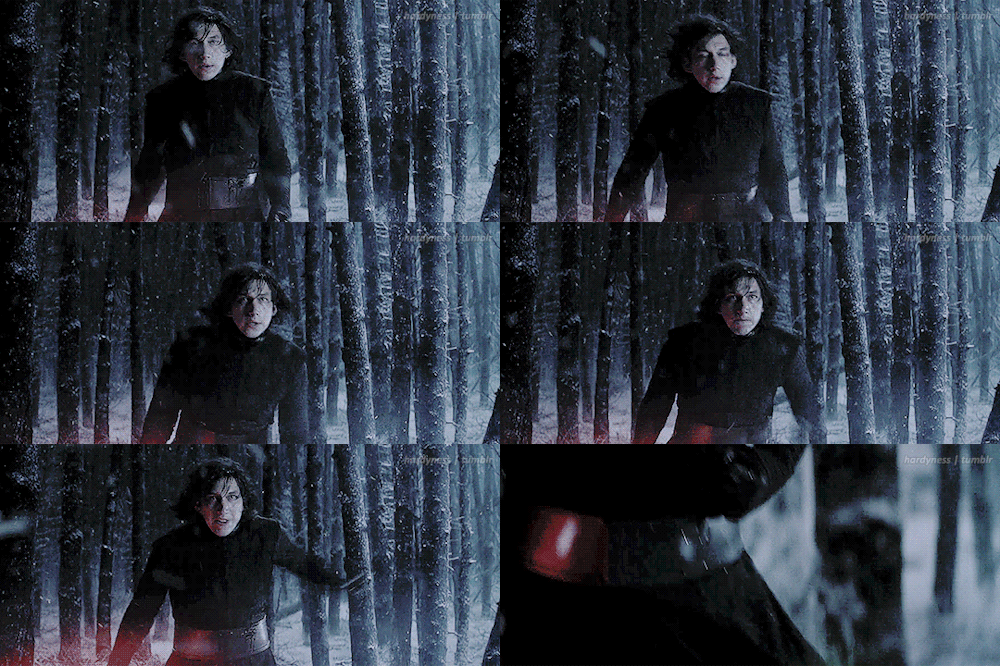
Kylo draws upon the dark side in The Force Awakens.

It’s also interesting how, when Kylo turns back to the Light and fights beside Rey against Sidious as Ben Solo in Episode IX, he looks like a completely different person, and holds himself differently, using the Force through the Light side rather than the Dark. He looks and acts lighter, as if a great burden has been lifted from him. As Kylo he seems weighed down, stomping around and slashing his lightsaber with heavy, massive strokes. But as Ben he’s like a dancer, jumping and flipping around with ease. It’s amazing to see.

While not technically a Sith Lord (in fact, he advocates that the Jedi AND the Sith end), he’s an interesting dark side user that I didn’t want to ignore. There are many dark side cults in canon Star Wars, but Kylo Ren is kind of his own thing.

Darkness is a part of life; there must always be balance. But from what I can see, embracing the Light frees you; embracing the Dark enslaves you.

I hope you enjoyed this collaborative post on the Force! How are you celebrating May the Fourth? Let me know in the comments and we’ll talk about it!
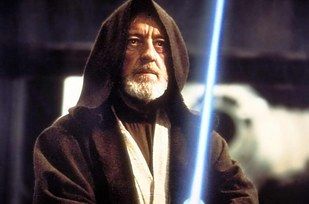
Five of Obi-Wan Kenobi’s Best Moments

It seems like an impossible task to pick out only five, since I feel that every single moment Obi-Wan takes breath deserves to be on the list, lol. But I forced myself to pick out five of his best moments in the Star Wars universe, in my opinion:

  • Defeating Maul Part I (TPM).
Kill my master? That tears it!

When Qui Gon and Obi-Wan face Darth Maul on Naboo in The Phantom Menace, it’s a really cool lightsaber duel (and John Williams’ soundtrack for it is fantastic). But when Maul cuts down Qui Gon, it gets real personal real fast. When Obi-Wan slices Maul in half, it was the first time a Jedi had defeated a Sith in a thousand years. And a Padawan, at that. Because of this, Obi-Wan earned his Jedi Knighthood and did not have to go through the Jedi Trials (whatever that is, lol). At any rate, this moment illustrates Obi-Wan’s excellent lightsaber skills and the kind of Jedi Knight he will become.

  • Satine’s Death (Clone Wars).
“Remember my dear Obi-Wan, I have loved you always. And I always will.”

This scene from Clone Wars (The Lawless, Season 5 , Episode 16 ), simply gutted me. Maul gets his revenge on Obi-Wan by killing the only woman he’s ever loved. In the episode, you can see the despair, and then the anger, that rises in Obi-Wan, but only for a moment. It’s in this moment that he fights one of the hardest battles of his life: resisting the urge to kill everyone in the room in his rage; to give in to the dark side. We get a glimpse into his emotions and thoughts in this moment in Clone Wars: Stories of Light and Dark, in the short story Kenobi’s Shadow by Greg Van Eekhout:

“…if Obi-Wan gave in to his desires, he’d be giving Maul exactly what he wanted.

He’d become the thing he’d dedicated his life to oppose.

He’d no longer be himself.

None of that was what Satine would have wanted. Not on her world. Not anywhere…

As Obi-Wan allowed the commandos to drag him away, only he knew of the painful victory he’d just won–and how he could not have done it without drawing strength from Satine Kryze, duchess of Mandalore.”

Maul had struck a blow to Obi-Wan–but he didn’t win. Obi-Wan’s “weakness”, according to Maul (his love and respect for Satine) is what saved him.

  • Defeating Anakin/Vader (ROTS).
“You were my brother, Anakin! I loved you.”

This is another tragic moment for Obi-Wan: his Padawan, his brother, his friend, Anakin, turns to the dark side and threatens everything Obi-Wan holds dear. It hurts him, but he will do what he must. Anakin’s arrogance causes him to make a mistake, and Obi-Wan maims him, leaving him to burn in the ashes of Mustafar. Some might wonder why Obi-Wan didn’t finish him off and put him out of his misery. He could have prevented a LOT of pain and suffering in the future if he’d killed Anakin. But he didn’t–he just walked away, leaving Anakin’s fate–and the fate of the galaxy–to the Force. Obi-Wan is a Jedi, and he will not kill an unarmed (pardon the pun) man. And perhaps he can’t bring himself to destroy Anakin at this moment–perhaps, somewhere in his heart, he still feels there’s hope. And of course, Obi-Wan is right. It takes a few decades, but the Force, in its way, brings Anakin face to face with his son, Luke, who brings about his redemption. By the time of A New Hope, though, Obi-Wan feels there’s nothing left of Anakin and there’s no hope of his ever coming back; maybe we’ll learn more about why in the upcoming Kenobi series.

  • Defeating Maul Part 2 (Rebels).
“Look what I have risen above.”

Like a bad penny, Maul just keeps turning up. He uses Ezra Bridger to find Obi-Wan, intent on finishing his revenge against his long-time nemesis. For years, Maul chewed on his hatred of Obi-Wan; meanwhile, Obi-Wan has let all of that go to focus on the most important mission of his life: to watch over and protect Anakin’s son, Luke. In this scene, you can see how Maul has stagnated in his hate; while the desert of Tatooine and his focus on his mission has burned everything else away for Obi-Wan. He is a sea of calm, focus, and wisdom. Maul doesn’t understand this Obi-Wan, and ferrets out that he’s protecting someone here. Obi-Wan narrows his concentration, not willing to let Maul endanger Luke, going into a readiness stance with his lightsaber. This, the prelude to violence, Maul understands. But he underestimates Obi-Wan, and the Jedi cuts him down ridiculously fast. Obi-Wan catches him as he falls and holds him as he dies, showing a compassion for Maul that is astounding considering the pain Maul brought him in the past. But as Obi-Wan told him, he’s risen above all that. He kind of reminds me of Gandalf the White here–he’s passed through fire and ruin, and is no longer the man he was. He’s burned down to his essence: a Jedi in the truest sense. Ironically, he reached this pinnacle in the act of letting go of being a Jedi Knight and becoming simply Ben Kenobi.

  • Sacrifice to Vader on the first Death Star (ANH).
“I shall become more powerful than you can possibly imagine.”

I didn’t recognize the significance of this scene when I first saw it in my youth. I probably didn’t even really understand it. But I didn’t know Obi-Wan all that well back then (none of us did before the prequels) and just figured he sacrificed himself so Luke and his friends could get away. And he did, but there’s more to it than that. At this point in his life, Obi-Wan believes he’s fulfilled his destiny: he protected Luke and brought him into the fray at a critical point. Now he must do what all Jedi must master–to let go. Of everything. That look he gives Luke before he allows Vader to cut him down–that knowing smile–he trusts in Luke, and in the Force, and that everything will work out the way it should. Or not. He simply trusts, and like the time he walked away from a burning Anakin, he leaves it all to the Force. And as he tells his former apprentice, Vader, he’ll be more powerful in death than in life. He’ll be one with the Force. And we find out later that as a Force ghost he can more easily guide and advise Luke. He’ll always be there (though not at Luke’s beck and call, lol). I love that Obi-Wan chose his moment of death, that he was in complete control, and was at peace with it. It’s a fitting death for one of the greatest Jedi who ever lived.

So these moments are all probably obvious, but nonetheless, they really do define the kind of Jedi Obi-Wan was.

Obi-Wan doing the Thing

What do you think are Obi-Wan’s best moments? Let me know in the comments and we’ll talk about it!

Rebels: Season Two Review

Rebels Season Two Spoilers Ahead!!!

I’ve been rewatching the animated series Rebels, and I’ve just finished Season Two. Not only is it longer (22 episodes rather than 15), but it was so much more emotionally satisfying. Several familiar characters make an appearance (or reappearance), and the finale was amazing. But we’ll get to that.

So much more happens in this season, and this post could be unbearably long if I mention everything, so I’ll try to point out the most important events and highlights.

Hera

So now the Ghost crew are a part of Phoenix Squadron, led by Commander Sato, along with Ahsoka. Hera and the rest of the crew are all gung-ho about it, but Kanan isn’t so sure–he’s reluctant to join the nascent Rebellion, remembering the Clone Wars and what happened to the Jedi because of it.

They receive a transmission from Minister Tua on Lothal–she wants to defect and she needs their help. She’ll give them important intel in exchange. But before they can retrieve her, she’s killed, engineered by Vader in a plot to draw the Rebels out. Kanan and Ezra end up fighting Vader, and it’s clear to them they are way out of their league–he’s more powerful than anyone they’d ever encountered. They hightail it out of there, but they’re stuck on Lothal. Lando makes another appearance here, as he owes them a favor, and he gets them off the planet.

Minister Tua and Agent Kallus

They escape, but Vader tracks them to the fleet. Ahsoka, on board the Ghost, feels his presence, and he feels hers; he murmurs, “The apprentice lives,” in apparent surprise. Ahsoka is shocked and passes out; later she tells Kanan and Ezra that she doesn’t know who he is, but I don’t particularly believe her. She suspects Anakin, I think, but says nothing to the others.

The Imperials burn Tarkintown on Lothal in retaliation, and the Rebels decide not to go back there; they don’t want to endanger anyone else. Ahsoka asks the Ghost crew to find an old friend of hers, believing that he can help them find a new base. The friend turns out to be none other than Captain Rex, along with two other clones: Gregor and Wolf. They’re in “retirement” on some desert planet, clomping around on some old Republic walker that has seen better days.

Captain Rex, Gregor, and Wolf

Kanan absolutely does not trust them, and understandably so. He’d seen clones turn on the Jedi and kill his own master, Depa Billaba. Rex states that he didn’t betray his Jedi, and explains that he and the others removed the chips in their heads that commanded the clones to kill their former generals, but Kanan’s prejudice runs deep. The others seem to like the clones, though. They need to fight some Imperials off, and the clones go back with them to the fleet. The reunion between Rex and Ahsoka is wonderful to see; and although it takes Kanan a while to come around, I love that Rex becomes an honorary member of the Ghost crew.

Unfortunately, Vader has sent out more Inquisitors, and they encounter two of them–Seventh Sister and Fifth Brother–on an old Republic medical frigate they’ve gone to in order to get medical supplies. They escape, but encounter them again when they discover they’re after Force-sensitive babies. They manage to rescue the kids, and we get to see a fabulous display of Ahsoka’s skills as she duels them both before escaping.

Fifth Brother and Seventh Sister

Ezra starts to feel a bit overwhelmed with his Jedi training with Kanan, on top of soldier training with Rex (and the chores Hera gives him on the Ghost), and while trying to escape his responsibilities he encounters Hondo Ohnaka. Since the fall of the Republic and the rise of the Empire, Hondo has come down a few notches in life–no longer the leader of a formidable pirate gang; he scrapes by in whatever way he can, smuggling and making deals with other pirates. He’s as funny and selfish as he was in Clone Wars, and he’s so fun to watch. He takes a shine to Ezra, who he considers to be his young protege in the art of the con.

Meanwhile, Hera brings an experimental B-Wing into the fleet, to be perfected and mass produced, and she becomes Phoenix Squadron Leader. Kanan and Rex go on a mission together to save Ezra and Commander Sato from the Imperials, and start to bond a little bit; Kanan even calls Rex his “friend.” Sabine has an adventure with an old friend, who’s now an enemy, and then becomes her friend again. I can’t remember her name, but she has gorgeous lavender eyes.

Ezra has Force visions about his parents, and is convinced they need to go back to Lothal. They encounter Ryder Azadi, the former Governor of Lothal, imprisoned by the Imperials–along with Ezra’s parents. He tells Ezra his parents heard the message of hope he sent out in Season One, and was inspired to help the other prisoners escape. But they themselves didn’t make it. It’s assumed they are dead, and Ezra deals with his grief.

Kanan comforting Ezra, as Ryder Azati looks on

Princess Leia shows up on Lothal as an ambassador from Alderaan, bringing three ships full of medical supplies and relief aid. Of course, she expects the Rebels to “steal” her ships, and in this way she helps the Rebellion in the best way she can. She’s about Ezra’s age here, and they have an adventure in getting the ships off Lothal for the Rebellion, without making Leia look guilty. She’s pretty good at making the Imperials look like fools.

In trying to find new, safer hyperspace routes, they encounter a group of Mandalorians on Concordia Dawn called The Protectors that work for the Empire. They take its leader, Fen Rau, prisoner, and get use of the hyperspace route. Zeb finds out he’s not the last of his people, and they help two survivors find a safe haven beyond the Outer Rim. They go on a mission with Hera’s father, the famed Twi’lek freedom fighter Cham Syndulla. Father and daughter have a strained relationship, but they resolve their differences and get a new ship for the fleet to boot. On a mission to get fuel for the Ghost, they encounter space whales called Pergil, and Ezra makes a Force connection with them (they’ll become an important plot point in a future season). Imperial Agent Kallus and Zeb are stranded on a frozen moon, and have to work together to escape with their lives (the experience leaves an impression on Kallus that bears fruit later).

Zeb and Kallus

Those pesky Inquisitors keep finding them, so Kanan, Ezra and Ahsoka go to the Jedi Temple on Lothal to find answers on how to deal with them. Kanan ends up fighting a Jedi Temple Guard, who turns out to be the Grand Inquisitor from Season One. Turns out, he’d been a Guard before Order 66, but became an Inquisitor afterward. He symbolically “knights” Kanan after Kanan admits to his fear that he can’t protect Ezra forever; he can only do his best. Ezra finds himself with Master Yoda, and talks with him about the war; only after Ezra insists that they must fight the Empire does Yoda tell him to go to Malachor. Ahsoka hears Anakin’s voice: “Why did you leave me? Do you know what I’ve become?” Her suspicions and fears about who Vader is, and her guilt over her potential part in it, hits home.

Chopper finds a new friend in AP5, and old Republic droid who now does inventory work for the Empire. They help each other on an adventure, and AP5 suggests a new planet for the Rebel base. It seems perfect at first, but then they discover it’s inhabited by–what else?–giant spiders. But they find a way to keep them away from the base itself.

The last two episodes of the season, “Twilight of the Apprentice” Parts 1 & 2, are the best episodes of the season, and possibly one of the best arcs in the entire show. Following Yoda’s advice, Kanan, Ezra, and Ahsoka go to Malachor, a “forbidden” planet to the Jedi. It contains a Sith Temple, and here they end up meeting Maul, who’s been slinking around there for years, apparently. They encounter three Inquisitors as well–Seventh Sister and Fifth brother, and one other–and they’ve gone there to find “the Shadow,” or Maul.

Ezra and Maul

Basically, Ezra gets separated from Kanan and Ahsoka, and meets Maul, who wants to use Ezra to get to the Sith holocron inside (as well as turn him to the dark side and have him become his apprentice). Ezra, innocent child, believes that Maul wants to help them, and once they get the holocron, he uses it to activate the Temple–he thinks he’ll get the knowledge they seek, but it really turns into a battle station. Ezra realizes this too late, and in the meantime, Maul has blinded Kanan in battle. They’ve managed to kill the Inquisitors and fend off Maul, but Vader shows up for the holocron, and they’re in real trouble. Kanan and Ezra together retrieve the holocron while Ahsoka battles Vader, and it’s this riveting and heartbreaking encounter that makes this episode epic.

Ahsoka battles Darth Vader

During the course of the duel, Ahsoka realizes that Vader is, in fact, Anakin. As the Temple starts to crumble around them, she tells him, “I won’t leave you. Not this time.” Ezra calls her name, but she closes the temple door on him, and they have no choice but to escape without her. We see an enigmatic scene of Vader leaving the Temple, and Ahsoka going into it. It’s a bit vague as to what actually happened, but it becomes more clear in a future season.

So I’ve already written WAY too much, but suffice it to say this was a great season, with an amazing season-ender.

Like this post? Hit the Like button, comment below, or Follow Star Wars: My Point of View.

Like to read Star Wars? Check out my sister blog The Star Wars Reader. I regularly review Star Wars books, both Canon and Legends.