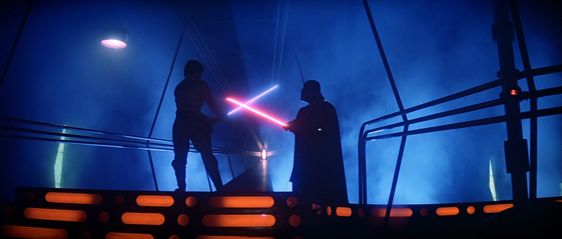
Happy May the Fourth!

Hello friends, and Happy May the Fourth! I’m planning on watching Tales of the Empire tonight, as well as catching The Phantom Menace in the local theater some time this weekend to celebrate.

I also have a special post today: a collaboration post with Jessica Bingham of Storytime Truth. We wrote about the nature of the Force; Jessica described the Light Side and the Jedi, while I explored the Dark Side and the Sith. Enjoy!

The Light Side of the Force, by Jessica Bingham

The Jedi Council

I have always thought of the Jedi Council as the representation of wisdom. The Jedi temple is a place where stillness, peace, and inner consultation resides. Even the structure of the council is one of invitation, that no one Jedi is above another. They sit in circle fashion, conversing. Contrast this to a speaker at a podium, or even Emperor Palpatine addressing the congress during the special session in Episode III. Palpatine speaks at people, the Jedi speak with each other. They each bring their inner stillness and knowledge of the force to bear on a situation. As Yoda says in Episode V, “a Jedi uses the force for knowledge and defense, never for attack.” In the times of the Republic, these sessions were primarily knowledge seeking, with some focus on defense against the dark side.

Common Jedi Force Practices

Meditation

Something you will see Jedi Master Yoda do often is meditate. This is a great way to become inwardly still. Sometimes his meditations are seconds long, other times we are led to believe they are dedicated sessions as part of his routine to remain in a state of enlightenment. He also becomes still before engaging in an action of importance such as lifting Luke’s ship out of the water in Episode V.

Qui-Gon Jinn also does this in Episode I during his fight with Darth Maul. Ultimately he loses the battle, but he gave himself a chance to reconnect with the force through purposeful stillness.

Feeling Before Action

When I say feeling I do not mean giving into impulsive emotions. This is more Sith-like and a sign of the dark side emerging. I mean prioritizing feeling over thinking by letting the heart guide the mind. The heart being the word for wisdom and stillness and the mind being the word for action. Qui-Gon Jinn tells this to young Anakin before his pod race in Episode I and Obi-Wan Kenobi tells this to Luke at the beginning of his training in Episode IV and again at the end of the same episode when Luke successfully destroys the Death Star. Kenobi cautions Luke about the dangers of impulsive feelings in Episode VI. He warns Luke that his fear for his loved ones could be used against him as it was for his father. This does not mean that the Jedi are hostile towards emotions, they just make it a point to distinguish between feeling states that serve them versus those that serve the Emperor (or ego).

Defense and Never Attack

The Jedi do the least amount of response necessary to combat a threat. This is a crucial guideline because it prevents enjoyment when faced with the temptation of ego. We see Anakin succumb to this multiple times in Episode II and Episode III before fully becoming Darth Vader. He takes pleasure in slaughtering the entire community where he mother was held, for example. He attempts to exact revenge on Dooku after the death of his mother and gets electrocuted. He gives into the desire to behead Count Dooku the next time they meet.

We also see Obi-Wan Kenobi flirt with crossing the line in Episode I when he watches his master fall to Darth Maul at the end.

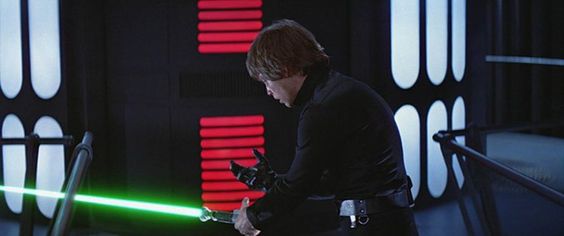
Luke Skywalker has a brief moment in Episode VI where he enters into the domain of attack. He viciously strikes his father’s saber and severs his hand before pulling himself back, sheathing his sword and casting it away. A Jedi must remain in a state of peace, passivity, and calm in order to refrain from the dark side.

Learning About Oneself Through the Force

We see a great deal of Jedi using the force for knowledge in Episode V. Much of this episode is dedicated to Luke’s training with Yoda. In this episode Luke learns that the greatest challenge is to overcome his own mind. He discovers this in the cave when he confronts himself as Darth Vader, reminding all of us that absent knowledge and the accompaniment of wisdom, we are all susceptible to our dark side selves.

Later on in Episode V, Luke loses his connection to the force, to his centeredness and fails to balance the stones in his practice session. He is ambivalent about his ship sinking further into the water and makes the mistake of believing that moving stones is radically different from moving a large-scale object like a ship. This is a crucial lesson of the force for Jedi to learn: its application is the same in all situations. Yoda proves this in the series by being the most enlightened and most powerful Jedi. One of the smallest but the most fierce and powerful. He has the highest midichlorian count of all Jedi, aside from Anakin Skywalker. This is why Anakin’s departure from Jedi to Sith was so catastrophic to the galaxy. He had the deepest, most promising connection to the living force and he fell into darkness. It is also why his one action through knowledge of himself as one with the force and defense of his son at the end of Episode VI was enough to tip the force back into balance. 

The Dark Side, by Tina Williams

The dark side of the Force deals in raw, powerful emotions: anger, fear, passion, hatred, jealousy, greed, bitterness, selfishness. You get the idea. These are emotions that are seductive and easy to access, as Yoda warns Luke in Episode V. Powerful, yes, but also a trap: fear leads to anger, anger leads to hate, hate leads to suffering. One can tap into great power through the dark side, but it’s never enough, and it will never be enough. In the end, it consumes you.

Consider the fate of these prominent dark-side users in the Star Wars universe:

Darth Vader: Ultimate Suffering

“Anakin is gone. I am what remains.” Vader in the Obi-Wan Kenobi series.

Darth Vader is the most iconic dark side figure in Star Wars, and perhaps the most tragic. Once Anakin Skywalker, he was one of the most powerful force-wielders in the Jedi Order. Through the light, he could have done amazing things for the galaxy. Instead, that power became focused through the lens of the dark side.

Anakin falls to the dark through his intense fear of loss: he loses his mother in Episode 2, and in Episode 3 fears he will lose his wife, Padme. Sidious makes sure Anakin believes the only way to save her is through him and the dark side. Because of his emotional attachments, Anakin doesn’t trust in the Force—and literally burns in “hell” on Mustafar as a result of his duel with Obi-Wan.

The suit that encompasses him for the next few decades keeps him alive but in constant pain. His injuries, both physical and emotional, will never fully heal. Vader draws strength in the Force through this pain—anger, grief, hate, as well as self-hatred—but that power will never ease his suffering.

It is only through love for his son, Luke Skywalker, that his pain ends. When Sidious tries to kill Luke with Force-lightning (after Luke had shown Vader compassion, after everything he’d done), it’s Anakin who picks him up and throws him down that shaft. It ends his life, but not before saving his son, and his soul as well.

Darth Sidious: The Emptiness of Hate

Darth Sidious, aka Chancellor, and then Emperor, Palpatine, is the paradigm of the dark side in Star Wars. A Sith Lord who rose to power during the prequel era, he is a master manipulator who orchestrates the Clone Wars to destroy the Jedi Order and becomes Emperor.

Sidious is pure evil, defined by hate and anger. There is no in-between with him, no struggling with who or what he is. He cackles with glee at the suffering of others, taking pleasure in their pain. Clearly, he draws great strength in the Force from all this hatred, Force lightning being one of his favorite weapons. But there’s one thing he does fear: death.

The Sith have a great fear of death, believing it to be the annihilation of the soul; they do not want to give up their physical attachments. Unlike the Jedi, they are denied the opportunity to become force ghosts after death, since its requirements are to face the darkness in themselves and defeat it, give up preconceived notions, and let go of what they fear to lose.

“The dark side of the Force is a pathway to many abilities some consider to be unnatural.” Sidious in The Rise of Skywalker.

Sidious’ obsession with prolonging his own life is evident in the lengths he goes for supposed immortality. We see it in his Project Necromancer in the Bad Batch, as he tries to use cloning technology (and, presumably, Sith magic) to attain that goal. He only partially succeeds in this, as, thirty years later in the Sequel trilogy, he returns, but in a rapidly degrading clone body. Only in his granddaughter Rey does he truly have the opportunity to successfully live on and continue to spread his evil.

Luckily, the galaxy didn’t have to endure that, as, once again, Light defeats the Dark.

Count Dooku: Righteous Anger

Count Dooku (Darth Tyrannus), the Separatist leader during the Clone Wars, and secret apprentice to Darth Sidious, came to the dark side through disillusionment and righteous anger. As a Jedi, he became disappointed with how the Order had become beholden to the Senate and the Republic, moving away from their role as guardians of peace and justice. He eventually leaves the Order, believing they’d become puppets to a corrupt system. Darth Sidious uses this to his advantage, turning him to the dark side and making him the leader of the Separatist forces.

As a young Jedi, Dooku lets his anger get the better of him in Tales of the Jedi.

Dooku, like Sidious, can use Force lightning, and uses it against both Anakin and Yoda in Episode 2. His arrogance causes him to believe that he is indispensable to Sidious, when in fact Sidious orders Anakin to kill him, thus replacing him with a new apprentice. The Sith are governed by the Rule of Two: there is ever only two Sith, a Master and an Apprentice. By the very nature of the dark side, the apprentice will always seek to usurp their master, coveting all the power for themselves. Dooku replaced Maul as Sidious’ apprentice and was then replaced himself by Anakin.

Darth Maul: The Futility of Revenge

Darth Maul, former Sith apprentice to Darth Sidious, is fueled mostly by rage and the need for revenge against Obi-Wan Kenobi. Since Obi-Wan “killed” him in The Phantom Menace, he has relentlessly pursued the Jedi throughout the animated series Clone Wars. His burning need for vengeance consumes him for years, coming to a head in the animated series Rebels, when Ezra Bridger unwittingly leads him to Obi-Wan on Tatooine as he watches over Luke Skywalker.

While Obi-Wan’s trials and his solitude on Tatooine leads to his character’s growth, Darth Maul’s consuming focus on revenge leads him to stagnate; he experiences no growth at all, as he’s been stuck in an endless loop of rage and bitterness. Even as he dies in Obi-Wan’s arms, his mind is still on vengeance, though not against Obi-Wan anymore, but ostensibly against Darth Sidious.

Obi Wan holds a dying Maul in “Twin Suns” from Rebels.

“Is he the Chosen One?” he asks Obi-Wan, referring to who he was protecting on Tatooine.

“He is,” Obi-Wan answers, at this point convinced the Chosen One was not Anakin.

“He will avenge us,” Maul says, referring to the suffering they’d both endured at the hands of Darth Sidious (Order 66 for Obi-Wan, and the death of his brother Savage Opress for Maul).

Even with his dying breath, Maul cannot let go of the idea of vengeance.

Kylo Ren: The Dichotomy of Dark and Light

Born Ben Solo, Kylo Ren is the son of Han Solo and Leia Organa. From birth he is strong in the Force, but Sidious, evil being that he is, influences and manipulates the young boy. He turns Ben to the dark side in retribution for the role his parents played in the fall of the Empire. He does this through a voice in his dreams, as well as through Snoke, who takes young Ben under his wing while his parents are busy rebuilding the Republic. Snoke plants distrust and turns him against his parents and his uncle, Luke Skywalker. After Luke seriously breaks Ben’s trust in him, he leaves Luke’s Jedi training academy and eventually joins the First Order.

After changing his name to Kylo Ren, he becomes obsessed with his grandfather, Darth Vader and wishes to emulate him and his power. But as Rey accuses him in Episode VII, he’s afraid he’ll “never be as powerful as Darth Vader.” This fear goads him to ever more heinous acts, culminating in killing his own father, Han Solo. But afterword, instead of feeling more powerful, he only feels more conflicted.

The interesting thing about Kylo Ren is that he is constantly tempted by the Light, rather than the other way around. It’s as if his natural state is the Light side of the Force and he actively has to work against it to ground himself in the dark side.

After he kills his father, he’s so emotionally compromised (and also injured by Chewbacca’s bowcaster) that he’s defeated by Rey in the lightsaber battle in the forest on Starkiller Base. To make himself stronger, he punches the wound in his side to feel its pain even more. He wants to feel the pain and rage of the wound in order to draw upon the dark side for strength, similar to how Darth Vader is in constant pain from his suit and draws power from his rage.
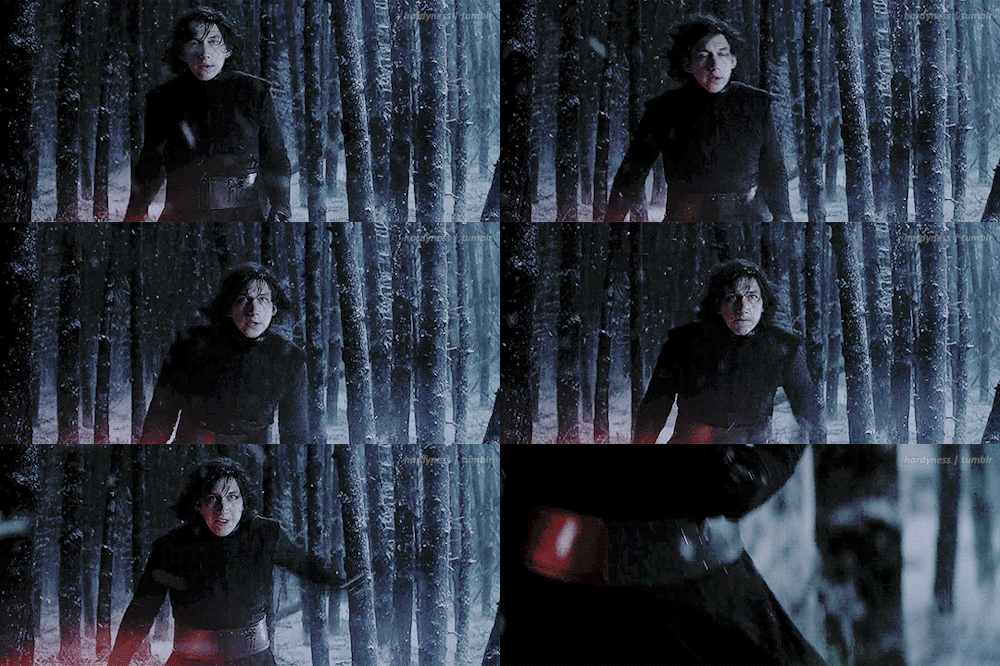
Kylo draws upon the dark side in The Force Awakens.

It’s also interesting how, when Kylo turns back to the Light and fights beside Rey against Sidious as Ben Solo in Episode IX, he looks like a completely different person, and holds himself differently, using the Force through the Light side rather than the Dark. He looks and acts lighter, as if a great burden has been lifted from him. As Kylo he seems weighed down, stomping around and slashing his lightsaber with heavy, massive strokes. But as Ben he’s like a dancer, jumping and flipping around with ease. It’s amazing to see.

While not technically a Sith Lord (in fact, he advocates that the Jedi AND the Sith end), he’s an interesting dark side user that I didn’t want to ignore. There are many dark side cults in canon Star Wars, but Kylo Ren is kind of his own thing.

Darkness is a part of life; there must always be balance. But from what I can see, embracing the Light frees you; embracing the Dark enslaves you.

I hope you enjoyed this collaborative post on the Force! How are you celebrating May the Fourth? Let me know in the comments and we’ll talk about it!

Who Are the Guardians of the Whills?

The Force is with me,
And I am one with the Force;
And I fear nothing,
Because all is as the Force wills it.
“―The Guardian’s Mantra

Chirrut Imwe and Baze Malbus

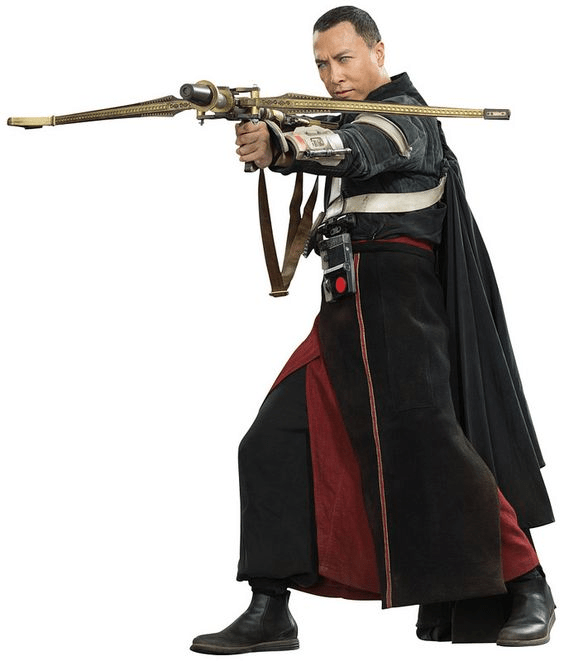
I think most of us were introduced to the Guardians of the Whills in the movie Rogue One: A Star Wars Story. Cassian and Jyn are on the streets of Jedha, looking for leads to the missing Imperial pilot. Jyn is distracted by a blind man begging on the street who somehow knows she’s wearing a kyber crystal necklace. He offers to give her a glimpse of her future for the necklace. “The strongest stars are made of kyber,” he tells her.

Jyn asks Cassian who the man is, and he says he’s one of the Guardians of the Whills. They used to protect the Temple of the Kyber, but the Temple is no longer there so they are just “causing trouble for everybody,” he tells her. That man turns out to be Chirrut Imwe, a Guardian who, along with his companion Baze Malbus, helps them steal the Death Star plans on Scarif.

The Guardians of the Whills were a religious order founded in 482 BBY. They primarily guarded the Temple of the Kyber on Jedha as well as the pilgrims who made their way there from around the galaxy. The Guardians were armed with lightbows, a weapon that they built themselves as part of their training.

Chirrut with his lightbow.

Guardians are not necessarily Force-sensitive like the Jedi, but they can sense the presence of the Force, while their compatriots, the Disciples of the Whills, prefer to listen to and interpret the will of the Force.

We see some of the Guardians in their original glory in the High Republic during the Convocation of the Force on Jedha. When fighting breaks out between Eiram and E’ronoh’s forces, it’s the Guardians of the Whills who assist the Jedi in trying to bring order back to the city.

If you want more of Chirrut Imwe and Baze Malbus before the events of Rogue One, there’s a short junior novel called, aptly enough, Guardians of the Whills. It tells of how Chirrut and Baze initially help Saw Gerrera in his fight agains the Empire, but change their minds when they disagree with his tactics and help a group of orphans escape the planet instead. It’s a great little book, with sayings and prayers about the Force from various Force-cults on Jedha at the beginning of each chapter.

In darkness, cold. In light, cold. The old sun brings no heat. But there is heat in breath and life. In life, there is the Force. In the Force, there is life. And the Force is eternal.“―Sunset Prayer of the Guardians of the Whills

Star Wars Chat Pack: How can you be more like a Jedi?

It’s time for another Star Wars Chat Pack question!

Star Wars Chat Pack, written by Kelly Knox.

Today’s question: What are some ways that you can be more like a Jedi in real life?

Well, a lot, lol. But I try. I’d like to think I’m patient, kind, helpful to others (most of the time). In tough situations, I try to ask myself, instead of What Would Jesus Do? (which, by the way, is also a good question to ask), What Would a Jedi Do?

I struggle with fear, anger, doubt, just like any other person. Just like a Jedi, too. One way a Jedi deals with these negative emotions is through meditation. To quiet their mind and touch the Force. I’ve tried meditation many times over the years, without succeeding in a consistent practice. So much for patience!

Rey meditating. And floating herself and rocks. I’d be happy just to get the meditating down.

But I’d really like to keep trying. I’m not only inspired by the Jedi but was encouraged to try it decades ago when I was into yoga (and I failed to make that a practice, too, lol). These days, I’ve been reading a lot of self-help books like Jen Sincero’s Badass books and others, and they all, every one of them, recommend meditation to really make a difference in your life. Not only to help with things like mindset (change your mind, change your life) but just to touch the Source. Not to get all hokey here (remember Han’s comment about “hokey religions”? yeah) but since becoming re-obsessed with Star Wars, I’ve come to be more cognizant of George Lucas’ inspirations for the Jedi and the Force. The Force is simply another variation of the Source, the Creator, a Higher Power, God. And midi-chlorians, like quantum physics, brings science into it all.

Anyway, all this to say that I’d like to meditate more and make it a regular practice. I was doing it for a while when I was working on the Jedi Journal posts. Which I’d also like to get back to, lol. (Hint to self: less scrolling through Facebook will free up more time–imagine that!).

I’ll keep trying. In the meantime, let me know how you would like to be more like a Jedi in real life. Meditation? Lightsaber lessons? (I would totally do that if I didn’t think I’d pull a muscle or seriously injure my old-ass self, lol). Let me know in the comments and we’ll talk about it!
Star Wars Chat Pack: What one Force ability would you choose and why?

First of all, Happy New Year friends! With the new year, I have a slew of new plans, goals, and ideas, including post ideas for the blog. I’ll be blogging more and testing these ideas out, so stay tuned.

I thought I’d start with going back to the Star Wars Chat Pack and do a question once a month, just because it’s fun. Today’s question is: What one Force ability would you choose and why?

Hands down, my choice would be Force Healing. Maybe not as cool or sexy as lightsaber skills or telekinesis, but I can’t think of anything more satisfying than being able to heal someone’s injuries or illness or take away their pain. I think it’s a rare ability, but it would certainly be a valuable one.

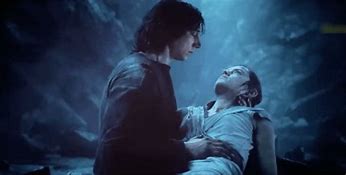
Rey had healed a vexis, a monster snake in TROS. It’s a bit of foreshadowing, as she calls Kylo Ren a “snake” and then heals him later in the film as well.

I feel like we don’t see too many examples of this ability before Rey in the Sequel trilogy. Maybe in Clone Wars or some Legends books here and there, but when I saw Rey heal that big snake, I thought, Wow, Jedi can do that? Now we see Grogu with the ability. But it makes total sense. The Force is life energy itself. Why shouldn’t someone who can influence the Force be able to transfer some to an injured or sick being?

There’s nothing worse than watching someone you love (or just anybody, really) suffer in pain and not be able to do anything about it. So that’s why I’d choose Force Healing as my Jedi ability.

What about you? What one Force ability would you choose? Let me know in the comments and we’ll talk about it!

Star Wars Chat Pack: Is Anakin the Chosen One?

Welcome to Day 15 of my NaBloPoMo (National Blog Posting Month) Challenge, during which I randomly pick a card from the Star Wars Chat Pack.

Today’s question is: Do you think Anakin Skywalker was the Chosen One who brought balance to the Force? Why or why not?

Oh, boy. If ever there was a contentious subject in Star Wars, this is one of them.

“You were the Chosen One!” I think we can all hear this conversation.

So the Jedi prophecy states, basically, that there will be one (“The Chosen One”) who brings “balance” to the Force. Qui Gon Jinn, who had studied the Jedi prophecies, believed that young Anakin Skywalker was the Chosen One, and that’s why he brought him back to Coruscant and to the Jedi Council.

The Council, especially Yoda, does not agree that Anakin should be trained, never mind that he’s the Chosen One. And later, Yoda expresses doubt about Anakin, believing that they could have “misread” the prophecy.

Once Anakin turns to the dark side and becomes Darth Vader, Obi-Wan gives up the notion that Anakin is the Chosen One. When Maul asks if the one he’s protecting on Tatooine is the Chosen One (Luke), Obi-Wan replies yes. He’s simply making the assumption here, believing Anakin’s turn disqualifies him from that honor.

Who we talking about here?

But later, in Return of the Jedi, we see that when Vader/Anakin kills the Emperor, he’s destroyed the Dark and brought Light back to the Force, and therefore, in a roundabout way, he is indeed the Chosen One. If that’s how you want to look at it, and I do.

The problem is the word “balance.” There are those who believe that “bringing balance to the Force” means the dark and the light have equal influence. And while that’s true in a Cosmic Force kind of way (as in there is always dark as well as light), I think people interpret it to mean that there is evil in the galaxy in proportion to the good, and therefore there should be as many Sith as there are Jedi.

But some, like myself, don’t see it that way; and I don’t believe George Lucas himself saw it that way, either, at least when it comes to this prophecy. I think what Lucas intended was that “balance” means Anakin destroyed evil, and now the Force is back in balance. As if the darkness unbalanced it, tainted it. That makes sense to me. So in this sense, yes, Anakin is the Chosen One.

Now, there are those who feel that the sequel trilogy, in particular the fact that Palpatine somehow “returned,” negates Anakin’s sacrifice. I don’t believe this is true. For one thing, Anakin didn’t kill the Emperor to specifically “bring balance to the Force.” I don’t think that’s what was going through his mind. He killed him to save his son. Period. It was personal, not cosmic, although the results were cosmic in nature–he did, indeed, bring balance with his actions. Prophecies are funny that way. But he sacrificed himself for his son; obviously Luke would have died if Vader/Anakin hadn’t intervened. How can that be negated?

This is why the Emperor ended up going down that shaft.

“But Palpatine (evil) came back!” the critics will argue. “How can that be if Anakin brought balance?”

Yes, of course he did. For a time. For that specific time in history. But if you look at our own history (and the history of the SW galaxy, for that matter), evil always returns. Always. You fight it and defeat it, and enjoy your victory for a time, and then it rises again. And again, and again, and again. It is the way of the world, of the galaxy, of the universe. The fight never ends. Even if it wasn’t Palpatine, it would have been some damn evil entity. Snoke himself said, “Darkness rises, and the Light to meet it,” to Rey and Kylo in the throne room. Anakin did his part; now it’s their turn.

Finally, Palps is gone! But just wait. Someone else will come along to ruin the galaxy.

Anyway, all of this to say, yes, I believe Anakin was the Chosen One, and he brought (temporary) balance to the Force.

What do you think? The Chosen One prophecy is kind of a clunky concept in Star Wars, rife for misinterpretation, and personally, I think the saga could have done without it. But it’s there, and this is what I make of it, anyway. Let me know what you think in the comments and we’ll talk about it!

Star Wars Chat Pack: What would you carve on the walls of the Path?

Welcome to Day 13 of my NaBloPoMo Challenge, where I randomly pick a card from the Star Wars Chat Pack.

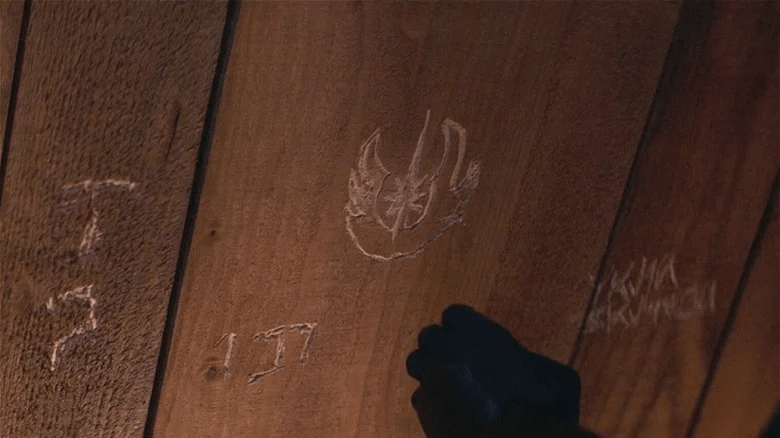
Today’s question is: If you were a Jedi hiding in the secret rooms of the Hidden Path, what phrase would you carve into the wall?

This is an interesting one! I love the idea of the Hidden Path, a secret group that helps Jedi and other Force sensitives hide from the Empire. It was introduced in the Obi-Wan Kenobi series. In it, Obi-Wan reads the names and phrases carved into the walls; one phrase he recites out loud: “Only when the eyes are closed can we truly see.” A comment on finding the Force within ourselves.

So what would I carve if I were a Jedi passing through? Well, it sounds kind of boring and simple, but think I’d carve, “The Force will be with you always.” A reminder that, no matter what your situation, no matter how dark or hopeless things are, the light is still there. The Force will never abandon you. Unless, like Obi-Wan in the series, you abandon it. And even if you do, all you have to do is reach out for it, and it will be there. Keep faith, keep hope alive, protect the Light.

I hope we see more of the Hidden Path in any future projects that take place during this time. A mention or part of a live-action show; or a book or animated series specifically about the Path. I think it might have been mentioned in the game Jedi: Survivor. But I want more, lol.

So what would you carve on the walls of the Hidden Path? Let me know in the comments and we’ll talk about it!

Star Wars Chat Pack: What is your favorite Luke Skywalker moment?

Welcome to Day 10 of my NaBloPoMo Challenge, where I randomly pick a card from the Star Wars Chat Pack.

Today’s card asks: What is your favorite Luke Skywalker moment?

Oh man, there are so many! Here’s just a few that I love:

The Mandalorian entrance. As soon as I saw that X-Wing, I got excited. Is it really him? The black glove! It is him! When Grogu called out to a Jedi on Tython, I figured somebody would answer. I didn’t really think it would actually be Luke Skywalker. But really, who else was there at the time? Ahsoka had already said No thanks, Ezra was on Peridea, and who knows where Cal Kestis was. It was truly awesome to see Luke in his prime again, kicking some Imperial droid butt (even if it was a deep-fake; it still made me happy) and saving Din, Grogu and friends. Loved, loved, loved it.

Fighting Kylo Ren in The Last Jedi. This was truly a remarkable moment: Luke distracting Kylo Ren and the First Order so the Resistance could get away, and he wasn’t even really there. Force-projecting himself across the galaxy (I didn’t even know that was a thing! but of course it is, why not?) is a tremendously powerful thing to do, proving that Luke is at the height of his powers here. I mean, of course it took his life, but what a sacrifice! The most Jedi thing a Jedi can do: fight back without really fighting. The look on Kylo’s face when he disappeared is priceless.

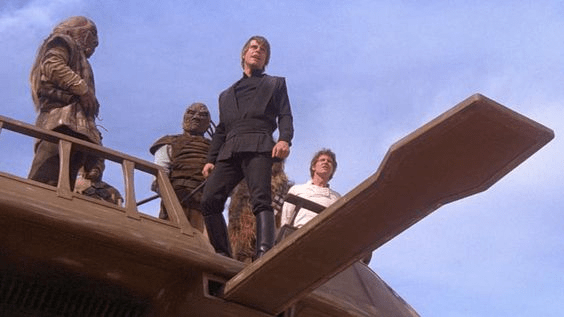
Saving Han Solo and his friends from Jabba the Hutt. When we see Luke enter Jabba’s palace and negotiate for Han Solo, this is really the first time we see him so confident, so sure of himself, and it’s awesome. In A New Hope, he’s a green kid, in The Empire Strikes Back, he’s full of questions and doubts, but here there’s a new maturity and confidence in his powers, and it’s great to see. Wow, he really is a Jedi! Once he entered Jabba’s palace, the whole place was doomed, lol.

I love Return of the Jedi Luke, but my absolute favorite moment, from that movie and everything else, is this one right here (and I don’t think I’m alone):

When Luke throws his lightsaber away, refusing to kill his father and saying these words, he’s stepped into next-level Jedi. He nearly kills Vader, and “wins” the fight, but he realizes he’d pay for that victory with darkness. Just as his father did. Which is no victory at all. His true victory is resisting the dark side and standing up to the Emperor, basically telling him to do his worst (which he does, of course, nearly killing him, giving Vader the chance to save him). This act in itself brings Anakin back from the clutches of Vader; Luke saves his father with compassion. And that, my friend, is Luke’s greatest moment, in my opinion.

What’s your favorite Luke Skywalker moment? Let me know in the comments and we’ll talk about it!
Star Wars Chat Pack: What does the Force look like to you?

Welcome to day 3 of my NaBloPoMo Challenge, where I pick a random card from the Star Wars Chat Pack.

Today I randomly picked the question, “Close your eyes and think of the Force. What does it look like to you?”

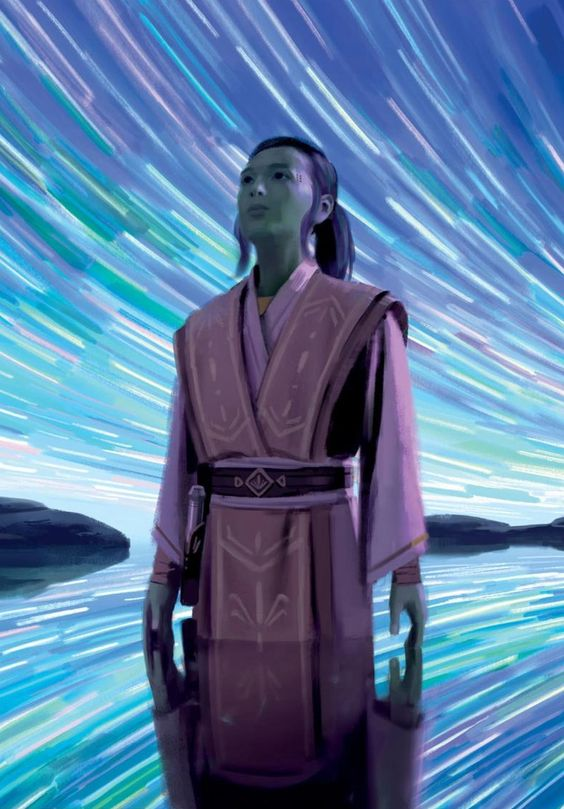
This idea of the Force being visualized in a certain way comes from the High Republic, when Jedi of that era had individual relationships with the Force and saw it in a very personal way. For example, Avar Kriss heard the Force as a song, each individual a note in the symphony of the galaxy. Vernestra Rwoh sees it as a river, or several rivers combining and flowing toward the sea of the galaxy. Burryaga, a Wookiee Jedi, sees the Force as a great tree with endless branches. Elzar Mann sees a great ocean, Stellan Gios the constellations, Bell Zettifar fire and flames. Etc.

Vernestra Rwoh from the book Star Wars: Chronicles of the Jedi by Cole Horton

How would I see the Force? Hmm, I never really thought about it. Before I learned about the High Republic Jedi, the Force was just an energy between people and things, invisible, not visualized in any particular way. I suppose, if I had to make something up, it would be colors, like a particular aura of colors around people and things. Different things and people would have different colors associated with them, and maybe a particular feeling along with it. A stone would be blue and cold; a tree would be green and energized; a loved one would be red and warm. Something like that, lol.

I like the idea of the Jedi of the High Republic visualizing different things when it comes to the Force–it shows how different and flexible they were compared to the prequel-era Jedi, more individualistic. They had a personal relationship to the Force. But for myself, I’m so used to just accepting it as an invisible force, it’s hard for me to associate it with anything in particular. It’s mysterious, a feeling, ineffable, but powerful. I like how Obi-Wan describes it to young Leia in the Obi-Wan Kenobi show when she asks him what the Force feels like.

“Have you ever been afraid of the dark?” he asks her.

“Yes.”

“And how did you feel when you turned on the light?”

“I felt safe.”

“Yes. That’s what it feels like.”

I like that analogy a lot. Maybe I’ve changed my mind; the Force is not color, but light, and all the associations light brings: safety, clarity, illumination, reassurance, goodness. It is the opposite of fear and ignorance. Of course, the Force has a dark side, but that’s not what we’re talking about here. At least, it’s not what I’m talking about, lol. Dark Force users would see and feel something completely different, I’m sure. But that’s another post.

How do you see the Force? Let me know in the comments and we’ll talk about it!

Why I Think Omega is Force-Sensitive

Star Wars: The Bad Batch' - Who Is Omega? - Inside the Magic

I was going to wait on the Bad Batch rewatch until just before Season Two premieres next year, but after I finished Clone Wars I just naturally segued into it.

The first time around, I really wanted Omega to be Force-sensitive, but despite some clues, it didn’t seem to be going that way, so I let the thought go. Not everyone has to be Force-sensitive, right?

But now with this rewatch, I’m picking up on those clues again, and I just can’t let go of the idea that it will be discovered she’s Force-sensitive. Here’s my reasoning:

  • Several times during battles or crises, Omega comes through and succeeds and states, “Guess I just got lucky.” Well, okay, maybe. But the fact that she says this not once, but a few times makes me think otherwise. (And Obi-Wan always said, there’s no such thing as luck). And yes, it may be part of her “enhancement,” but just what is her enhancement? Hmmm…Force sensitivity, maybe?
  • When the squad visits Cut on Saleucamai, he tells Hunter that all of Clone Force 99’s defects were for a purpose. So what is Omega’s defect, and its purpose? With the others, it’s obvious what their skills are, but with Omega, it’s a mystery. Perhaps it will manifest more obviously with age, but it just seems strange that not even Omega knows what her enhancement is. It seems hush-hush, which suggests something amazing–like a Force-sensitive clone.
  • When Omega picks up the Zygerrian weapon, she’s not immediately good at it, which is natural. Like everyone, she needs to practice. Echo tells her she needs to ignore distractions, which is also true for everyone. But later, during the heat of battle with some droids, she hits her mark every single time. She manages to ignore all the distractions, which includes fear. Sounds very Jedi-like to me…
Omega - Encyclopédie Star Wars HoloNet
  • When they meet Cid, Omega is the only one who figures out that the first person they meet there is Cid. Almost immediately. Precociously perceptive? Yes. From the Force? Maybe.
  • We know from The Mandalorian that cloners in the post-Rebellion era were tinkering with making clones that were Force-sensitive. They’re not Kaminoans, but maybe they were inspired by the Kaminoan’s work, including any secret Force-sensitive cloning. In fact, in The Mandalorian, Dr. Pershing, the cloning scientist, wears an emblem on his uniform that is reminiscent of a Kaminoan symbol the clones wore in AOTC. And at the end of S1 of The Bad Batch, the Empire has taken Nala Se, the Kaminoan scientist who tinkered with Omega and the Batch, to their own cloning facility. I know all of this is for cloning Palpatine, but it just seems to suggest that Omega may have been the prototype. Nala Se did have access to Jedi on Kamino, after all.
Dr. Pershing stands against a medical table cowering from The Mandalorian
Dr. Pershing’s emblem…
Several identical looking children, clones, sit at computers in Star Wars Episode 2: Attack of the Clones
And the emblem on the clones in AOTC. Hmmm…..

None of this is solid proof that Omega is Force-sensitive, of course. And even if she is, she may not have the powers of a Jedi, like telekinesis. She could be more like Chirrut Imwe, from Rogue One: aware of the Force and able to take advantage of that, but unable to manipulate it.

Or I could be completely wrong, lol. I could be reading into things to see what I want to see. Because I would LOVE Omega to be Force-sensitive. Only time will tell, and I can’t wait for Season Two!

What do you think? Do you think Omega is Force-sensitive? Why or why not? Let me know in the comments and we’ll talk about it!