My Favorite Dystopian/Apocalyptic Books

I’m a fan of dystopian fiction, but I’m a bit finicky about it. I tend to stay away from Young Adult dystopian (no Hunger Games or Divergent series, thank you). I usually like more literary-minded picks, but there are exceptions. I’ve been reading Octavia Butler, so I started thinking about my favorite dystopian novels. Here they are, in no particular order:

The Stand, by Stephen King (1978).

How it all ends: Accidental release of deadly bio-weapon

Basic premise/plot: A superflu kills 99% of the population; the survivors must choose between the powers of good and evil for the fate of humankind, following either Mother Abigail (good) or Randall Flagg (evil).

My thoughts: One of my first Stephen King reads, and one of my favorites. It’s a huge book with a ton of characters, but gripping for the most part. It’s been years since I’ve read it, but there are memorable characters I’ll never forget: Trashcan Man, in particular, who likes to set garbage (or anything, really) on fire–and even sets a whole empty city on fire; Tom Cullen, the mentally-challenged guy who is always spelling moon (“M-O-O-N, that spells moon.”) King is always entertaining.

Adaptations: I’ve seen the 1994 miniseries with Gary Sinise as Stu Redman and Molly Ringwald as Frannie. I liked it, for the most part. I haven’t watched the 2020 version, but maybe I’ll put it on my list.
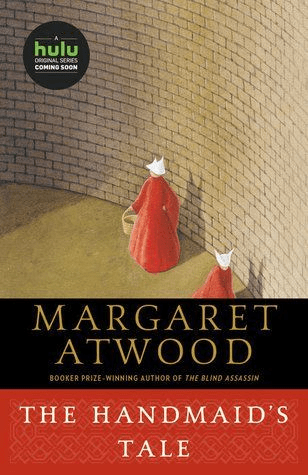
The Handmaid’s Tale, by Margaret Atwood (1985).

How it all ends: Subjugation of women through theocracy take-over.

Basic premise/plot: In the near future, America has been taken over by a theocracy and renamed The Republic of Gilead; in a world of dwindling birthrates, women of child-bearing age have become property with no rights and used by wealthy couples to have children.

My thoughts: I read this book years ago, and it outraged me. Not the book itself, which is brilliant, but what happens in the book. I was young and couldn’t imagine such a thing coming to pass, couldn’t imagine women’s rights being so eradicated and reduced to basically medieval status. Ah, the naivete of youth. Now, it not only outrages me, but scares the hell out of me. Because it absolutely could happen, as far-fetched as it sounds. I won’t get into politics here, but let’s just say I’m not too optimistic about women’s rights just about now.

Adaptations: There was a 1990 film that I never saw (and I heard it wasn’t very good), but I’ve watched the first season of the series on Hulu in 2017. It’s fairly true to the book with a few smart changes, and was sobering and upsetting to watch. In fact, I decided not to watch the following seasons because I just couldn’t bear it, lol. I’m someone who can get through every brutal season of Game of Thrones, but this show just hit a nerve for me and I couldn’t continue.
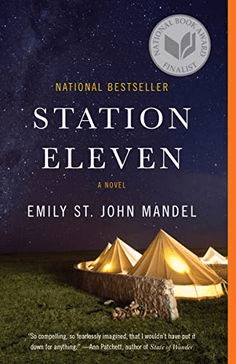
Station Eleven, by Emily St. John Mandel (2014).

How it all ends: Worldwide Deadly Pandemic

Basic premise/plot: A worldwide pandemic has nearly destroyed the human population; a group of actors and musicians travel the countryside in the Great Lakes region to entertain the survivors with Shakespeare and classical music, as they believe “Survival isn’t enough.”

My Thoughts: I adored this book. I mean, it’s tragic that the flu happened, but the story and the writing is wonderful. If you’re looking for a Mad Max kind of post-apocalyptic world here, you won’t find it–it’s too quiet. There’s just not enough people. But those who are left behind find a way to survive, and this particular group–actors and musicians–try to bring a little joy back into life through art. It makes you think about what makes life worth living, beyond survival. It’s about art and memory and what lasts. There’s a bit of danger from a religious zealot (of course), but it’s the connections between past and present that’s really interesting to me.

Adaptations: HBO Max has a miniseries adaptation, but I haven’t seen it. It sounds like a lot of changes have been made, and I love the book so much, I don’t want to experience that.
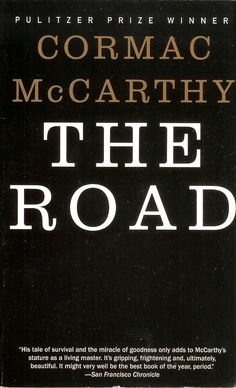
The Road, by Cormac McCarthy (2006).

How it all ends: Unknown; landscape destruction and societal breakdown.

Basic premise/plot: An unidentified disaster has reduced civilization to rubble and anarchy. A man and his ten year old son travel the dangerous landscape, heading south along the east coast for warmer weather and hope.

My Thoughts: This is a very difficult book to read. I’m not talking about the language; it’s simple and clear. But the subject matter is so damn heavy. There’s been some vague disaster (I think it’s clever that we, the readers, don’t know what it is, because it puts us in the characters’ shoes–they don’t know, either.) It doesn’t really matter what happened, only that it destroyed life as we know it. A nameless man and his ten year old son traverse an ash-covered wasteland, heading south along the Atlantic coast in search of warmer weather. They must find food and shelter along the way, and avoid those who would steal from them or kill them. Cannibalism is a very real thing (there’s a few scenes concerning this that traumatized me, lol). The man is determined to keep his son alive and safe, though he knows he himself his dying. His son, a sweet, good boy despite the horrors he’s seen, “carries the fire,” which I interpret as the light of civilization, the hope for humankind. It’s a very dark read, but does offer some hope.

Adaptations: There’s a 2009 movie with Viggo Mortensen as the Man and Kodi Smit-McPhee as the Boy. I thought it was a great adaptation, and not just because I love Viggo.
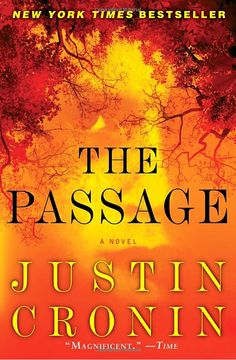
The Passage/The Twelve/City of Mirrors, by Justin Cronin (2010-2016).

How it all ends: Accidental release of scientific experiment that turns humans into vampire-like creatures.

Basic premise/plot: A scientific experiment intending to make humans stronger goes awry; it instead turns the test subjects into vampire-like creatures who escape and either kill or transform the rest of the human population into more of them. The key to saving humankind resides in a little girl named Amy.

My Thoughts: I was totally mesmerized by this trilogy of books. It was recommended to me by my sister, who had read the first book, and I instantly fell into it. My sister ended up not reading the next two books, lol, but I tore into them eagerly. It alternates between past and present, from just before the experiment destroys the population, to a hundred years into the future with people trying to deal with the aftermath. Each book gets closer to the origin of the experiment and how it all went wrong, and how those in the future will begin a new era.
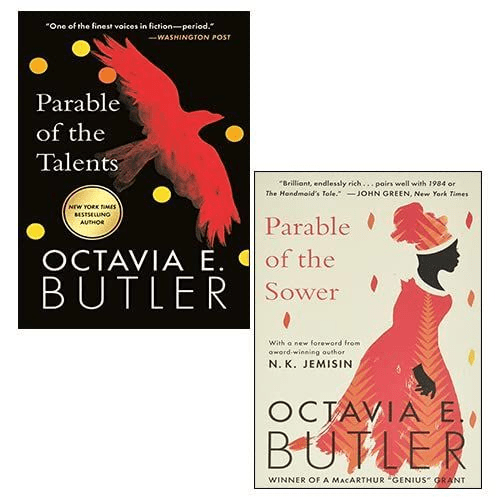
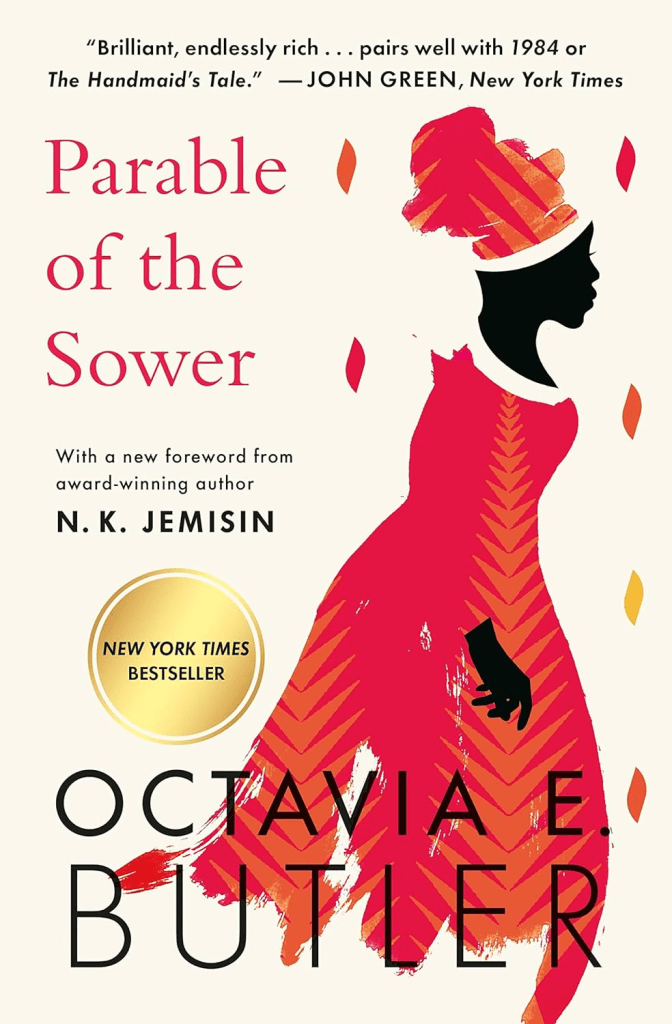
Parable of the Sower/Parable of the Talents, by Octavia E. Butler (1994, 1998).

How it all ends: Societal breakdown and anarchy; theocracy take-over.

Basic premise/plot: In the 2020’s, society has broken down into violence, illiteracy, drug addiction, and corporate slavery. Precocious 15-year-old Lauren Olamina sees the direction her world is going in. After her walled neighborhood is attacked and destroyed, she heads north from LA to northern California with a group of survivors, traversing the dangerous roads, determined to survive and start a new way of living.

In Talents, Olamina and her people have been living in their new community, Acorn, for five years, and it’s beginning to grow and thrive; she and her husband have a baby, Larkin. But disaster strikes–the community is raided by Jarrett’s Crusaders, an extremist group from Christian America; the men and women are enslaved and the children abducted. They live in abject slavery and horror for seventeen months. When they’re finally free, Olamina must decide how to rebuild her life, and Earthseed. Her husband was killed and her two month old baby taken, while her passion about Earthseed is stronger than ever.

My Thoughts: I really wish Butler had been able to write her intended third book in this series, because I did not want to say goodbye to these characters and this story. Talents ended in 2090, with Earthseed flourishing and fulfilling their Destiny, but Olamina and her daughter, finally reunited years after the disaster, have a strained relationship. The ending was fairly rushed, and I think Butler intended to write more about Olamina’s final years, and her struggles with establishing Earthseed and her relationship with both her daughter and her brother, in the third book, which she was going to call Parable of the Trickster. But alas, we will never know that story. These books will stay with me for a long while.

Adaptations: I’ve heard that an adaptation is in the works; A24 has bought the rights and slated to be directed by Garret Bradley, but no other details as of yet.

I’m sure I’ve overlooked other dystopian books that I’ve read over the years, but these are the ones that come to mind and I loved the most.

What are your favorite dystopian stories? Let me know in the comments and we’ll talk about it!

My December Entertainment Update

Hello friends! Time to talk about what’s been entertaining me lately.

Quest of the Jedi Book 1: The Way of the Apprentice, by Jude Watson. I needed an e-book to read, and after not finishing the series The Last of the Jedi, lol, I decided to try this one. It’s the first in a series chronicling the adventures of a young Anakin and Obi-Wan. Like the other series, these are short junior novels, quick, fun reads. This one has Obi-Wan and Anakin sent to a planet in trouble with two sets of other Padawan/Masters that includes Siri and Ferus Olin (I’ve finally gone back far enough to meet him as a Padawan). The planet has been devasted by some kind of bio-weapon disaster, and the Jedi are supposed to help the planet evacuate. Of course, the story becomes more complicated than that, and it’s essentially a story about Anakin learning (or not learning) how to work with other Padawans. I’ve started Book 2, but got distracted by If It Bleeds, by Stephen King. I’ll get back to it.

Ahsoka Rewatch. I decided to rewatch Ahsoka since a friend of mine at work said he was going to watch it, so we could discuss. But he’s been so obsessed with Loki, he hasn’t even gotten past Part 2. Sigh. Oh well, I enjoyed the rewatch, and like it even better on the second watch. It all seems to come together better when you can binge it rather than waiting a week between episodes, idk. Part 5, Shadow Warrior, remains my favorite episode, but I also just adore Ezra, too. And Baylan continues to intrigue. So many great moving parts to this series, though it comes off a little clunky as a whole.

Parable of the Talents, by Octavia E. Butler. In Progress. I’m about halfway done with this book, and I’m totally engrossed. The sequel to Parable of the Sower, it tells of Lauren Olamina and her Earthseed group finally finding safety and relative peace at Acorn, the community they build together in northern California. But disaster and tragedy strike when The Children of Christian America, a fanatical religious group, descends on the community, enslaves the adults, and steals their children. Very difficult part to read, but Lauren finally escapes and is trying to find her infant daughter. I’m eager to see how this one ends. Butler had planned on a third book but unfortunately she died of a stroke in 2005 before she could write it.

If It Bleeds, by Stephen King. In Progress. I was feeling in a bit of a King mood lately, so I thought I’d check this one out. I’ve always enjoyed his shorter fiction, sometimes more than his novels. I’ve only just started the first story, so not much to report on this one. More next month.

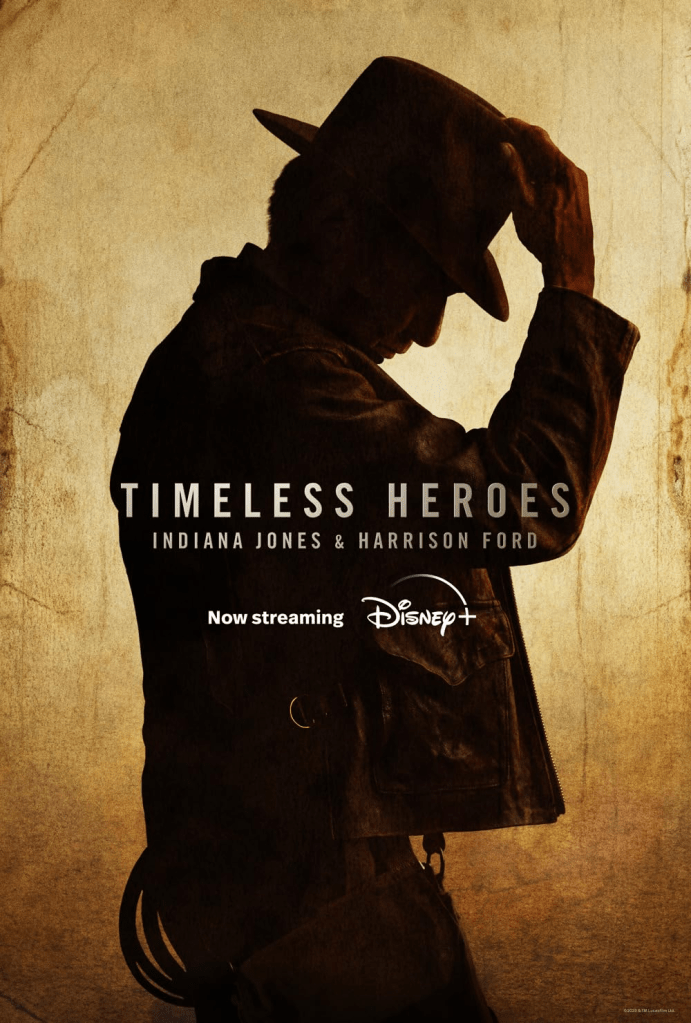
Timeless Heroes: Indiana Jones and Harrison Ford. Saw this a few weeks ago and of course watched it. Harrison Ford and Indiana Jones are intrinsically linked, obviously, and this documentary was about both. I’ve always been an Indy fan but I have my favorites (Raiders and The Last Crusade). And I’ve followed Ford’s career but have by no means seen all his films. I also have favorites of those (Blade Runner, Witness and Regarding Henry are top notch). This doc follows Ford’s career, but particularly focuses on the evolution of the Indiana Jones franchise. I did like the interviews with Ford and I decided I like him a little bit better, as in the past few years he just seemed like an ungrateful jerk, lol. Perhaps just misunderstood, but in these interviews he really radiated a warmth concerning these films that redeemed him a bit for me.

New book announced: The Glass Abyss, by Stephen Barnes. I always get excited when new Star Wars canon books are announced, and this one is no exception. I’m really hopeful about this one, because, as you may know, I’ve never been a big Mace Windu fan. He’s just unlikable, lol. I want to like him, though, and in the past have tried to read the Legends Mace book, Shatterpoint, in the hopes of understanding why people love him so much. But I just couldn’t get into it at all. Maybe a canon book will do better for me, as I prefer canon to Legends. Anyway, this one comes out in August of 2024, so not for awhile. Steven Barnes wrote the Legends book The Cestus Deception, which I have on my shelf but haven’t read yet, lol.

Anyway, this is the plot summary:

The Jedi are reeling from Qui-Gon Jinn’s sudden death at the hands of a Sith. Jedi Master Mace Windu’s feelings about Qui-Gon have always been complicated, and have not been made any simpler in death. While they often disagreed, Mace valued Qui-Gon’s unique perspective, and their shared dedication to the Force made them allies. Without Qui-Gon and his unorthodox views, Mace feels out of balance.
 
While considering his fallen friend’s legacy, Mace is surprised to receive a final message from Qui-Gon, marked to be delivered to Mace on the event of Qui-Gon’s death. The message contains a last request: a plea to help the Outer Rim planet of Metagos.  
 
Many years ago, a violent solar flare transformed the surface of the desert planet into a landscape of irradiated glass—as beautiful as it is dangerous. Now most of the surviving inhabitants live underground, where rival clans fight to control the planet’s limited resources. As a young Jedi, Qui-Gon protected the Sa’ad farming clan from the planet’s less scrupulous factions. The Sa’ad practice the art of dream-weaving, retaining their waking minds upon sleep in order to communicate and coexist with the wild creatures around them. Qui-Gon vowed to return if they ever required his aid, but now it falls to Mace to fulfill that promise. The Sa’ad’s leader, KinShan Nightbird, has begged for the Jedi’s help in freeing Metagos from the crime lords who threaten to eradicate her people’s way of life.   
 
Intent on fulfilling Qui-Gon’s final wishes, Mace travels to Metagos and infiltrates the enemies of the Sa’ad. But as the Jedi Master investigates the intricate web of adversaries and allies, Mace finds himself pushed to the boundaries of the Jedi code, challenging his beliefs and his relationship to the Force itself.

Amazon

Sounds good to me.

So that’s it this month. What’s been entertaining you? Let me know in the comments and we’ll talk about it!

My Entertainment Update for November

Hello friends! As I was busy in November doing my NaBloPoMo (National Blog Posting Month) Challenge, I waited until the end of the month to post my Entertainment Update, instead of mid-month. There’s a few things to talk about, so I’ll be as brief and to the point as possible.

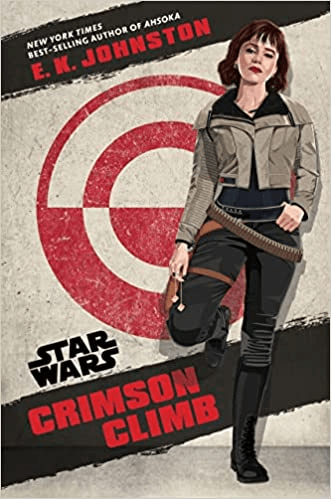
Crimson Climb, by E.K. Johnston. At the beginning of the movie Solo, a young Han Solo attempts to escape the White Worm gang on Corellia with Qi’ra. He succeeds; she doesn’t. She gets dragged back to the White Worm lair and faces the consequences. This book covers the first year after her failed escape attempt: Lady Proxima punishes her and sells her to a violent criminal; she’s then plucked from him by an associate of Dryden Vos, and becomes a member of Crimson Dawn. The book tells of her rise in that criminal organization to Vos’ lieutenant, the Qi’ra we see later in Solo when Han meets up with her again. I enjoyed the book, though it wasn’t a page-turner for me. I get the feeling we’re going to get a Qi’ra trilogy from Johnston, in the same way we got a Padme trilogy from her. I do like this idea. I wouldn’t say I like Qi’ra; she’s done some pretty bad stuff. But I do admire her smarts and her drive to survive. I was going to do a post on other Qi’ra-related content (comics and books, etc) but got side-tracked by the Chat Pack, so maybe I’ll do that next.

The Eye of Darkness, by George Mann. The long-awaited first book of Phase 3 of the High Republic released this month, and I tore through it pretty quickly. After a detour into the past with Phase 2, we now go back to the Phase 1 characters we know and love: Avar Kriss, Elzar Mann, Bell Zettifar and Burryaga. I was particularly happy to see Avar Kriss as a main protagonist; after meeting and really liking the character in Light of the Jedi, the first High Republic novel, she then retreated mostly to the comics for the rest of the saga so far. I loved seeing her in action again in a novel. Another character I haven’t seen in a novel since LOTJ and whose been in the comics is Porter Engle, who is also one of the main characters here. Both he and Avar are trapped behind the Stormwall, an impenetrable barrier put up by Marchion Ro, leader of the Nihil. Ro has claimed a large portion of the galaxy, calling it the Occlusion Zone, and the people who live within it are at his mercy. Boiling it down, Avar and Porter are trying to find a way out, while Elzar Mann, and Bell and Burryaga, are trying to find a way in, but of course it’s much more than that. This book really deserves its own post, because it’s fantastic and I loved every minute of it.

Star Wars Myths and Fables, by George Mann. I downloaded this to my Kindle because I needed something to read there, and it was free through Prime, lol. And I’d just read George Mann’s High Republic novel and loved it, so why not read him again? This was very different from that, of course, as it’s set up as a telling of, well, myths and fables. These stories are straight exposition, as if told around a campfire or as a bedtime story. They’re fairly entertaining, and Mann does a good job here, but not my favorite type of story. Just something to read between the major Star Wars reads. I love the cover and wouldn’t mind having the hardcover on my shelf, though.

Parable of the Sower, by Octavia E. Butler. This is a dystopian novel published in 1993, but remains relevant and frighteningly prescient, considering the events of the book take place in 2024-2027. Lauren Olamina is a precocious 15 year old who lives with her family in a walled community in the suburbs of Los Angeles. It’s walled to keep out the thieves, beggars, homeless, drug addicts, and other desperate people who are willing to kill to survive. It’s not easy living within the walls, but it’s a death sentence outside them. Society has broken down to a point where there aren’t many jobs that pay decent money, or money at all, for that matter; some work for food and board. Some flee to corporate-owned towns and cities and basically become slaves to the corporations. Lauren’s father is a preacher, and teaches at the local college (who he’s teaching, I have no idea; illiteracy is running rampant), though it’s precarious travelling to and from work. One day he just doesn’t come home. That’s after her 14 year old brother runs away and decides to try to make it outside the walls; he’s found dead later, horribly mutilated. The police and fire fighters charge fees for their services, which most people can’t afford. Their community is destroyed by “pyro” addicts, who smash through the gate and set fire to the houses, killing people and stealing their things. Lauren, whose remaining family is killed, is set on her journey north on foot, with a few survivors, to try to find a new, safer life. She’s been preparing for this, and has ideas about a new way of living, a kind of new religion called Earthseed, in which “God is Change.” Life on the road is dangerous and heartbreaking, but she meets people willing to join the group and protect each other. I found this book engrossing and terrifying, mostly because it has elements that we already see in our society, but on a larger scale. I can totally see it happening if we’re not careful, if we don’t pay attention and take action. Anyway, there’s a sequel called Parable of the Talents, which I want to read, but I don’t know how much more human suffering and tragedy I can take right now, lol.

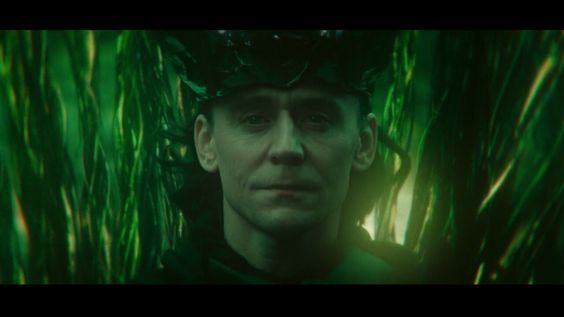
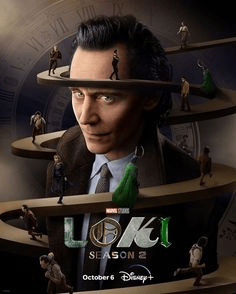
Loki Season 2. I’m going to be honest and say I didn’t enjoy this season as much as I did Season One. I started out with “I’m so happy to see these characters again!” to “I have no idea what’s going on” to “This is okay but not great” to “All right, this is pretty good” to “I have no idea what’s going on” again, to “This is really good but now I’m sad.” In other words, it was uneven for me. However, I loved the character arc that Loki went on during the entirety of Seasons One and Two. He’s come full circle, from his arrogant proclamation of “I am burdened with glorious purpose,” to his acceptance of the actual burden of his glorious purpose. In finding that purpose, he had to understand himself, find his heart, make some friends, and realize he needed to give up the people he loved in order to save them. To see him transform like that was very satisfying; I love a good redemption arc. But I was kind of hoping he was going to lead the TVA, not have to sit on that throne all by himself for eternity. But he’s doing what gods do, I guess. Or what they’re supposed to do. At any rate, I have mixed emotions: I’m glad he’s found his glorious purpose, but I’m sad by how lonely it must be. Will this be the last we see of Loki? It seems that way, but I wouldn’t count on it. I also watched Assembled: The Making of Loki S2, which I always enjoy watching.

Snowpiercer. I’ve had this in my Amazon Prime queue for a while now, and decided to finally watch it at the beginning of the month. The premise is this: the world has frozen solid from some last-ditch experiment of launching something into the sky that presumably would “fix” climate change. Instead, it turned the world to ice. The last fragments of humanity are travelling around this ice globe on a train that never stops, circling the world on an endless track for years and years. The problem is, the train is divided into the haves and have-nots. At the front of the train are the haves, I’m guessing the people who originally paid for a spot on the train at the beginning; while the end of the train is for the have-nots, who I’m guessing were desperate people who fought their way onto the train when things went south (or should I say north?). These poor souls are locked in the back cars, cramped and nearly starving, at the mercy of the will of the creator of the train, Wilford. Chris Evans is great as Curtis, who decides to lead a rebellion and bust his way through the train cars to the very front, where Wilford, and the engine, are. It’s quite a journey, and very violent, which I suppose makes sense. Interesting premise, and entertaining.

Whew! It seems like a lot, but I’ve been reading and watching these things since mid-October. What’s been entertaining you lately? Let me know in the comments and we’ll talk about it!