My Star Wars Legends Reading Challenge–Ranking the Old Republic Books

Hello friends! I’m still continuing my Legends Reading Challenge, and I’ve finished The Old Republic Phase. I’ve done several posts of my thoughts on a few of them, but instead of doing more on the last few I’ve read, I’m just going to rank all the books in this phase with a few words about them. Let’s get started!

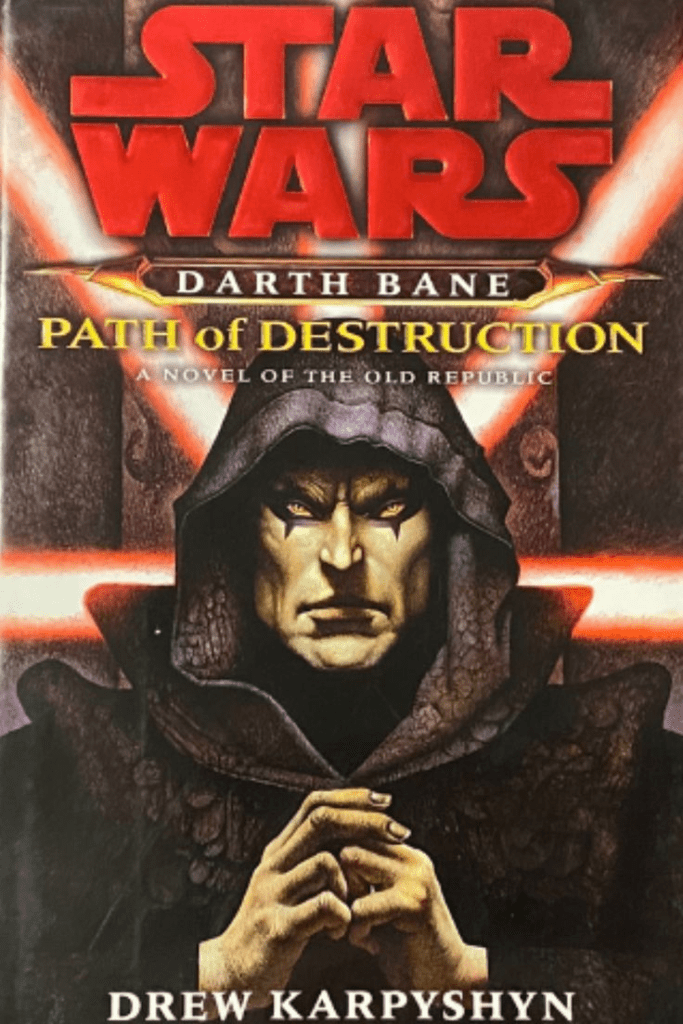
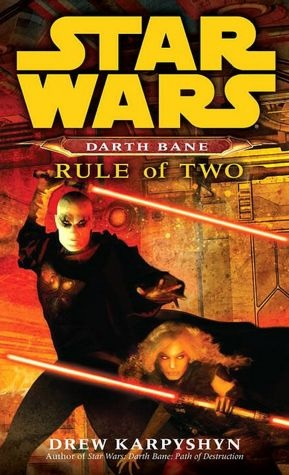
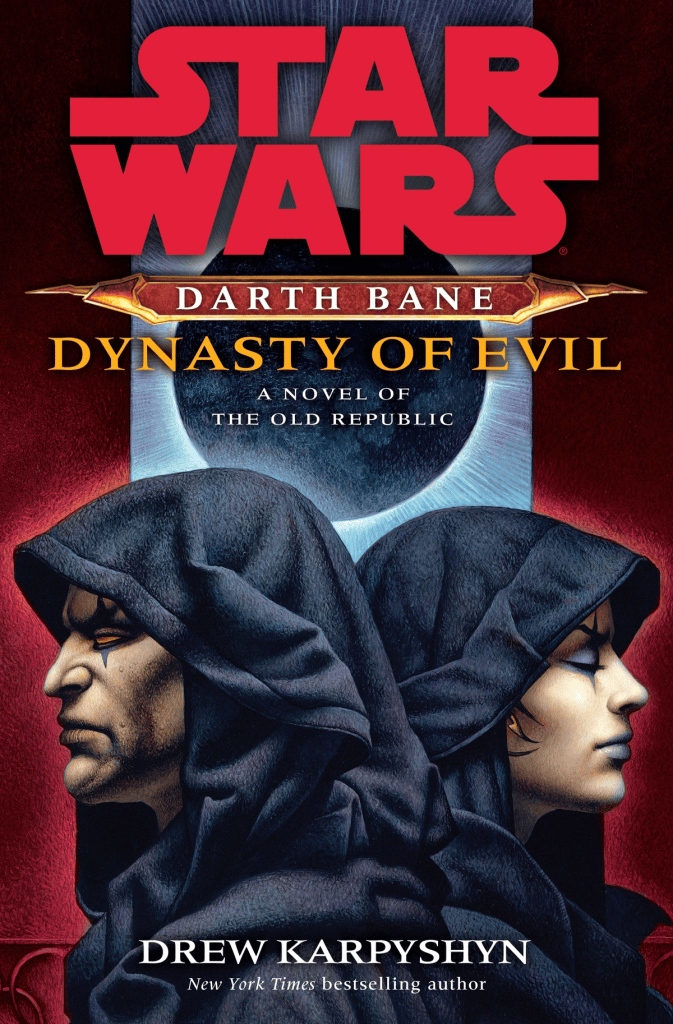
  1. The Darth Bane Trilogy, by Drew Karpyshyn. (5 out of 5 lightsabers). I did a review of Path of Destruction, but didn’t get to reviews of the other two books: Rule of Two and Dynasty of Evil. I did read them, however, and loved them, though the first book is my favorite of the three. The story of how Darth Bane radically reshaped the Sith is compelling reading, and though I’m Team Jedi all the way, these books are fantastic and helped me appreciate the history and beliefs of the Sith. Definitely number one on my list.

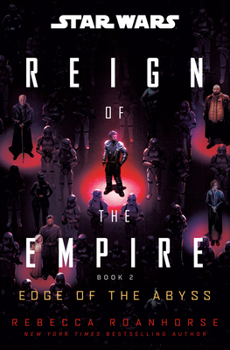
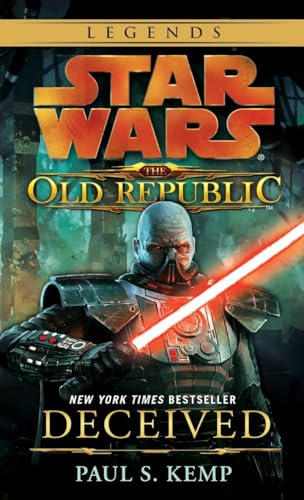
2. Deceived, by Paul S. Kemp. (4.5 out of 5 lightsabers). Check out my full thoughts here. I really liked this story of Darth Malgus, who loves a Twilek woman who was a former slave. The plot was fairly simple (which I appreciated, lol) but the main characters had to make tough decisions.

3. Annihilation, by Drew Karpyshyn. (3.5 out of 5 lightsabers). Check out my full thoughts here. I liked this one because it dealt with Theron Shan, a character who is descended from Revan and Bastila Shan, but who doesn’t have the Force. He relies on his own skills to stop a dangerous Sith and her ship/weapon. A good adventure. I gave this one 3.5 at the time of the original post, and now it’s above two 4-lightsabers books, lol, so I’m thinking it’s actually a 4.

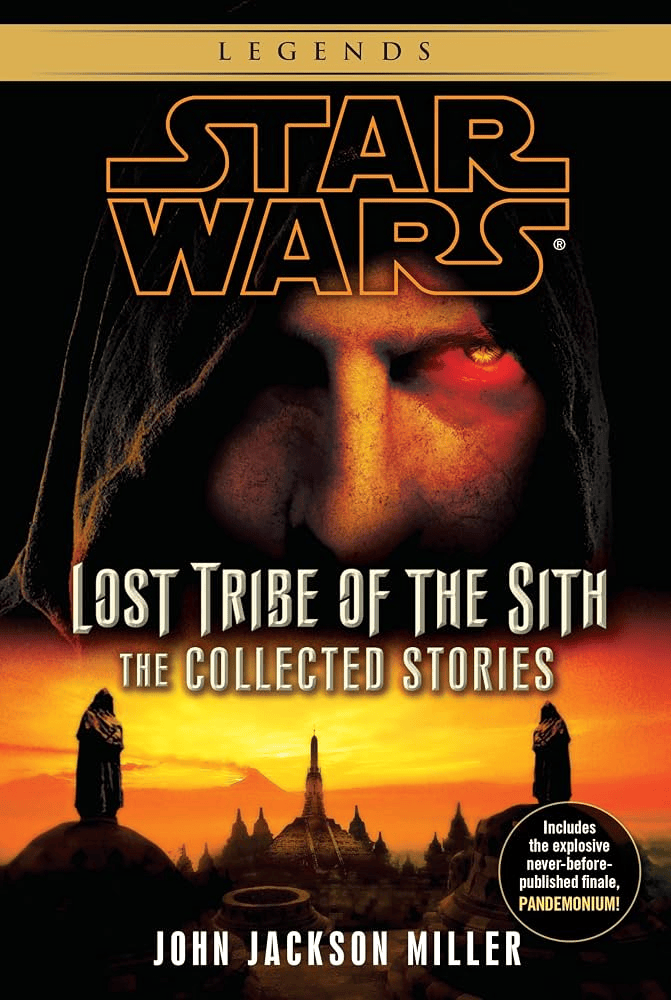
4. Lost Tribe of the Sith, by John Jackson Miller. (4 out of 5 lightsabers). This is the last book of the Old Republic I read, and I didn’t think I’d like it, for some reason. But…I loved it! It’s a series of stories about several generations of Sith that crash-landed on a remote planet called Kesh 5,000 years BBY. The Sith on the ship Omen were working for Sith Lord Naga Sadow, but during a battle they were knocked into hyperspace off course, and crashed on a mountain on Kesh. The ship was destroyed, there were no communications, no one knew where they ended up so no one was coming, and there were very little metals on the planet, so no reparing anything. They were stuck. And they and their descendents stayed there for 5,000 years, conquering the native Keshiri. It was so interesting to see these Sith adapt and change over millenia, with no contact from the outside galaxy–no Republic, no Jedi, no aliens, just humans and Keshiri. Legends were born and reborn. But Sith will always be Sith, fighting each other for power. I was enthralled with the whole thing. Apparently, these stories are prequels to the Lost Tribe told about in the Legends books Fate of the Jedi (which I probably won’t get to for a long time, considering they’re towards the end of the Legends list, lol). I looked it up in Wookieepedia, and the Tribe does eventually get off Kesh to threaten the galaxy and deals with Luke Skywalker. Something to look forward to!

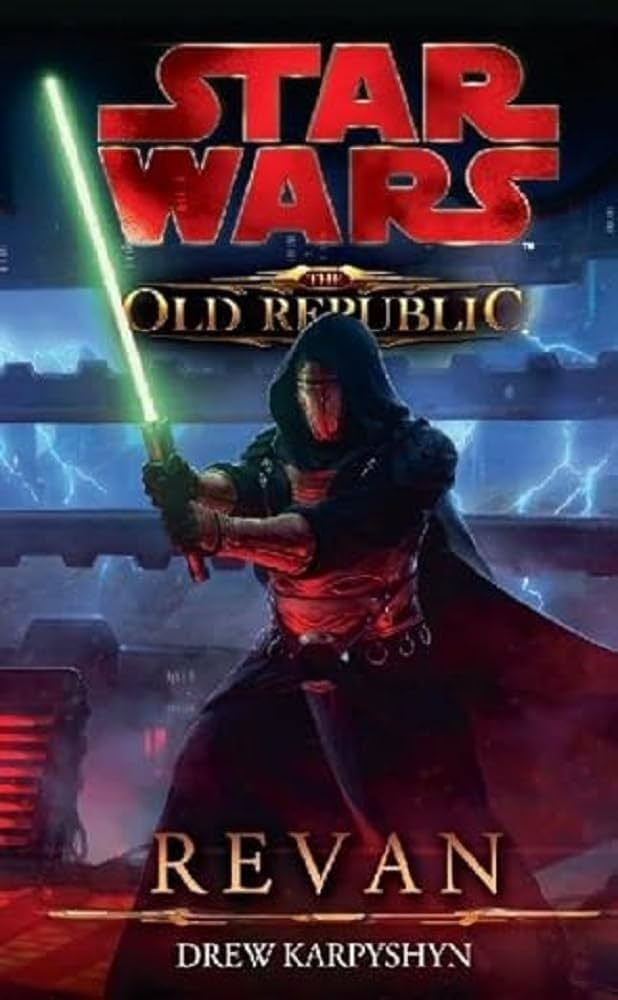
5. Revan, by Drew Karpyshyn. (4 out of 5 lightsabers). Check out my full thoughts here. I know some people absolutely love Revan, but I’m not one of them, lol. I don’t hate him, but I don’t see the fascination. Maybe it’s because I’m not a gamer. At any rate, the story was fine (I gave it 4 out of 5 lightsabers), but I do think it’s more appreciated if you’ve played the game.

6. Red Harvest, by Joe Schrieber. (3 out of 5 lightsabers). Check out my full thoughts here. Star Wars zombies! This was a fun and freaky Star Wars read. A Sith Sorceror seeks immortality but things go terribly wrong, naturally. A quick, bloody read with some interesting Star Wars elements.

7. Dawn of the Jedi, by Tim Lebbon. (3 out of 5 lightsabers). Check out my full thoughts here. This is the first Legends book I read in my Legends Reading Challenge, and the first on the timeline (25,000 BBY). It wasn’t exactly what I was hoping for, as it wasn’t the very beginning of the “Jed’aii,” but I guess that’s far enough back, lol.

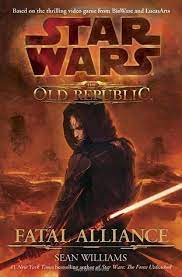
8. Fatal Alliance, by Sean Williams. (3 out of 5 lightsabers). Check out my full thoughts here. This one took me awhile to get through, and had a lot going on. The weirdness factor was up there, too, lol. Not bad, but not great, either.

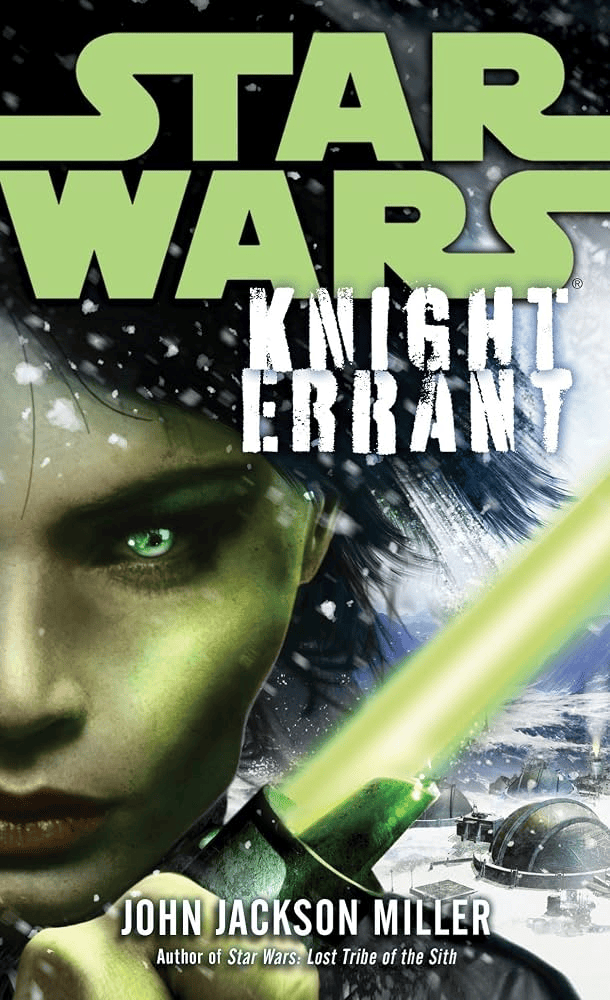
9. Knight Errant, by John Jackson Miller. (2 out of 5 lightsabers). Confession: I didn’t finish this book. Doesn’t seem fair to give it a rating because of this, but based on what I read, I’d give it a 2 (and that’s only because I normally respect the author, lol). It pains me to do this, as I’ve enjoyed plenty of other John Jackson Miller books (Kenobi, Rebel Dawn, and Lost Tribe of the Sith). And it’s a really cool cover. But it was just so incredibly boring. There’s no other way to say it. I didn’t particularly like the Jedi protagonist, it took forever for things to get going (and by the middle of the book, it still hadn’t), the plot was confusing and weird, and I just didn’t want to waste any more time on it. I just didn’t care. I’m sad about it, but it happens. There were some comics that went along with it (and even a portion of the comic inserted into the middle of the book), but it didn’t help me like it any better. Maybe someday I’ll finish it…but I doubt it, lol.

So that wraps up the first Legends section of The Old Republic. Next up: “The Rise of the Sith Era” with Cloak of Deception, by James Luceno. Back into more familiar territory, and I’m looking forward to it! Stay tuned.

Canon Contemplation: Finishing up Alphabet Squadron

Some Spoilers Ahead!!!

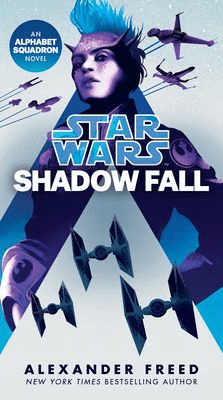
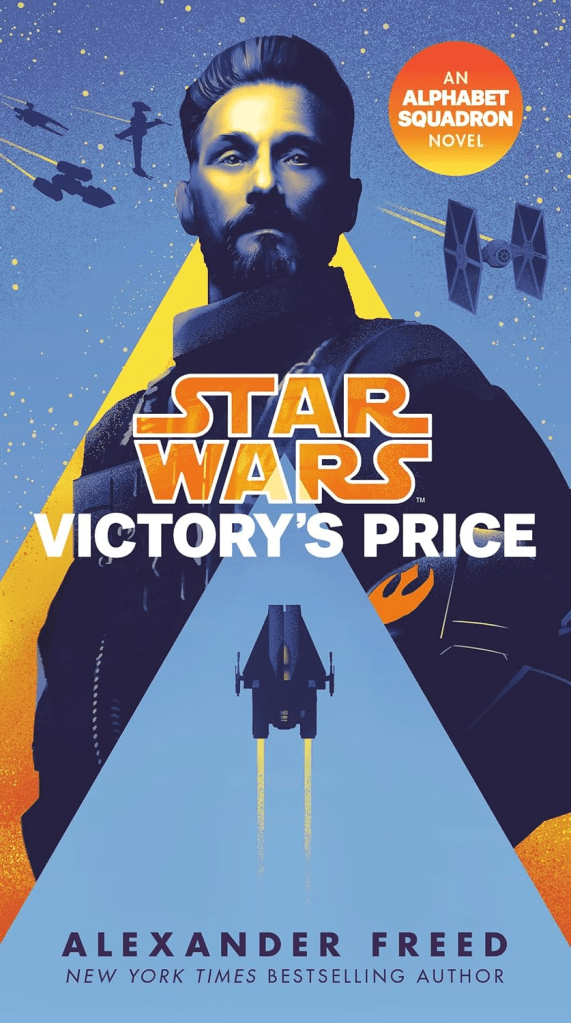
Hello friends! With a few books in between, I’ve finally finished the Alphabet Squadron trilogy by Alexander Freed, with Shadowfall and Victory’s Price. I did a little review of its first book, Alphabet Squadron, along with the book Inferno Squad, in an earlier post.

The feel of this whole series reminds me of of the show Andor: no Jedi or Force or larger-than-life heroes or villains; just regular people doing their best and trying to end this war. Gritty, complex, no easy answers, the toll war takes on people. A slow burn at first, and then ramping up until I couldn’t stop reading. The Rebels may have won the war at Endor, but it didn’t officially end until a year later at Jakku, as the New Republic sought out renegade Imperials. In this trilogy in particular, Alphabet Squadron–along with General Syndulla and her New Republic crew–are after Shadow Wing, the Empire’s 204th TIE squadron.

I won’t go into plot details of these two books, but suffice to say there are many battles between the two groups, with losses on both sides. My eyes usually glaze over long battle scenes, whether it’s in a book or on the screen, and if these books were only about the battles, I wouldn’t be interested at all. For me, it’s the characters that made these books stand out. In the first book, I didn’t really like any of them (except Hera, of course), lol. But they were interesting and complex; and over the course of the books they grew on me. I became extremely invested in their welfare and what would eventually happen to them. I’ll just describe a few of them here:

Alphabet Squadron:

Wyl Lark is an A-Wing pilot from the planet Polyneus. His people are pacifists at heart, but felt the need to send 120 of their people to fight against the injustices of the Empire. Wyl is an excellent fighter pilot, but the constant killing wears down his soul. After Endor, he was getting ready to go home, but he was needed for more, and so he stayed. His extreme empathy–toward his enemies, as well as his allies-frequently puzzle and discomfit his team. In other words, he’s not jaded–not yet–and he tries several times to reach out to the enemy and end the killing. Wyl acts as the moral center of the story. He makes mistakes, but they’re always for the right reasons.

Chass na Chadic is a Theelin who flies a B-Wing. Chass is an angry young woman–she idolizes Jyn Erso, who died a glorious death to stop the first Death Star–and she very much wants a glorious death herself. But she wasn’t at Endor, and she keeps surviving battles while her comrades die around her. Mostly, she’s afraid if she survives, there will be no place for her in the New Republic. Fighting is all she knows. So she takes reckless risks, and Wyl Lark keeps saving her, and it enrages her. She has a difficult relationship with Wyl, as well as Yrica Quell. Well, with most everyone, lol.

Nath Tensent is a bit older than these two, an Ex-Imperial who pilots a Y-Wing. He left the Empire early on and became a sort of pirate, but lost his crew to the Empire; the Rebels recruited him after that. Mostly, he wanted revenge against the 204th, who killed his crew. Nath is an odd one–he isn’t particularly loyal to the New Republic per se. He’s in it for revenge, and also because he was being paid by Caern Adan, the guy who cobbled Alphabet Squadron together. Yet, he’s brave to a fault, saves countless lives, and gets several medals. He likes the attention and acclaim, but not the responsibility. He’s got a soft spot for Wyl and looks out for him, but he becomes attached to the whole squad. When pushed, he’ll do the right thing.

Kairos flies the U-Wing, and is a bit of a mystey at first. She’s non-human, but no one really knows anything about her or her people; in the first book she’s wrapped in robes and a masked helmet, and rarely spoke. But she’s intense, a terrifying killer if it comes to it. Turns out the Empire took control of her planet, and she, as the “shaman” was taken by them, interrogated, and imprisoned. Her people, however, were isolationists; their culture denies mingling with any other beings of the galaxy in order to stay “pure.” Kairos was not pure anymore, and she had no place with her people. So she was highly motivated to end the Empire. Her squadmates barely understand who she is, but trust her.

Yrica Quell is the defecting Imperial TIE fighter pilot who flies an X-Wing. She took part in Operation Cinder (Nacronis) in the 204th, but afterward defected to the New Republic, claiming Cinder as her reason and that she didn’t, in fact, take part. Turns out it was her mentor, Soran Keize, who pushed her to defect. He could see that Cinder was eating away at her but knew she wouldn’t go on her own. So she did, and Caern Adan put her in Alphabet Squadron to find and destroy the 204th, because of her knowledge of her former squadron. Just when it seems Alphabet is coming together, they find out that she did, in fact, take part in Cinder, and are appalled. Feeling she has no future in the New Republic, she goes back to the 204th, but not to really rejoin them; rather, to let the New Republic know where they were. She was part of neither, but wanted to do what was right, and to save as many lives as possible, as it seemed the 204th were operating a second Cinder. Towards the end of Victory’s Price, she goes up against her former mentor, Soran Keize, a man she likes and respects, but feels she must stop to save even more lives.

All of these people have tough character arcs, and I mean they really go through it. Physically, emotionally, spiritually, they go through the wringer; they come out the other side damaged, but wiser, I think, at least concerning themselves: who they are and what they want.

The 204th:

Soran Keize is the only character from the Empire I’ll get into, as he’s the most important to know and understand. After Cinder, and after he pushes Quell to defect, he leaves the Empire himself for a while. He takes on the name Devon, and tries to make an honest living in the galaxy for a time. He does this because he knows the Empire truly lost the war and there was no coming back; he also had issues with Cinder and what the Empire had become. But eventually, New Republic Intelligence catches up with him and tries to arrest and/or kill him. He gets away, but decides there is no life for him in the New Republic, not as long as they keep coming after him. So he goes back to the 204th. He doesn’t do it for the Empire. He does it for his squadron, the 204th. He does it out of loyalty to them, the people he had worked with and were responsible for. He still knows the Empire is done. But he wants to give the people of the 204th a purpose. If that means constantly engaging with the New Republic, then so be it, to whatever end comes. Eventually, though, he has to regroup with the larger Imperial Remnant fleet, and they take part in the battle of Jakku. Well, his people do, but he goes on a solo mission to Coruscant to try to destroy a vast Imperial database that holds every single horrible thing every member of the Empire had ever done; the New Republic could use it to harry and harass any ex-Imperials after the war. He wants to wipe the slate clean and give them a chance to live new lives. But in doing so, in bombing the database, it could kill thousands living nearby in Coruscant, and Quell tries to stop him for this reason (there are other reasons, too, which are interesting).

Soran is probably the only Imperial character I’ve encountered that I actually like. Except perhaps Leo Partagaz from Andor, but that’s mostly because of his disposition; he’s still a ruthless Imperial, lol. But Soran is a philosophical man, and truly believes that he’s helping the people he’s leading. He doesn’t care about the Empire at large; that’s over. Without many other options, all he can do is give them purpose, and he’s laser-focused on this plan. I think he’s doing it to give himself purpose, as well, in a galaxy that has irrevocably changed, and not in his favor. I respect him at least for that.

I want to mention the Emperor’s Messenger Droid, as well. This is one of many droids that announced Operation Cinder to the fleet commanders, with the eerie faceplate that held Sidious’ hologram face inside it. After Cinder, it went dark, and floated around Soran’s ship like a ghost. And I think that’s the point: it’s a symbol. The Emperor haunts them all, even in death. He’s a constant shadow looming over them, reminding them of their former glory, and of all the horrible things they did in his name. The crew at one point make a shrine out of it, praying to it for guidance. It’s frustratingly silent, giving no hint of what they’re supposed to do now. They have no idea the Emperor is punishing them for allowing the Rebels to win (typical that he doesn’t want to take any responsibility himself). It’s inside the droid that Soran finds out about the database, that the Emperor was keeping a mind-boggling account of every crime, big and small, of every Imperial out there. Because that was the point: making everyone in the Empire accountable and responsible, no matter how small a role they played. A petty and cruel bastard he was, lol.

Anyway, these books are as rich and complex, as dark and gritty as Andor, and asks a lot of the same thorny questions. When the story is about Jedi and Sith, good and bad tend to be clearly delineated. Here, as in Andor, we mere mortals have a harder time of it. We’re just people, caught up in terrible violence, with unending cycles of revenge. War is hell, and there are no winners, not really, not when the violence rips you to pieces, physically and emotionally and spiritually. These books are about the toll war takes on regular people, the scars left, the ambiguous moral decisions that have to be made. I’ll be thinking about these characters for a long time.

As a whole, I give this trilogy 4.5 out of 5 Lightsabers (the slow burn build-up requires a lot of patience, but the payoff is worth it; and they’re BIG books–500 or more pages each).

Have you read the Alphabet Squadron trilogy? What did you think? Let me know in the comments and we’ll talk about it!
Thoughts on Star Wars: Legacy and Eyes Like Stars

Hello friends, two new Star Wars books have come out in the past few weeks and naturally I’ve read them. Here are my thoughts about both:

Planet-Sized Spoilers Ahead!!!

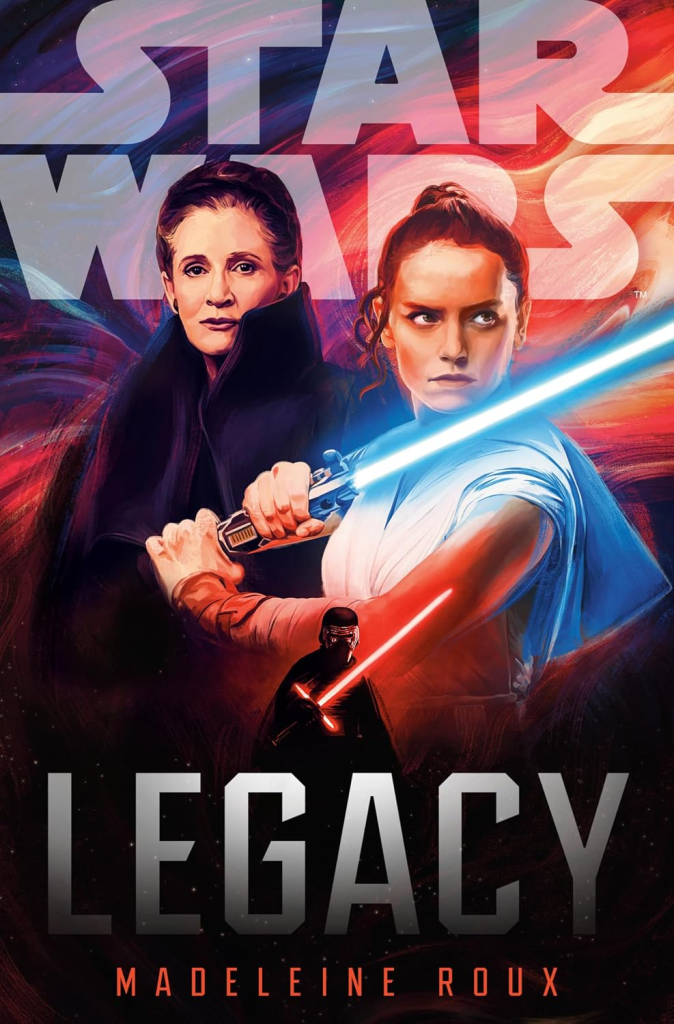
Legacy, by Madeleine Roux. This is the one that I was really looking forward to. It takes place between The Last Jedi and The Rise of Skywalker, and focuses on Leia and Rey. Rey has the broken Skywalker lightsaber and feels the need to fix it so she can use it to help the Resistance against the First Order. She’s also feeling the pressure of being the last Jedi and expectations of saving the galaxy and rebuilding the Jedi Order (who wouldn’t?). She’s also reeling from her last encounter with Kylo Ren and their Force connection. She’s been pouring over the ancient Jedi texts she got from Ach-To and with the help of C-3PO, finds information about an ancient “forge” on the planet Tython. She decides to go there to find it and reforge the lightsaber.

She intends on going alone, or at least with C-3PO, but then Leia decides she’s going to go as well. Leia has got her own troubles, as she’s very recently lost both her husband and her brother, and continues to deal with the pain of losing her son to the dark side; not to mention the very precarious position the Resistance is in right now, after the narrow escape from Crait. But she feels responsible for Rey and feels she can help in some way, as she did (briefly) train as a Jedi with Luke decades ago. Rey is impatient and feels a little weird around Leia, considering the connection she has with Kylo, but Leia is insistent, so off they go.

Near the planet, they run into some refugees from Hays Minor that are in trouble with the First Order: two young men, Gavrin and Ziff. Rey and Leia help them get down to the planet, where Gavrin’s father, Lijar, is with more refugees who are posing as members of the Church of the Force. Lijar himself is an actual, enthusiastic member, who is excited about the Jedi temple remains nearby. Gav and Ziff, not so much. They’re fresh off a vigilante mission to assassinate a First Order Major who helped destroy their home of Hays Minor, a mission that went horribly wrong and Gav was severely injured. When they learn that Rey is a Jedi, they want her to help them seek vengeance on the Major and save one of their own, who is to be executed soon. Of course, Rey and Leia refuse, seeing the rashness and futility of such a move. This only proves to them that the Jedi are not what they are hyped up to be.

Rey and Leia focus on the Temple and what it can tell them. Rey is impatient to get to the “forge,” not seeing that it’s actually a metaphorical forge for the Jedi who went there. Because of Tython’s strong connection with the Force, both Rey and Leia have strange dreams and visions while there. Leia has dreams of what might have been, had she continued her Jedi training with Luke. She dreams of being a powerful Jedi who stops the First Order before they can destroy Hosnian Prime (in the dream, she literally pulls apart a Star Destroyer with the Force, lol). Rey, on the other hand, dreams of her dark self, the one we see in TROS, the one who embraces the darkness within herself. She also sees Ben/Kylo, a what-if scenario of if she’d taken his hand and joined him. In the meantime, they find some holotapes of the ancient Jedi who lived and worked there nearly 5,000 years ago. Something bad had happened here; a Sith woman came to the temple to try to come back to the Light; it’s not clear exactly what happened, but it didn’t work out well–there’s evidence of a battle.

Anyway, in the meantime, we see First Order Major Brilla Wolstenholme in the aftermath of her assassination attempt. She survived only because Kylo Ren happened to arrive at the right time and saved her. She wants revenge on the rebels who tried to kill her, but is sent to the planet Chespea, an awful backwater where she and others are nearly killed by the wildlife there. She embarks on a near-mad journey to find Gavrin and Ziff, but in the process finds out that the First Order actually set up the assassination attempt to show Kylo Ren–and herself, at first–as a hero, to boost morale. But after the parades, they tried to get rid of her on Chespea. This is a woman who willingly joined the First Order as a child and was a devoted disciple; their betrayal cut deep. At one point she could have just disappeared and started over, but she couldn’t let it go and went back to the First Order, who promptly arrested her.

Back on Tython, Rey keeps resisting the darkness within her, constantly running away from it instead of facing and accepting it. At one point she climbs up a cold, snowy mountain just to get away, but then finds she’s stuck there, near-freezing. Someone comes along to help her–the Force ghost of Anakin Skywalker (which was a suprise, but a welcome one, lol). He tells her that she’s not alone, that she can’t do everything alone. He himself tried to fix everything by himself, and well, it didn’t work. She manages to get off the mountain and back to Leia, and she tells her about her connection to her son. That secret had been a barrier between them.

Leia herself has had Force ghost visits by her brother Luke, who helps her with her dreams, but also tells her that Rey is Palpatine’s blood. Leia decides not to tell Rey right now, as she feels it would just push her further over the edge; she’s clearly dealing with her darker self in the place.

Anyway, it all comes to a head when Ziff, clearly the more angrier of the two rebels, goes off and makes a deal with the First Order: he’ll lead them to the Jedi and General Organa, but they have to bring the Major. There’s a confrontation with Ziff in the temple and he accidentally shoots a little girl named Meepka, and Rey, with a new confidence, heals her and the crystal at the same time. While she does this, she has a Force vision of putting Dark Rey and Kylo Ren away for now, telling them goodbye. She’ll deal with them later.

They manage to get away just in time, but the Major blows up herself and Ziff in the end.

There’s A LOT more than what I’ve written here, obviously, but I loved the book because it shows how Rey and Leia get to the point of their relationship we see in TROS. We go from the ending of The Last Jedi, with the Skywalker lightsaber broken and Leia and Rey not really knowing each other too well, to Leia being her Master, the lightsaber fixed, and Rey able to Force-heal. There are a lot of questions that hovered between these two movies that get answered in this book. Some may complain that that there’s not enough “action” or planet-hopping, but I like that these characters get to slow down a little bit and digest all that’s happened to them, and have all these important conversations. It’s much more character-driven, which are the kinds of books I really like.

If you like Rey and/or Leia, the Sequels, the Jedi, and character-driven books, this one’s for you. If you’re not a fan of these things, you may not enjoy it. But I loved it and give it:

4 out of 5 Lightsabers

Eyes Like Stars, by Ashley Poston. This is the first Star book presented as a “romance,” and at first I thought I probably wouldn’t bother reading it, since it’s not my area of interest. I do like some romance in my Star Wars; it would be super dull if there wasn’t any, but not necessarily front and center. Lost Stars by Claudia Gray is about the closest I want to come to Star Wars romance.

BUT–I was waiting for Legacy to come out and was slogging through Shadowfall, and felt I needed a quick Star Wars read. So I checked it out, and guess what? It’s pretty good! Definitely in the YA romance department, with two young people who are thrown together under dangerous circumstances and naturally start falling for each other. It’s a very fast read; I got through it in two days, lol.

Ardent (if that’s not a romance heroine’s name, I don’t know what is, lol) works on the tour ship that belongs to her father, and is content to live her life on its predictable decks and predictable itinerary. While docked in Coruscant one day, she looks for a holotape of a romance series in a seedy part of town, where things get very complicated. She finds the tape, but when she leaves she realizes she left with something that she didn’t pay for (an old astrolabe) and brings it back to the shop. When she gets there, a young man is in trouble with some First Order officers. They’re after an old broken lightsaber he has in his possession, and she helps him get away. Sian, the young man, convinces her to let him stow away on the ship to get away from them, and he’d disembark on the first stop. But of course, things don’t go according to plan.

I won’t go deep into plot details, but it’s fairly interesting. I like how Ardent has a latent talent for “astrogating,” like her mother–no computer navigation, just getting somewhere through hyperspace with their minds, kind of like the Skywalkers from the Thrawn novels, clearly using some form of the Force to find their way through the stars. Her mother had died when Ardent was eight years old while astrogating, and her father won’t let her use it or learn about it anymore. He’s put a lot of pressure on her to continue the family business, just assuming that’s what she wants. Her older brother had left three years prior, chafing at the confines of the ship and their father, so the business would fall to Ardent. She always thought that was exactly what she wanted, but since meeting Sian, she’s not so sure. And when her brother shows up again on the ship, acting weird and snooping around, things just get more fraught.

I think the love story hits all the marks that romance fans are looking for. I enjoyed the book, but again, it’s not really my thing. There were enough “Star Warsy” things in it to make it a fun read for me, but I’ll give this one:

3 out of 5 Lightsabers

Star Wars Canon Contemplation: Inferno Squad and Alphabet Squadron

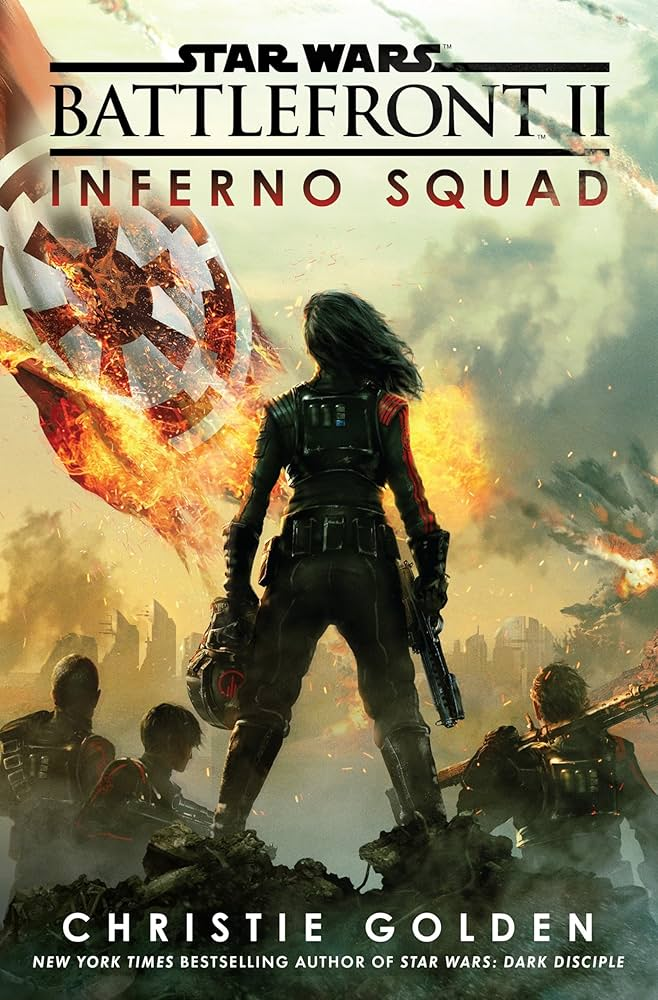
Hello friends, so after tearing through the Legends trilogy of Darth Bane, I decided to read some canon books. I’ve been avoiding the “pilot” stories because I don’t really care for those–I thought. But there are only a handful of canon novels left that I haven’t read, lol, so I had to broaden my view. I decided to start with Battlefront II: Inferno Squad. Of course, I haven’t played the game, but I’m always willing to give video game books a try if it’s good storytelling.

SPOILERS!!!!

So not only is this one a pilot story and a video game story, but it also has Imperial characters as the protagonists. Those are a lot of strikes for me, lol. I can’t completely root for Imperials to succeed, but I will concede that it’s interesting to get their point of view once in a while. Plus, this one’s written by Christie Golden, and I loved her Star Wars novel Dark Disciple, so off I went.

And you know what? It was a great read! I was pulled in from the very beginning as Iden Versio, a star Imperial TIE pilot, goes deep undercover with her comrades (called Inferno Squad) in the remnants of Saw Guerrera’s Partisans after his death, who call themselves The Dreamers (Save the Dream!). Their job is to find out who is leaking information to them and to eliminate the threat. Iden has to publicly “defect” from and denounce the Empire, citing the destruction of Alderaan as the inciting incident that turned her. This is painful for her, as she doesn’t believe that at all (which is why it’s so hard for me to root for Imperials, who see the destruction of an entire planet full of civilians a military necessity, while the destruction of the Death Star is a “terrorist” act, ugh.)

Anyway, she’s recruited by the Dreamers, while her comrades are playing parts that caused them to become members as well. They have to take part in a few missions where their fellow Imperials are killed, but they maintain their act. They get to know the members of the group, and while some aren’t that likeable (such as their leader Staven), most of them are just people who hate the Empire and want to see justice done. The group is led by Staven, but they have a “Mentor,” who advises and guides them, and is actually the person who is giving them the Imperial intel for their missions. Turns out this is Lux Bonterri, the son of Mina Bonterri from the Clone Wars, who was an Onderonian Senator for the Separatists. I vaguely remember Lux from a few Clone Wars episodes–I remember he kind of had a thing for Ahsoka?–but the rest of his history I’m not familiar with.

Anyway, Inferno Squad figures this out and routes the Dreamers, but not without some personal cost. They lose a member of their squad and have to commit acts against the Empire. And most of them also become, if not friends with, then friendly with some members of the Dreamers, giving them a different perspective of the war.

I think it was clever to have Inferno Squad go up against the remnants of Saw’s Partisans, because they were considered extremists and not an official part of the Alliance. I’m not a fan of Saw’s methods, so I didn’t particularly care what happened to them, even though I did like most of their members. And I wasn’t that sad when one of Inferno Squad’s members died because–well, Imperial. I felt oddly detached from all of the characters, lol. Despite this, it was a good, fast, entertaining read. Iden’s struggle to please her cold, perfectionist Admiral father made her a bit more sympathetic for me, and learning that she later defected to the Alliance after Operation Cinder redeemed her a bit in my eyes.

3.5 out of 5 lightsabers

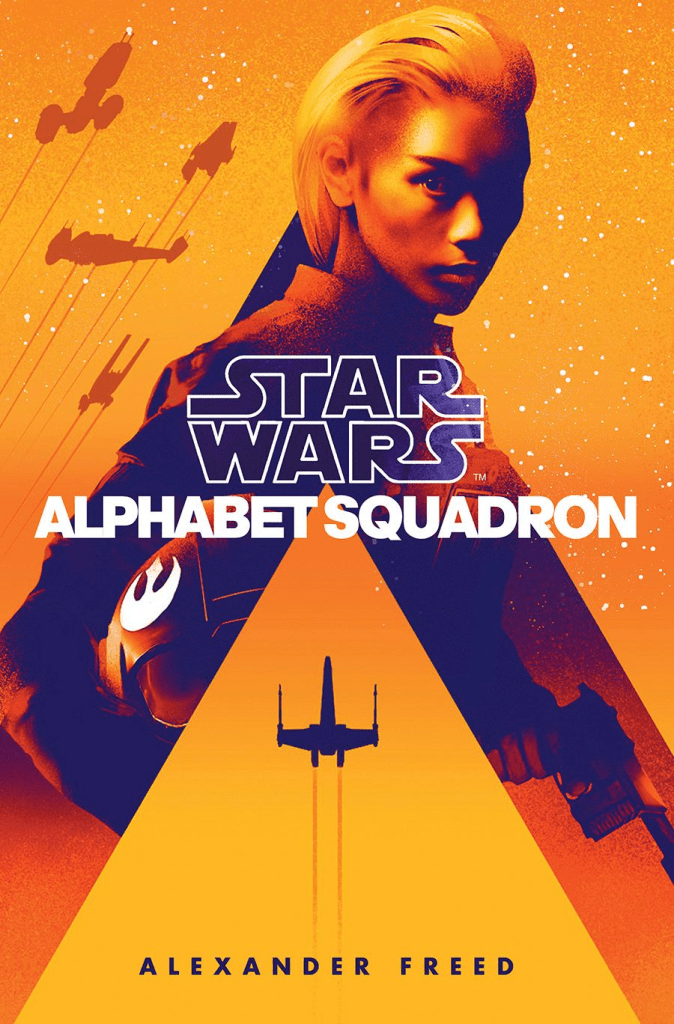
Let’s switch sides and go with a Rebel/New Republic pilot story. Although this one, Alphabet Squadron, features an Imperial defector named Yrica Quell. Quell leaves the Empire after Operation Cinder, supposedly in protest against its extreme cruelty. She spends some time at Traitor’s Remorse, a camp for Imperial Defectors, where she’s assigned a “therapy droid”–actually, an old reprogrammed Imperial torture droid called IT-O. But then Caern Adan, from New Republic Intelligence, recruits her to lead a squadron to find the Imperial TIE squadron Shadow Wing, which happens to be Yrica’s old squadron.

Together with an alphabet soup of ships and their pilots–Wyl Lark with his A-Wing, Chass na Chadic with her B-Wing, Nath Tensent with his Y-Wing, and Kairos with her U-Wing–Yrica must lead the squad in search of Shadow Wing. But Yrica must prove her loyalty and ability to lead, and it seems she’s got some secrets. Every member of Alphabet Squadron is damaged in some way and it takes some time–most of the book, in fact–for the squadron to form any semblence of a team. I found myself losing patience with all of them, especially Yrica, at some point or another, but it just means the author (Alexander Freed) did a great job writing them as flawed human beings who have been through a devastating war.

I tried reading this book some time ago on my Kindle, but after a few chapters I just couldn’t get into it. More than likely, I was distracted by other books, but this is a slow burn and a fairly dense read. I was determined to get through it, and once I slowed down and took it all in, I found that it’s a great book. For a “pilot book” it’s got a lot going on as far as characterization. While Inferno Squad was a fast, intense read about an Imperial pretending to be a defector, this one deals with an actual Imperial defector, who has to reconcile so many conflicting feelings and ideas about who she’s loyal to now. She desperately wants to prove herself so she can fly again, but her superiors don’t fully trust her yet, and her teammates don’t understand her. Yrica doesn’t make it easy for them, either, as she still thinks like an Imperial much of the time.

It was fun to see Hera Syndulla in the story, as Alphabet Squadron comes to be aboard her ship, the Lodestar. She leads an attack, along with Alphabet Squadron, on a planet called Pandem Nai, in the hopes of routing some Imperial Remnants, as well as destroying Shadow Wing. They manage to do the former, but not the latter–Shadow Wing gets away.

So I’ll be plodding my way through the next two books–Shadow Fall and Victory’s Price–to see how this team can actually come together and defeat Shadow Wing once and for all. Stay tuned.

3 out of 5 lightsabers

A Revisit to a Great Star Wars Book

If you have a blog on WordPress, you’ve probably noticed it’s been showing old posts that you wrote on this day in the past. It’s kind of fun to go back and see what I was reading and writing about in Star Wars one year, two years, 5 years ago. I also had another, separate blog where I wrote about the Star Wars books I was reading called, appropriately enough, The Star Wars Reader. I briefly do those kinds of post on this blog now, combining everything Star Wars here. But I thought I’d reblog this one about Claudia Gray’s Leia: Princess of Alderaan, as I’m eagerly awaiting the new Leia/Rey novel (Legacy, by Madeleine Roux) coming out at the end of July. Enjoy!

My Legends Reading Challenge: The Old Republic: Darth Bane–Path of Destruction

Spoilers Ahead!!!

Hello friends! You didn’t think I’d forgotten my Legends reading, did you? Nope, it just took me a bit to get this far. I had been reading Knight Errant by John Jackson Miller, and surprisingly, it was a terrible slog for me. I happen to like JJM’s other books–A New Dawn and Kenobi, specifically–and I was familiar with his rather plodding, and carefully and thoroughly-told tales. But this was on a different level. It was just so convoluted and out there and well, just plain boring, I had to put it down.

But this post isn’t about that book, it’s about Bane. I’ve heard many good things about this trilogy, breathless and excited praise, and I thought, yeah yeah, I’ll get there, calm down, lol. But as soon as I picked it up and started reading, I was enthralled. Bane’s rise from downtrodden cortosis miner, to Sith soldier, to star student at the Sith Academy on Korriban, to the most powerful Dark Lord of the Sith, is truly compelling and one of the most entertaining reads of the Old Republic books.

One of the reasons I worried about getting through the Old Republic section of the Legends books was that it was so heavily focused on the Sith. Normally, I don’t care to read books with the “bad” guys as the protagonists; I just have a hard time sympathizing with them as the main character (I did really like the Darth Malgus book Deceived, however). But as I was reading this book and watched Bane rise among the Sith and become disenchanted with the Brotherhood of Darkness and the new Sith ways, I found myself nodding along as he learned of the old Sith Masters and came up with the Rule of Two: “Hmm, yeah, he’s right, you know, they’re weak, they need to be destroyed.” LOL. I was actually rooting for him to become the strongest, most powerful Sith and exorcise any trace of guilt, pity, or compassion in himself to get there. And I blame the excellent writing of Drew Karpyshyn, who drew me into this world and into Bane’s life, and helped me understand where he came from and what he believed, and why (I also enjoyed Karpyshyn’s excellent Old Republic novel Annhilation).

The book focuses almost entirely on Bane, with only a few other, brief points of view, and I think this was an excellent decision on the part of the writer. I don’t mind multiple points of view, but if there’s too many, my attention will often become scattered. Once we enter Bane’s mind, we stay there for most of the book, and it’s an intense experience where the reader becomes enveloped in the fire of the dark side. Towards the middle to the end of the book, we see the Battle of Ruusan taking place between The Brotherhood of Darkness and the Jedi’s Army of Light, which becomes Bane’s chosen time and place to destroy the Brotherhood. The war has come to a terrible stalemate, and both sides are exhausted and near despair.

The Jedi in charge is named General Hoth (did he have a whole world named after him?), and the war has caused him to become desperate, angry, a little crazy, sliding toward the dark. It’s interesting to see the Jedi Order in this time period, what with the constant wars with the Sith over the centuries. We canon junkies think the Clone Wars caused a lot of harm to the Order, but these holy wars with the Sith were on a different level entirely.

Bane has had an insight that seems obvious when you think about it: the war between the dark and the light will not be won by armies; it will be won by the power of the Force. The Sith infighting over the millenia has only caused them to become weak, as seen by Lord Kaan’s forming of the Brotherhood: the Sith Lords have formed an alliance in order to defeat their enemy, with the idea that they are all equal; together they will be strong enough to defeat the Jedi. But alliance and working together as a whole is a Jedi trait. Bane has nothing but contempt for this; the very essence of the dark side is to be the strongest. The weak serve the strong. The Sith Lords have even dropped the title Darth from their names, as part of distancing themselves from the old ways. Bane brings the title back–he is Darth Bane, not simply a Dark Lord of the Sith.

Bane’s epiphany begins with his study of the ancient Sith texts in the archives during his spare time, when he’s not training with the other students. The Masters have no use for the old knowledge and see it as a waste of time, but Bane is fascinated. The Old Masters performed incredible, even impossible feats (I’m thinking of Darth Nihilus, who swallowed entire worlds [!!!]). Most of the new Masters believe it all to be myth and legend, but Bane isn’t so sure. He leaves the Academy to explore the old Sith tombs in the Valley of the Dead, but he’s disappointed to find nothing but dust and bones. But he’s not deterred. Instead of going to Ruusan with the other students to fight in the war, he goes to the planet Lehon and finds a Sith holocron with lessons on the dark side from none other than Revan himself. It’s here he comes up with his idea: the Rule of Two. There should be only one Master, to hold the power, and one apprentice, to crave it. When the Apprentice has learned all there is to know from the Master, they will challenge and kill the Master and take on their own apprentice, thus preserving the line. They will survive through secrecy, deception, and betrayal, the true Sith ways, and one day defeat the Jedi. It will take a thousand years, but it works, lol. At least for a while, as the Light always returns, and on and on. But I digress.

He destroys the Brotherhood through a Thought Bomb, an ancient, very dangerous Sith spell that usually destroys any Force user within its radius, Sith and Jedi alike. He tricks Lord Kaan into using it with the other Sith Lords, and they are killed, their spirits trapped in an agonizing netherworld, along with the Jedi General Hoth and his followers who sacrifice themselves to end the Brotherhood. Bane is now free to put his plan of the Rule of Two in motion. He meets a little girl named Zannah on the planet who he takes as an apprentice, and we’ll see their relationship in the next two books.

There’s a lot I haven’t mentioned here, including some characters like Githany, a fallen Jedi who shares an attraction with Bane and betrays him over and over (which he admires, lol); Sirak, a Zabrack Sith student that Bane challenges and loses to, and then later defeats; Sith Lords like Quorlis, Ka’sim, and Kopeck; Lord Farfalle, a dandy-like but noble Jedi who keeps General Hoth on track; and everything about Bane’s childhood at the abusive hands of his father, Hurst; his challenging life in the cortosis mines; and his brief service in the Sith army, all experiences that contributed to who he is and what he believes, as well as his strength and persistence. It was interesting to follow his journey, and I understand why he chose the dark side and the Sith rather than the light side and the Jedi: the Republic, who are allied with the Jedi, never did anything for him or his planet; and the dark side gives him a sense of control and power over himself and his life, which he didn’t have growing up on Apatros. It was an outlet for all of his rage, and I get that. But as Tech from the Bad Batch said to Crosshair: “Just because I understand you doesn’t mean I agree with you.” The dark is the dark, after all.

Anyway, these are my rambling and not very organized thoughts about Path of Destruction, which is probably my favorite Old Republic Legends book so far. I give it:

5 out of 5 Lightsabers!

Have you read this book? What are your thoughts on it? Let me know in the comments and we’ll talk about it!
Gorgeous Star Wars Art Books

Hello friends!

I mentioned in an earlier post that I sell used books online (Pango Books) and use the credits from sales to turn around and buy more books (because that’s what book lovers do, lol). I buy all sorts of books, but I’m especially enjoying Star Wars “The Art Of” books, because I don’t normally buy these for myself. They’re gorgeous, but usually expensive brand new (think $40-$50 each). I just got a slew of them, so I thought I’d showcase them here because I’m very excited about them (nerd!).

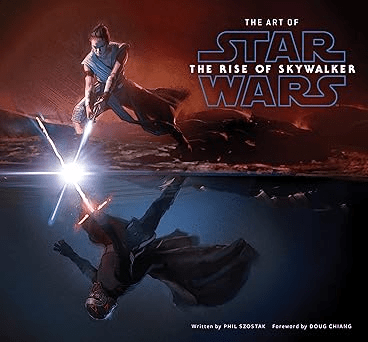
The Art of The Rise of Skywalker. I’ve had Force Awakens and The Last Jedi Art books for a while now (I found them in a used book store), so I finally got this one to complete the collection.

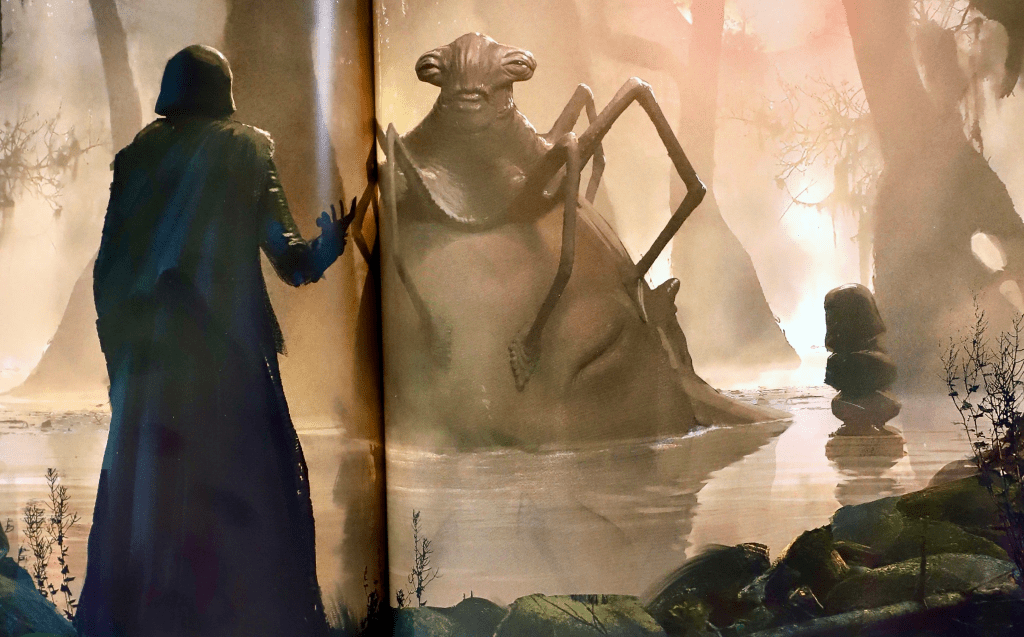
The Eye of Webbish Bog, a really cool concept that didn’t end up being used in the movie. Kylo Ren meets up with this creature at the beginning of the movie, when he finds the Wayfinder on Mustafar. There’s a creature on top of a giant head and he says cryptic, prophetic sorts of things.

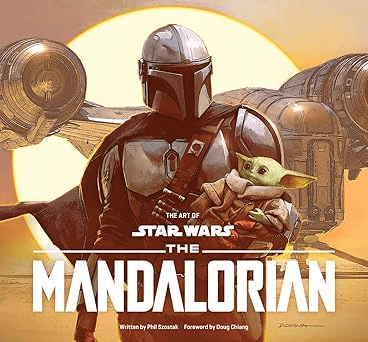
The Art of The Mandalorian Season 1. With The Mandalorian and Grogu opening today (May 22nd as I write this), I’m super-hyped for the movie. I rewatched all three seasons of the The Mandalorian in the past month or so, and have always loved the concept art showed during the credits at the end of each episode. These books show those works and more in these comprehensive art books.

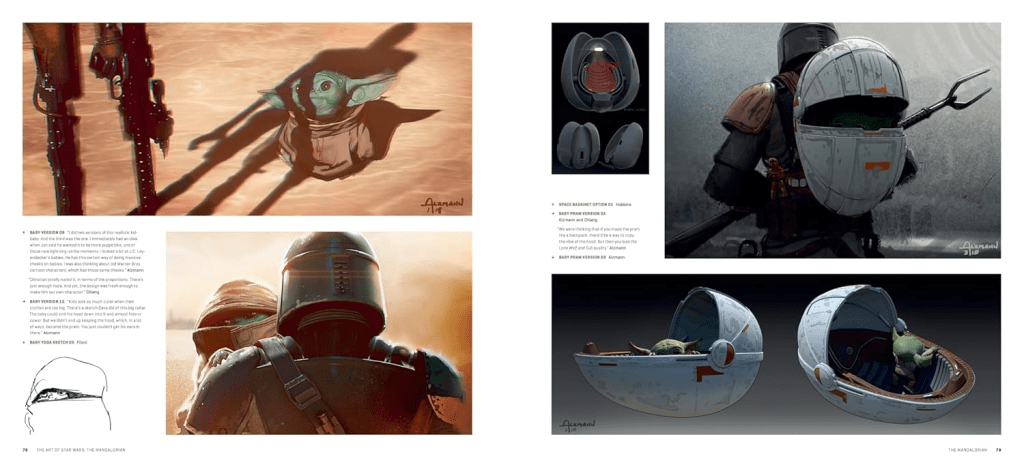
Some concept art for the first season of The Mandalorian. Grogu peeking out of the cloak is so cute. And a baby backpack?! So neat to see these ideas that didn’t pan out for the show.

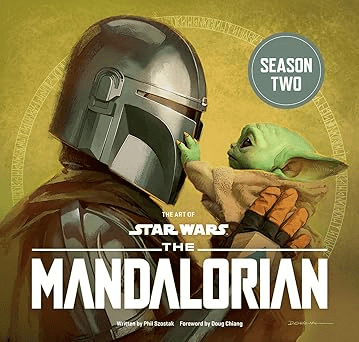
The Art of the Mandalorian Season 2. More gorgeous artwork from Season 2 of the show. I’m not sure if there’s a Season 3 art book, but you can be sure I’ll be on the lookout for anything (and from the movie!).

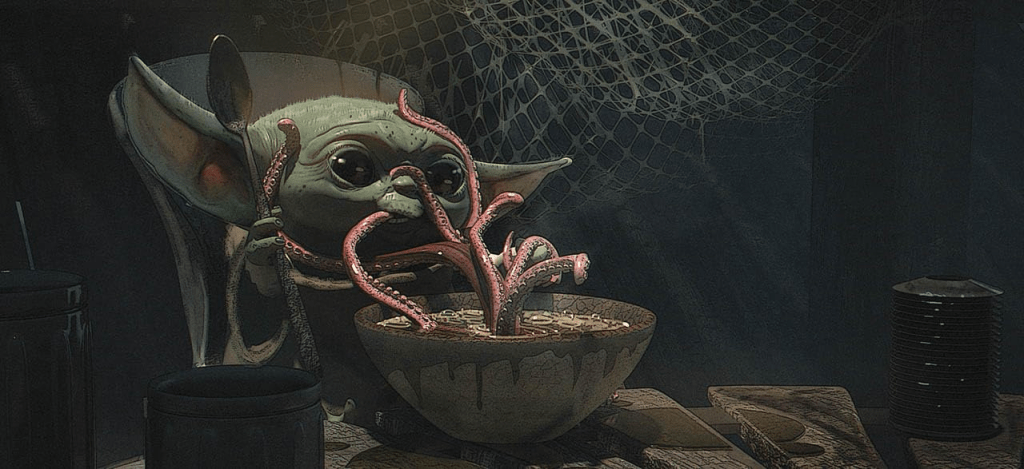
An adorable example of concept art of Grogu eating his soup on Trask.

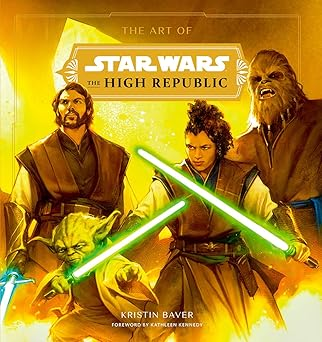
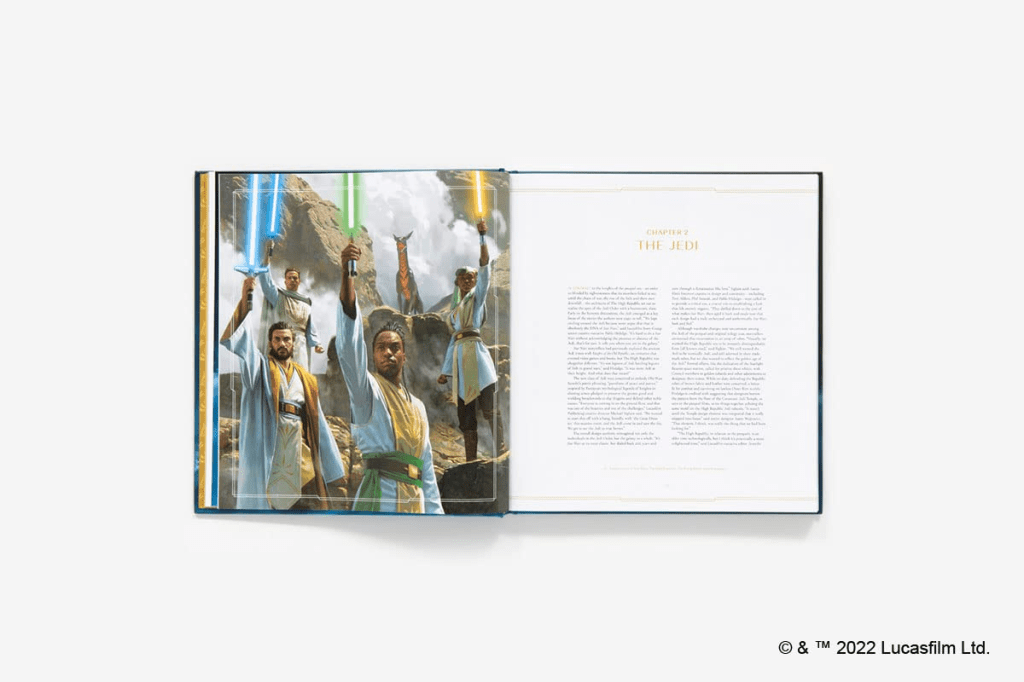
The Art of the High Republic. I adore the High Republic books, and this art helped me envision all the characters along the way. I don’t mind using my imagination when it comes to seeing the characters in my mind, but it doesn’t hurt to actually see what the creators had in mind. There’s a Volume 2 that I’d like to get eventually.

An example page from The Art of the High Republic, showing an image of the Jedi (and Ember!).

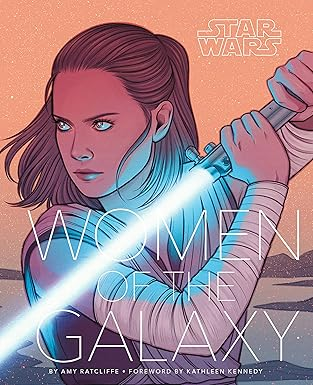
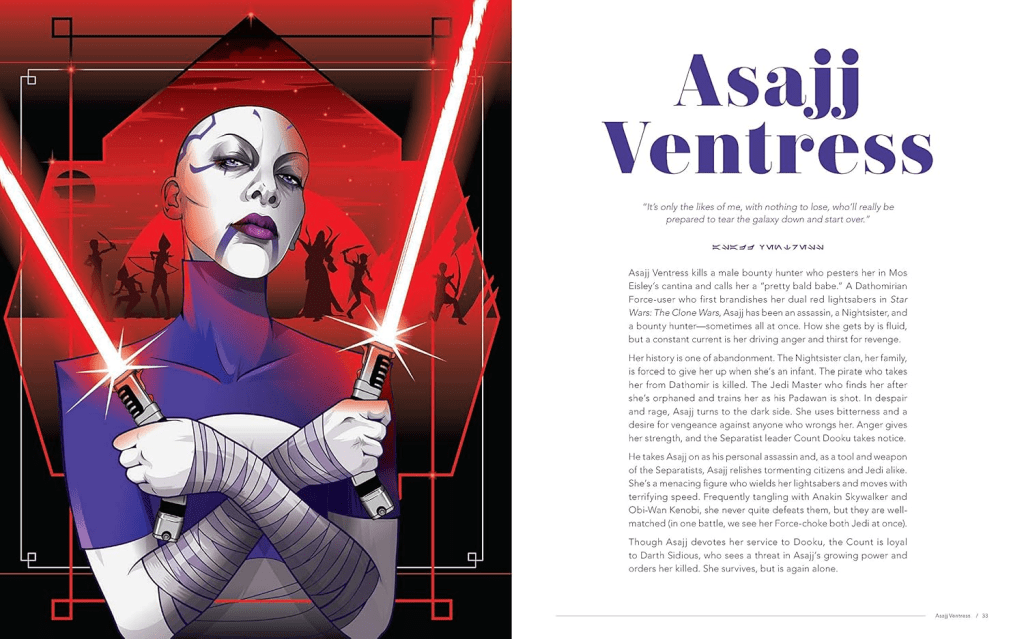
Women of the Galaxy. This one isn’t really an “Art of” book, but there’s depictions from various artists of the women characters in Star Wars, even a couple I’ve never heard of (mostly from comics). There’s artwork of the character and a few paragraphs (a few pages for the main characters like Leia, Padme, and Rey) about that character. It’s only up to The Last Jedi, so I’d like to get the updated version I’ve seen with Ahsoka on the front.

An example page of Women of the Galaxy, showing Asajj Ventress.

I could spend hours leafing through and reading these books. There’s so many other “Art of” books I’d like to get: Solo, Rogue One, Andor, and the ones I mentioned above. I love any kind of Star Wars art; it may be time for another Fan Art post. Stay tuned!

Also stay tuned for my thoughts on The Mandalorian and Grogu (I plan to see it sometime in the next week), and also on Darth Bane: Path of Destruction, my latest Legends read (I’m loving it and ripping through it!).

Star Wars Canon Contemplation: The Rise and Fall of the Galactic Empire and Propaganda

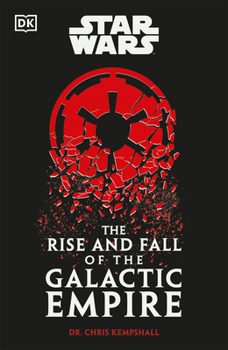
Hello friends! I just finished reading two Star Wars books that are set up as “non-fiction” in the galaxy far, far away, and I have to say they are both excellent. The first is The Rise and Fall of the Galactic Empire by Chris Kempshall, and the other is Star Wars Propaganda by Pablo Hidalgo.

I started reading this sometime last year, but put it down after a few chapters for some reason; I was probably distracted by other books at the time. But I recently watched an interview with the author by Star Wars Explained and I was enthralled (I’ll link to the interview below; I highly recommend watching it). So I went back to the book and began reading it from the beginning again, and loved it.

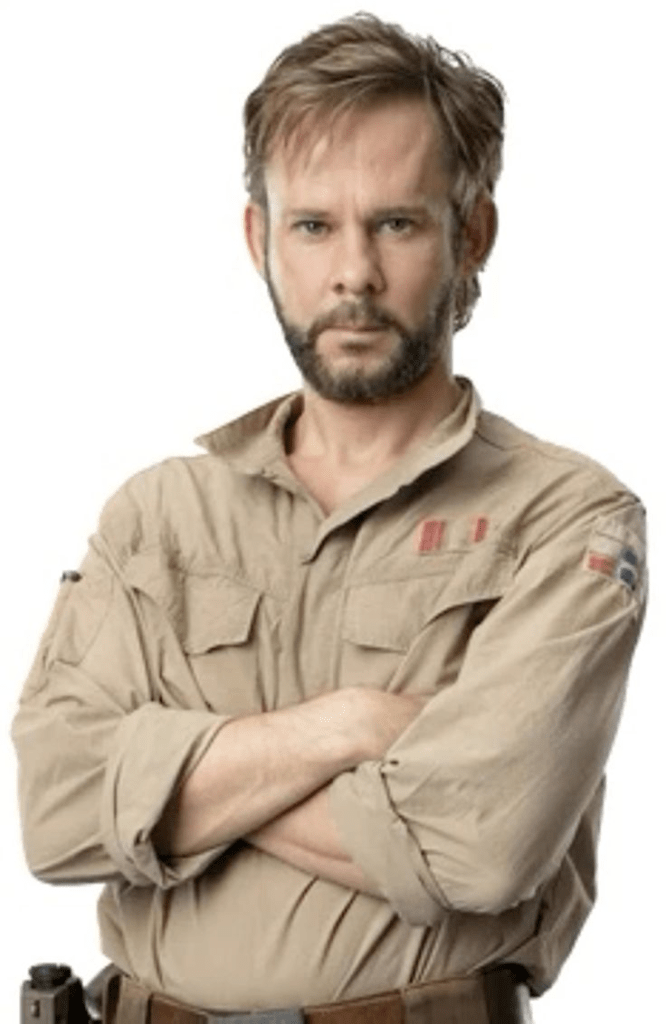
The book is set up as an examination of the Galactic Empire, its rise, fall, and repercussions into the New Republic and the Rise of the First Order, written by Beaumont Kin, who you may or may not remember from the Sequel Trilogy. He was played by Dominic Monaghan, and his most important line was probably, “Cloning, dark magic, secrets only the Sith knew!” when confronted by Palpatine’s return. It wasn’t directly stated in the movies, but in comics and books (like Shadow of the Sith by Adam Christopher–another excellent book, check it out) he’s presented as an historian. He studied the history of the Sith in particular, and taught history until he joined the Resistance after the destruction of Hosnian Prime by the First Order. He’s writing the book in the ruins of Exogol, of all places, after that great battle. What a gloomy place to be working! But there are troves of files there that he can access, about the Sith, the Final Order, as well as the Empire.

Kin begins with Palpatine, of course, what is known about him, how he rose to power, his Sith origins. We, the audience to the story, know a lot about him and the events that took place, but we have to remember that most of the galaxy in this fictional world did not. Palpatine was just a man who gained enormous power and built a juggernaut of an Empire. Only later does the galaxy get an idea of the dark, mystical powers that contributed to his ascent. But Kin’s point here is that yes, he was a Sith, but he was also a man–a greedy, selfish, narcissistic, but patient and cunning human being who pulled the wool over the galaxy’s eyes. And that is what scares him the most: you don’t need to be a Sith to become a tyrannical despot. It can happen again. And again, and again. He hopes that his history of the Empire–and later, the First Order–is a lesson the galaxy can learn about preventing such a thing from happening again.

It’s a big book–432 pages–and he goes into details about the organization of the Empire, their ideology, the ISB, Compnor, the military, the Imperial Senate, the role of Darth Vader, the Moffs (Tarkin in particular), and how they eventually responded to the rising threat of the Rebellion, their successes and their ultimate failures.

Many of the characters we are familiar with are referenced in the book, characters and events not only from the movies, but from comics, books, TV shows, and any number of other media. There are a ton of footnotes, referencing the various Imperial or Alliance files and documents that he’s sourced, and occasional commentary. Towards the end of the book, when he discusses the rise of the First Order and his participation in the Resistance, he shares his personal feelings about his terror, his despair, his hope for the future. Mostly, he urges his readers, and the galaxy at large, to support each other, to stand up for each other when the next challenge arises.

I loved that this book was written by an actual historian, who understands the patterns of history, and how to go about making some sense of them. This fictional “nonfiction” book is a great read, and I highly recommend it.

Beaumont Kin, Star Wars historian.
The historian behind the historian, Dr. Chris Kempshall. Is it me, or do they look fairly similar? Alter egos!

Here’s the interview with the author on Star Wars Explained:

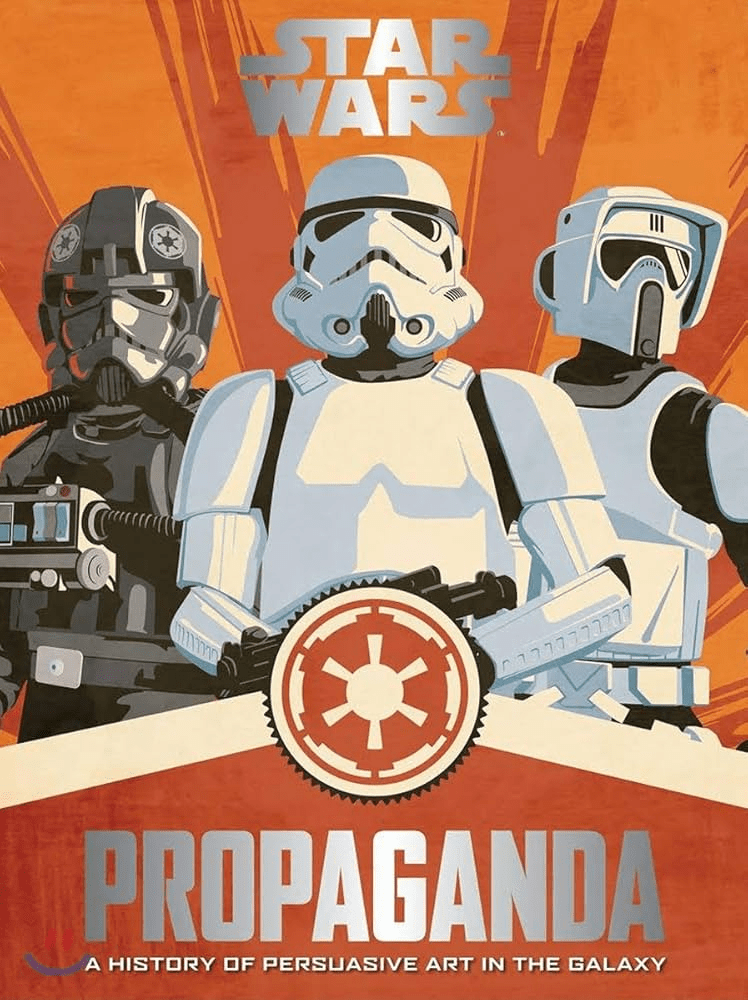
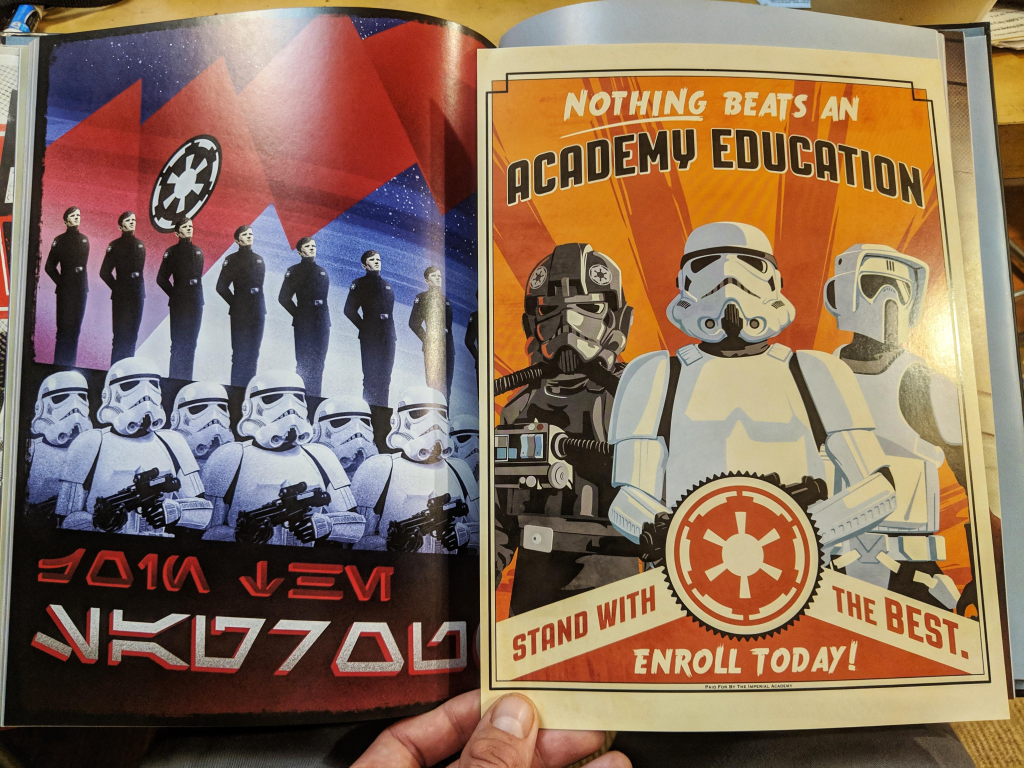
As I was getting close to finishing up Rise and Fall, I got this beauty (with credits from selling books on Pango Books, woohoo!). It’s also presented as a “nonfiction” book in the Star Wars galaxy, examining propaganda art by both the Republic and the Separatists during the Clone Wars, and the Imperials and the Rebellion during the Galactic Civil War (and a few from the First Order and the Resistance). It comes in a slip case, with the Rebellion symbol in silver on the black front cover, and the symbol of the Empire on the back. It was supposed to come with ten posters, but because it’s a used book, I didn’t get those. 😦 Oh well. The art inside is enough, though, and is awesome.

Each poster is accompanied by a paragraph about it, who in the galaxy created it and why, and what the poster was trying to accomplish with it. Sabine Wren, the only artist I’m familiar with, is mentioned in the Rebellion section. There’s a foreward at the beginning of the book by a famous Bith artist who did early propaganda work for the Empire, but came to regret his work later in life. At the end of the book is a list of all the in-universe artists and where they were now, if known.

In the real world, Pablo Hidalgo is the author of the book, who has become a kind of archivist of Star Wars lore, and he did a great job on this beautiful book, as well as the real world artists who created the posters.

Just a small sample of the posters inside the book.

Check out these books if you can, they’re a fantastic addition to any Star Wars library.

Star Wars Canon Book Thoughts- Outlaws: Low Red Moon

Hello friends! It’s been a bit, as I’ve decided not to do the monthly entertainment update for a while. What I’m going to do instead is post about new Star Wars books or shows and what I think about them as they come up. (I will also continue to post my Legends Reading Challenges; I’m working on Knight Errant right now). The latest canon novel is Low Red Moon, based on the video game that came out last year.

As you probably know, I’m not a gamer. I almost decided not to read the book out of lack of interest. But this is a prequel to the story of the game and so, theoretically, you don’t need to know anything about Outlaws beforehand. And I heard there were cameos by Fennec Shand and Q’ira, so my interest was piqued. Also, I liked Mike Chen’s earlier book, Brotherhood.

So, I got the book, and watched a few story videos of Outlaws just to get a feel for the characters. And just so you know, if you plan to read the book or play the game, there are

TOTAL SPOILERS AHEAD!!!!!

So, in the game, a man named Jaylen Vrax and his BX Commando droid ND-5 work with a woman named Kay Vess on various missions in the criminal underworld. This book takes place before they meet Kay, and the very beginning is about ten years before.

We meet the Barshas, a wealthy and powerful family who own Barsha Corp., which builds engines for various kinds of ships. The parents are Nytyl and Roisem Barsha, who are pretty terrible people, and two kids: Jaylen, the natural child of Nytyl and Roisem, and Sliro, the child of Nytyl and…some other woman we don’t meet. The parents favor Jaylen, of course, and treat Sliro horribly, particularly Roisem, who always reminds him he’s only “half a Barsha,” and Jaylen is the heir. Jaylen sees this, doesn’t really like it, but also accepts it as normal behavior. He’s fond of his brother Sliro and tries to maintain a good relationship with him, but it’s clear Sliro is resentful, of Nytyl and Roisem, and perhaps even Jaylen, on occasion. Jaylen is groomed to take over Barsha Corp., while Sliro is found a postion in the Empire, which has been in power for a few years now.

Jaylen Barsha/Vrax

Jaylen decides he wants to run the company with Sliro’s help, but before he can announce it, his family is arrested on charges of corruption and exiled to a family compound on an island on the planet Gus Treta while the Empire decides their fate. While there, he tries to find out what happened to Sliro, who never showed to the official announcement, but there’s no word on him. They get the news that the Empire will not imprison them, but all their holdings are confiscated. That’s when the droid shows up.

ND-5 is a former Separatist Commando droid, created for battle and assassination. He has been reprogrammed by…someone, to kill the entire Barsha family. And he does, all except Jaylen. With another droid’s help, Jaylen manages to put a restraining bolt onto ND-5 to prevent him from killing him, but not before he witnesses the murder of his family. He manages to escape the planet with ND-5, unsure of what is next.

Nine years later, Jaylen Barsha is now Jaylen Vrax. ND-5 is still with him. They’ve been travelling the galaxy, looking for work in the criminal underworld to stay afloat. At this point, along with the restraining bolt, there’s a fused chip in ND-5’s neural core, and I’m kind of confused about the state of these things and why Jaylen has been lying to ND about it for years. Obviously, he was at first terrified that the droid would kill him, but along the way it turns out that, with adaptation and learning experience, he probably wouldn’t, but Jaylen wants ND-5 completely under his control, and so refused to remove the restraining bolt, and lies about his prior programming taking over, etc. etc. It was hard for me to keep up, lol. But basically, ND-5 is completely loyal to Jaylen, even wanting to prove his loyalty again and again, but Jaylen refuses to remove the bolt under the lie that if he does, ND might revert back to his original programming and kill him. He keeps telling ND-5 that they’re partners, but clearly Jaylen is using him for his own purposes. And in all fairness, the droid did murder his family, which is something Jaylen can’t get out of his mind. But you also feel bad for ND, because he just wants to be Jaylen’s partner and basically be his own “person” and make decisions on his own. So there’s a tension there.

A central part of the book is about ND-5’s restraining bolt, ND-5’s push for autonomy, and Jaylen’s reluctance to give up control.

Anyway, in the early years Jaylen tried to find Sliro and find any information on who might have sent the droid to kill the Barshas, all while trying to make a name for himself in the criminal underworld. Early on, he found a code name–Low Red Moon–associated with the slaughter of the Barshas, but could find nothing further for years. After nine years, he decided to let go of the past and focus on the future. This led to a mission with Fennec Shand, one that got him a datapad with a list of ISB agents and their code names, a list he could sell or trade in the criminal underworld to get himself ahead. The mission is a success, but the list contains a name–Low Red Moon. He’d almost forgotten about it, but now he wants to follow up and track this agent down.

The name attached to the code name is Madel Nureth, who they track down. She turns out to be an accountant who works for the ISB, cleaning up financial records between the Empire and the criminal syndicates. Jaylen and ND find her and follow her, as she’s heading to a meeting with Crimson Dawn. But before they can confront her, they’re incapacitated by a Hutt agent, who’s also following her. But then the Hutt agent is incapacitated by someone else, a shadow. The shadow takes Jaylen, while Nureth takes ND-5.

Turns out, the “shadow” is a Zabrak named Mill, who saves Jaylen’s life by killing the worm that was injected into his body (ew!). It’s not stated in the book at all, but Mill is a character created by the author in his other book, Brotherhood. She was a young Jedi Padawan who accompanied Anakin on a mission, but what she really wanted to do was to study medicine and heal. There are clues in Low Red Moon that she is a Jedi, but I wouldn’t have remembered Mill from Brotherhood if I hadn’t seen it mentioned elsewhere in a review of the book. Anyway, she and another former Jedi named Vivert travel the galaxy, collecting medical equipment and trying to help people. She doesn’t tell Jaylen they’re Jedi, but he’s bewildered by their altruistic motives. Vivert is being held by Crimson Dawn for…reasons, it’s all very complicated and has something to do with a bacta tank owned by a Hutt, a bacta tank they want, but now the Hutts want the tank back and to kill Vivert because she knows a Hutt is sick and vulnerable, and somehow Crimson Dawn is involved, and….I don’t know, I give up, lol.

So Jaylen and Mill decide to go to Crimson Dawn, for several reasons: Jaylen still wants to find Madel Nureth and how she’s involved with Low Red Moon, and to get ND-5 back, and also to offer the datapad to Crimson Dawn to get on their good side and further his underworld career. Mill just wants to get Vivert back, and maybe to get the elusive bacta tank. So in they go to meet with Q’ira, to offer her the gift of the ISB list. Meanwhile, Madel Nureth is cooking their books, and messes around with ND-5, who is in off-mode, or something, and finds out that this is the droid that she was ordered to send to Gus Treta to kill the Barshas.

ND-5 with his green duster.

Then the Hutts show up causing some trouble, wanting Vivert and the bacta tank. Vivert escapes and meets up with them, and they hatch a plan: Jaylen will smooth things over between Crimson Dawn and the Hutts, thus securing the trust of both syndicates; Mill will go with Jaylen, while Vivert and ND-5 will deal with Madel Nureth. There’s some details concerning who gets the datapad, and who gets the bacta tank, and somehow proving to the Hutts that Vivert is dead, but my brain is fried by this point, lol. Let’s just say the negotiation goes well, peace is restored, Jaylen and Vivert go back to her ship, and ND-5 and Vivert find Madel Nureth. ND-5 ends up killing Nureth, because she knows who Jaylen is. Even now, ND-5 is protecting Jaylen, and he doesn’t even have the restraining bolt on (can’t remember why, lol). But Nureth had unlocked some files in ND-5 that neither Jaylen nor ND-5 had access to, and these files revealed who it was that had ordered Nureth to send ND to kill the Barshas. And it turns out the perpetrator was…(drumroll, please!)–

Sliro.

Big surprise. I already knew this from watching some of the Outlaws story game play, but I didn’t mind knowing. Even if I didn’t, it’s pretty darn obvious throughout the book who sent ND-5. And Jaylen, smart in so many ways, never suspected. It throws him for a loop. Jaylen Vrax decides to seek vengeance for Jaylen Barsha, and to use his new underworld status to help him in that. And to keep lying to ND-5, about the restraining bolt, and his programming. Even though Nureth told ND that Jaylen was lying to him, the droid refused to believe it.

And so that’s where they are at the start of the Outlaws game, where Kay Vess gets involved with Jaylen’s schemes to destroy Sliro. Kay becomes very fond of ND, and in the end, after Jaylen kills Sliro, she removes the restraining bolt so ND can finally kill Jaylen–not out of programming, but because he wants to be free of him. There’s an epilogue in the book, showing ND with Kay and her little friend Nix on board her ship (their ship, I guess), and everyone’s happy. ND has found a family, of sorts, and can make his own decisions and be his own person.

So, I liked the book, despite being a little confused at times. I liked the cameos by Fennec, Q’ira, and Mill. I like ND-5. Jaylen is more complicated. Like ND, he needs to reinvent himself, learn and adapt after his original purpose is taken away from him. But unlike ND, those pesky human emotions get in the way. He’s traumatized by his family’s slaughter, naturally. He’s stuck with the droid that did the deed, and no matter how much ND proves his loyalty, Jaylen can’t let go of his need for control. One could argue that ND-5 is “only a droid,” but I think we Star Wars fans know better than that.

My rating: Three out of Five Lightsabers

A Peek At My Star Wars Shelves

I promised in my last post that I’d share some pics of my Star Wars shelves, probably as an addition to my usual Entertainment Update. But this seemed worthy of its own post, so let me introduce you to my most prized possessions, lol.

So here are my two Star Wars shelves. The tall one contains all the canon books and references, and the smaller one is my Legends shelf. (The shelf to the right of that is my husband’s shelf of marbles, dice, old bottles, and other shiny, fun little ephemera that he fancies).
So here’s the top of the canon shelf, which contains almost all of the High Republic novels (adult and YA). Trials of the Jedi, the last book, I had to put on the next shelf down. I put my Acolyte Funkos of Yord, Sol, and Osha here. Though they’re not in these books, they’re a part of the later High Republic as seen in The Acolyte. I love my “life-size” Grogu; the little diorama is something my husband found for me at a flea market. A thrift shop framed photo tops it off.
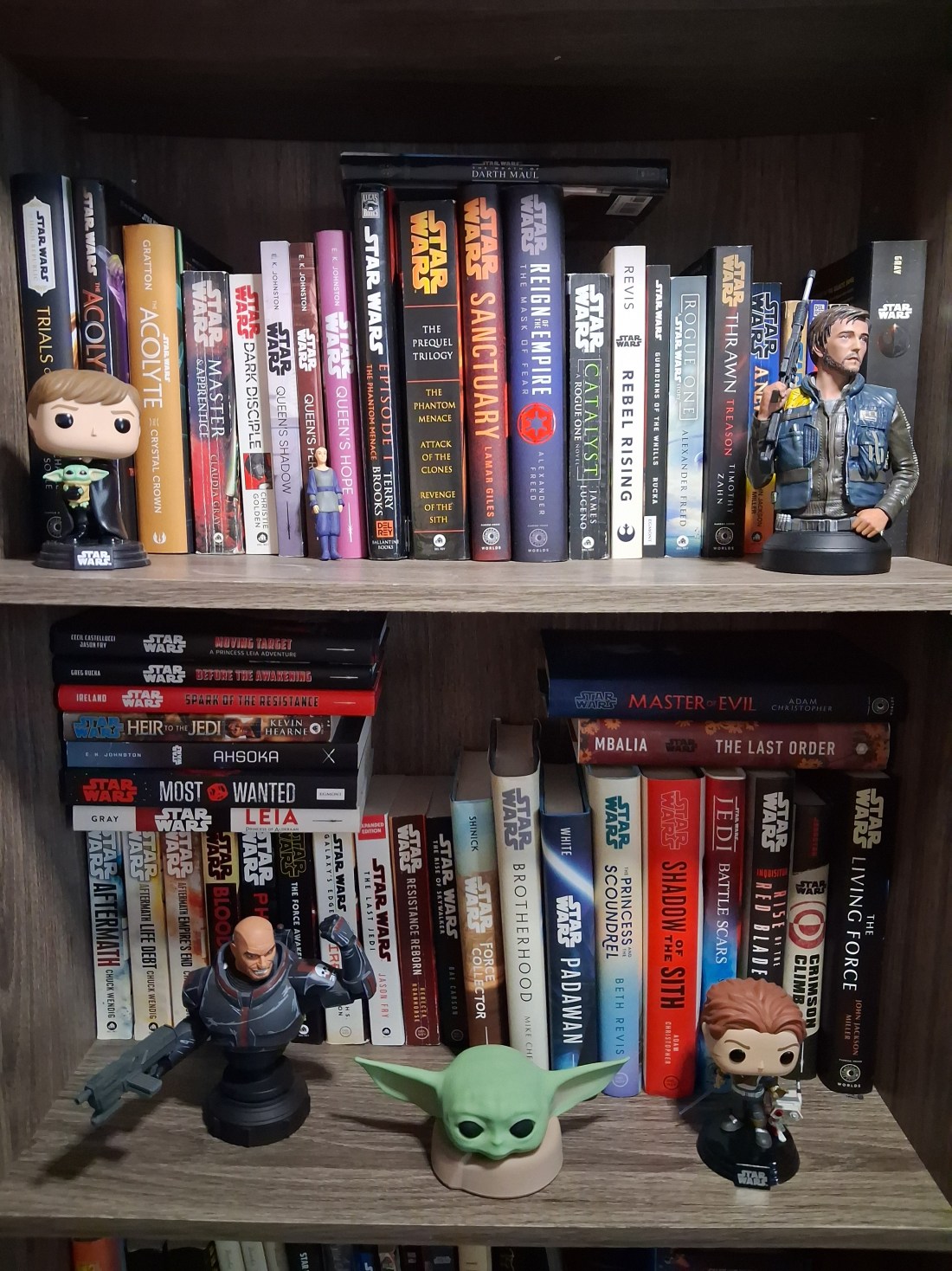
The second and third canon shelf. Most of the paperbacks are in chronological order, and the hardcovers are new ones mostly shelved in release order (but not always, lol). It’s getting to the point where they go wherever I can find room. I love my Cassian and Wrecker figures; Cassian is near Rogue One books, and Wrecker is where I could fit him. I have Cal Kestis near the Battle Scars book, and if you look closely, you’ll see a tiny Padme figure next to the Queen books. The Luke with Grogu Funko is just adorable.
Fourth and fifth canon shelf. The fourth has odds and ends, like short story collections, Ian Droescher’s Shakespeare collection (the original trilogy), Carrie Fisher’s The Princess Diarist, journals, cards and games, and canon books I have yet to read (Thrawn, Ronin, Tarkin, etc). Good place for my Rey Funko, and beloved Hello There Obi-Wan. The bottom shelf has magazines (SW Insider as well as others), comics, and reference books. Grogu is everywhere, of course, and I love my Rey figure with BB-8.
This shelf is newer, since I started my Legends Reading Challenge. I get the books as I come across them or when I get to the book to read, so most of these aren’t read yet. I’m still in the Old Republic phase, but getting close to finishing that one. One mug contains some SW Topps cards I’ve come across, and the other holds SW bookmarks. And naturally lots of little Grogu knicky-knackies.
Bottom two of Legends shelves. Some YA or middle grade Legends books, some different-sized Clone Wars books, and an Essential Legends of Shatterpoint (The Essential Legends are gorgeous, but I’m going to stick with the original release covers from now on). And all the rest of my figures and knick-knacks. I love my big BB-8, and the Obi-Wan figure from his show. Also Cloud City Han and Leia figures in the back my husband got me. And a big, BIG Mando, lol.

And that’s it so far. 🙂 These shelves will continue to grow and become stuffed with each new book, and I’ll probably have to find a place for the figures and Funkos. I’ve stopped getting the toys for the that reason–I just don’t have the room, and I’d rather save it for the books.

Share your Star Wars shelfies if you have them, I’d love to see them!