
Clever! I did not know that.

Did you hear it? I’ll have to rewatch and listen…

Clever! I did not know that.
Did you hear it? I’ll have to rewatch and listen…
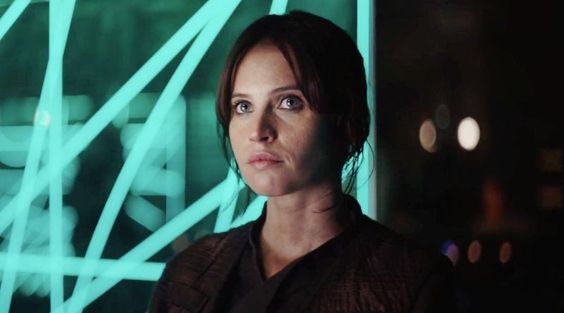

I just finished reading the Rogue One novelization by Alexander Freed, and I have to say, though I enjoyed it, I’m not sure if “book Jyn” is the same person as “movie Jyn.”
Here’s what I mean. The same events happen to her as in the movie, the same origins, and the same end. Everything’s the same on the outside. On the inside of Jyn’s mind and heart, however, I saw a different person than I saw onscreen.
In the movie, Jyn is an emotionally distant criminal with no allegiances. She’s hurt and bewildered by her mother’s death and her father’s and Saw’s abandonment. It makes her bitter and hardened, distrustful.

In the book, Jyn is not merely bitter–she’s a raging inferno of hate. She hates everyone and everything, but especially her father, Galen Erso. Seriously, if Jyn was a Force user, she’d have turned to the Dark Side almost immediately. She spits anger and hatred and distrust almost constantly, a tensed animal ready to spring into violence.
I was a little unsettled by this version of Jyn. While I perfectly understood it, it was at odds with the Jyn I saw portrayed by Felicity Jones onscreen. Maybe it’s Jones’ lovely face that made me feel there was more hurt and loneliness behind her heart than hatred. A silly tendency, maybe; but Jones is a wonderful actress, and I seriously doubt she misunderstood the character.
That means the author decided to go deep into Jyn’s psyche to tell the story, and what he apparently found there caused him to create a character that constantly wanted to blow things up. Kind of like an unhinged, female Poe Dameron.
I’m not saying Alexander Freed is a bad writer, or did the wrong thing. On the contrary, he created a pretty convincing psychology of Jyn based on what he knew of the character. In the book, Jyn is not only damaged by her past experiences, but traumatized. He thought about a sweet 8-year-old girl who watched her mother get murdered, her father leave with the Imperials, and who was then delivered into the hands of a violent guerilla extremist who had no interest in coddling her, despite his love for her–or even because of it. What kind of person does that create?
Someone who compartmentalizes her pain to survive, and stuffs all her emotions into a “dark cave” that she rarely explores. It’s the cave she hid inside as a child, waiting for someone to find her. Over the course of the book, that cave keeps opening up to her little by little, a bit of light here and there to illuminate everything she’s trying to deny or forget. When she sees the holographic message from her father, it puts her into a tailspin; she doesn’t know what to think of her father anymore:
My father is alive. My father is a traitor. My father is building a weapon to destroy worlds. My father is a hero. My father is a coward. My father is a bastard. Galen Erso is not my father. Galen Erso didn’t raise me…

The girl’s a tad messed up. Who can blame her? However, over the course of the book, that dark cave of emotions keeps getting pried open more and more, until, at the end of the story, when she and Cassian and the Rogue One crew are on their way to get the Death Star plans come hell or high water, it’s wide open and illuminated. She’s accepted everything that’s in there, is at peace with it, and herself–she’s now a woman with a purpose, doing what she’s meant to do. When the end comes,
…The world grew brighter, emerald at first and then a clean, purifying white. In Jyn’s mind, the cave below the broken hatch was illuminated with the strength of a sun, and then the walls turned to dust and there was no longer a cave but only her spirit and heart and everything she had ever been: the daughter of Galen and Lyra and Saw, the angry fighter and the shattered prisoner and the champion and the friend.
Soon all those things, too, burned away, and Jyn Erso–finally at peace–became one with the Force.
At the end, book Jyn and movie Jyn are the same, and the differences don’t seem to matter too much.

I always enjoy reading the novelizations of the movies, because it gives us a chance to see into a character’s mind a little bit more than a movie can do. This one was more uncomfortable than most, but still worth a read.
Check out my Women of Star Wars post on Jyn Erso here.
Did you read the Rogue One novelization? What did you think? Comment below and we’ll talk about it!


![J.J. Abrams’ Star Wars: Episode VII: Title TBD hits theaters during the Christmas season next year and, with more and more teases for the film being released on the Internet, fans of the original trilogy are hoping that the light side of the Force guides Abrams’ hand as he crafts the next chapter of the […]](https://i.pinimg.com/564x/35/71/c9/3571c9efe3d7a178c406b01296ecdf42.jpg)


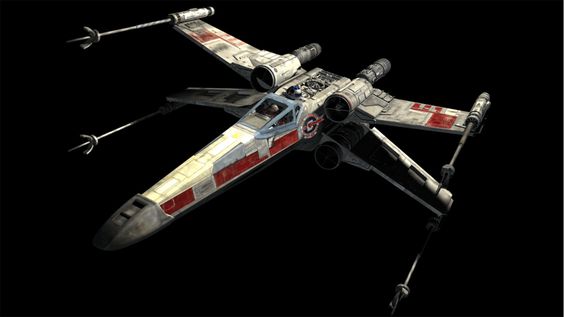
I like Han Solo. Not only did he make that Kessel Run, but he got out of that asteroid field in Empire. But for someone who can barely drive a car, it’s hard to choose. They’re all great.
If there’s someone not on the list, put them in the comments below!


I happen to be one of those people who loved Solo: A Star Wars Story. I don’t necessarily think it’s crucial for the canon (unlike Rogue One, another movie I loved even more), but it was a fun, entertaining heist movie.
One of the more interesting aspects of the story was Qi’ra, young Han’s love interest. They grew up together on Corellia, as orphans/runaways who worked for Lady Proxima, an alien crime lord. It was a tough life, but they dreamed of something better, of having their own ship and not living under anyone else’s thumb. Despite their crappy life, they had a youthful innocence that allowed them to dream.
The two hatched a scheme to escape, and, long story short, Han got out. Qi’ra didn’t.

It’s the experiences of these two young people that determines the choices they make later, and how those experiences define them.
Han went into the Imperial forces to become a pilot, but decides it’s not the life for him. Plus, he couldn’t follow orders. Big surprise there. Despite seeing battle and war, it doesn’t ultimately change who he is–the irrepressible scoundrel we’ve all come to know and love. He’s still one of the “good guys”, even though he’s loathe to admit it.
When they meet again years later, Qi’ra recognizes this and knows they can never make a life together. Because she HAS been fundamentally changed by her experiences. We don’t get too many details besides dark hints and references to “the things she’s had to do” to survive.
For one, she’s beholden to baddie Dryden Vos for getting her off Corellia–at least that’s what I’m guessing–and giving her the opportunity to rise in his crime syndicate, Crimson Dawn. In addition to presumably killing indiscriminately at his command, I’m guessing she’s also had to sleep with him, something only hinted at in this Disney movie, but the assumption is there.
All of which leads to a self-loathing that she’s accepted, something that Han doesn’t recognize or accept himself.

Qi’ra sees that Han has retained some of his original innocence (and perhaps loves him more for it). When he tells her “You don’t know everything,” she replies, sadly but knowingly, “No. Just more than you.” For Qi’ra, there’s no going back to what she once was. There’s only forward, and it doesn’t include Han.
I don’t believe Qi’ra is evil. She’s damaged and she knows it; there’s no point in trying to be anything else. When she kills Dryden Vos, I believe it’s for two reasons: to save Han, out of a love she still feels for him; but also to elevate herself, for she has ambition as well. If this is how it has to be, then she’s going to be in charge. She’s taking back some power.
I do think she’ll get more than she bargained for dealing with Darth Maul. That’s a type of evil she hasn’t reckoned with yet.

Qi’ra’s abandonment hurts Han, and it partly shapes the man he becomes in the near future. No commitments, no attachments. Don’t trust anyone, a lesson he thought he’d learned from Beckett–until he meets a certain princess and her friends years later. That’s when we–and he–learns that he really is one of the good guys.
As for Qi’ra, I wish we could find out what became of her. The scene with Darth Maul was a teaser for a second film, but Solo’s disappointing reception (undeserved, in my opinion) may nip that in the bud. Too bad.
Qi’ra may have written herself off from the good guys, but even though I believe she’s more than capable of fending for herself against crime lords, I don’t think she truly has the heart to play serious with the bad guys–Maul, the Emperor, the Sith, the Dark Side, etc. Maybe I’m wrong. Perhaps we’ll never know.
Did you like Solo: A Star Wars Story? What did you think of Qi’ra? Comment below and we’ll talk about it!

Carrie Fisher likes to be picked up. She’s tiny, so it’s okay.


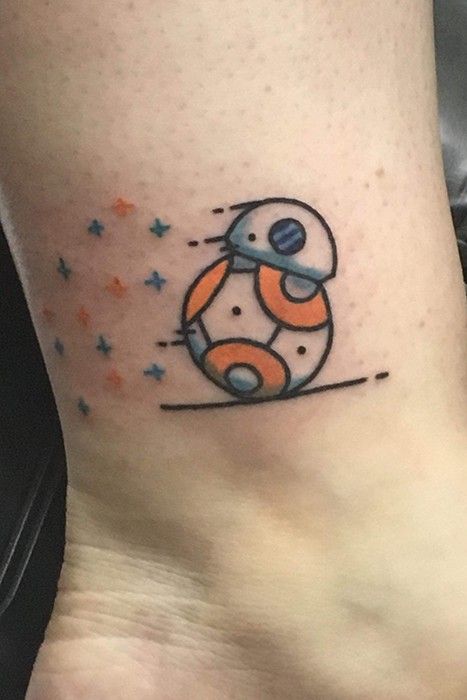
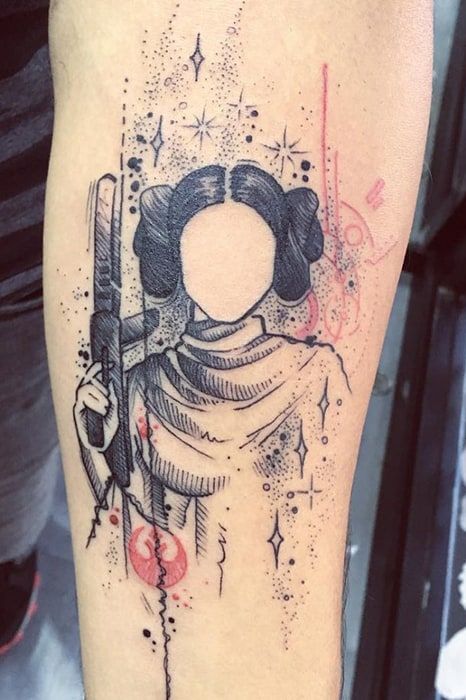
Wow, I love Star Wars, but this is commitment! Check out these fantastic tattoos:

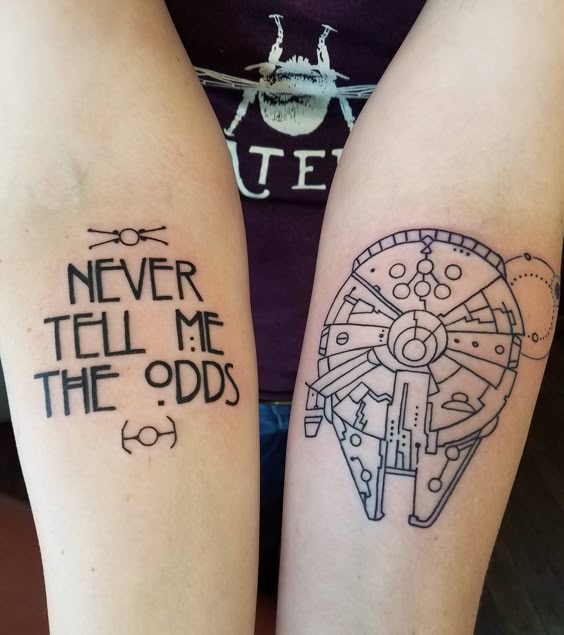

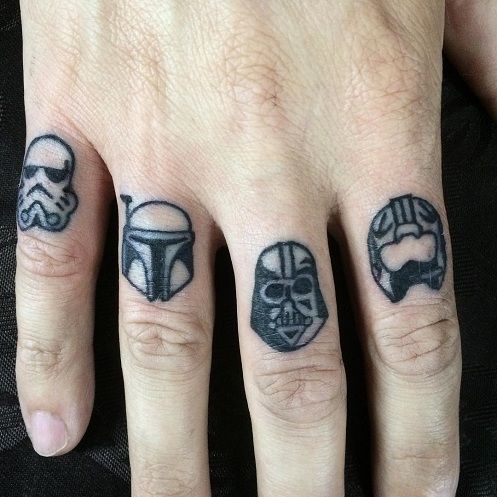

I’m not a tattoo person, but if I were to get one, it would be tiny. Like this:
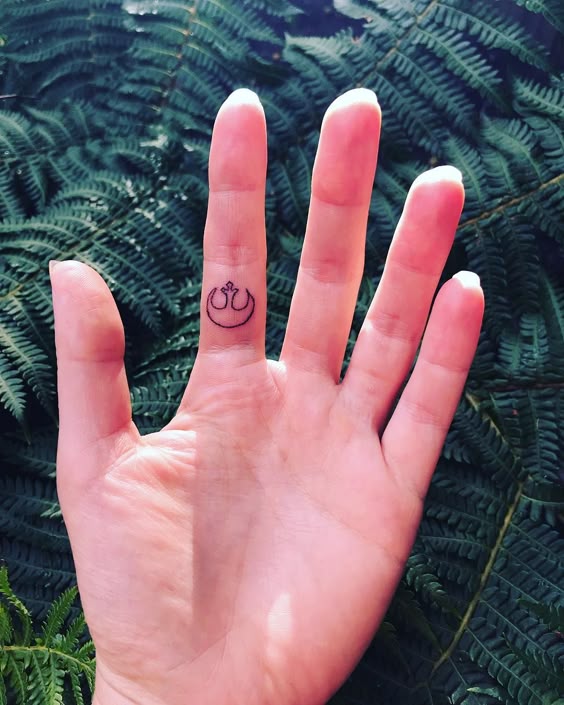
Do you have any Star Wars tattoos? Attach some photos below and show us!
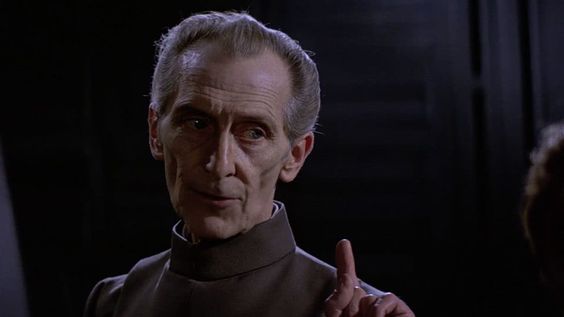
This fact makes me happy in so many ways…


In The Last Jedi, after Leia is injured, Vice Admiral Amilyn Holdo takes command of the Raddus, the command ship of the Resistance fleet (if you can call it that) fleeing the First Oder.
And Poe immediately dislikes her and causes trouble.
Despite knowing that Holdo is Leia’s good and trusted friend (and Poe nearly worships Leia), he immediately distrusts her and whips up a mutiny on the ship. Why?
Because she won’t tell him–or anyone–her plan for escape.
He proceeds to have a hissy fit about it and demands–demands!–to be told what she plans.
Now, at first viewing, I shared Poe’s frustration. Why doesn’t she just tell him and get him out of her hair? But on reflection, Poe’s antics on the Raddus just shows how much growing up he needs to do.
Holdo knows this about him, and maybe this was a test for him. A test he failed miserably. It can be argued that this probably wasn’t the best moment to teach Poe a lesson.
But think about it. Holdo is a Vice Admiral-she even outranks Leia–and Poe has just been demoted to Captain, for his reckless, foolhardy ignoring of orders, a recklessness that caused them to lose their bombers. And she has to explain herself to him? Or to anyone for that matter? I don’t know much about the military, but I’m pretty sure questioning orders from your superiors is frowned upon.

So why does Poe feel he can get away with it? I get it–the situation is critical, they’re up against a wall–but to me, it seems that maintaining the chain of command is essential in these situations.
Is it the purple hair? And I hate to even go here, but it has to be said: is it because she’s a woman? Would he have done the same if Holdo were a man?
Star Wars has been pretty good at getting women equal footing in the Galaxy, especially in the prequels and sequels. They’re everywhere, doing everything and anything, and that’s all to the good.
Still, with this Poe/Holdo standoff, I can’t help but think, “I have a bad feeling about this.”
Maybe I’m just jumping to conclusions. If I think about Poe’s character–Holdo herself called him a “trigger-happy fly-boy”–he probably would have been that way to anyone. He has no patience; he can’t sit still. It’s a mark of extraordinary arrogance to believe that your superiors don’t know what they’re doing or that you deserve to be in the know in all things. He lacks trust in anyone but himself. He even disobeyed Leia, which caused them to lose their bombers, leading to the death of Rose’s sister, Paige. I wonder if Rose knows this?

I also know this is the Resistance, not the First Order. The First Order is a well-oiled machine, with clear hierarchies and chains of command. There’s a lot of order to the First Order, and Poe’s insubordination would not have been tolerated.
But the Resistance isn’t a fighting military machine. It’s a group of people coming together to fight for freedom. Like the Rebellion before it, they’re a rag-tag bunch, and though they try to maintain an orderly chain of command out of necessity, they’re a bit more forgiving. They understand Poe’s value as a pilot. And they just like him. In the Resistance, people are individuals, not cogs in a machine.
Even after Poe’s shenanigans are stopped by Leia, Holdo says, “That one’s a troublemaker. I like him.”
“Me, too,” Leia replies with a smile.
I don’t know if I would have been that forgiving. But in essence, these older women are regarding him like some wayward child who misbehaves. Oopsie! That little rascal almost derailed our entire escape plan. Oh well! He’ll grow up someday, right?
And I’m glad to see that he does in TROS, after some further tests. Even in The Last Jedi, he’s sobered by Holdo’s sacrifice.
Naturally, this showdown between Holdo and Poe was a kind of forced conflict in the movie, as some tension was required in that part of the story. I found it a little over the top on Poe’s part, and Holdo seemed unreasonably stubborn on keeping her plan a secret. Oh well. It seemed to work, I guess.
But the whole thing left me feeling baffled.

What was your take on the Poe-Holdo showdown? Comment below and we’ll talk about it!

Mine is K2SO.

If you love a droid not on the list, tell us in the comments below!
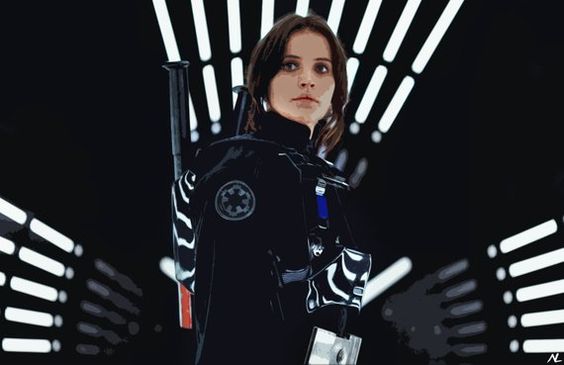

Here’s the latest installment of my Women of Star Wars series.
Jyn Erso from Rogue One is an interesting character to analyze, because she doesn’t initially align herself with either the Empire or the Alliance. Who is she and what does she want?
At the beginning of the film, I assumed that after witnessing the death of her mother at the hands of an Imperial, an Imperial who also took her father away, she’d naturally drift toward the Alliance. But no. When we first see her as an adult, she’s a criminal who is busted out of imprisonment by the Alliance for their own reasons.
My assumption was based on adult thinking; I forgot that as an 8-year old, Jyn might have understood things differently. All she knew was that she lost her parents to the Empire; and she was left in the hands of Saw Gerrera, an extremist formerly linked with the Alliance, who taught her how to survive, surely, but who also “abandoned” her. She trusts no one, and just lives day to day to survive.
I’ve read the Rogue One novelization, and it gets deeper into the character of Jyn. The book presents her as not just distrustful, but deeply damaged by these perceived abandonments; not only that, she spends many years hating her father. I’m going to delve deeper into the novelization in another post, but for now I’ll focus on Jyn as seen in the film.

We don’t necessarily see that hate for Galen Erso in the film; what we see is a person who has endured many losses, who has had to fight to survive, and who has become bitter with that life. When her father says when she’s a child, “Whatever I do, I do because I love you. Say you understand,” and she replies, “Yes, Papa,” we know that an 8 year old can’t possibly understand what’s happening and why. The loss of her father is painful and bewildering, and she’s angry without understanding why.
When Saw Gerrera leaves her behind because she’s a liability for his group, he left her able to take care of herself. We, the audience, may understand it intellectually, but as a 15-year old, Jyn just sees it as another abandonment. Is it any wonder she has no particular allegiances?
When she agrees to help the Alliance, it’s because she has no choice, really, but we get the feeling that she needs to find her father, if only to get answers. This is a personal quest for Jyn; she’s not there because she hates the Empire, or has any sympathy for the Alliance. She probably hates them both, along with everyone else in the galaxy.
Things start to change for her once she sees her father’s hologram message. She understands a little more about him, what he’s done, and why. It brings up painful, almost paralyzing emotions, and Cassian must pull her away to escape the destruction of Jedha’s Holy City.
Witnessing that destruction, a mere fraction of what the Death Star can do, brings her father’s actions into focus, and she begins to understand the wider implications of such a weapon. It’s not just about her and her anger; it’s about that little girl she saved in Jedha’s plaza, a rescue reduced to nothing because she died anyway, vaporized along with her mother, and everyone else there. She witnesses Chirrut’s and Baze’s loss of their home. The Death Star has become horrifyingly real.
On Eadu, Galen Erso dies in her arms (from Alliance bombs, no less). His last words to her are “It has to be destroyed.” At this point, Jyn becomes determined to do just that–not for the Alliance, but to give her father’s death meaning. It’s still personal. Her father built the damn thing himself so he could secretly put a weakness inside it. This cost him his family, and caused Jyn to live the painful life she’d lived. It has to all mean something. She must finish the job, if she’s to have any kind of personal resolution.

But it’s also not just personal anymore, either. Her confrontation with Cassian after Eadu moves her closer to this. She’s understandably upset when she learns he meant to kill her father all along. This perceived betrayal cuts deep, considering her trust issues. Cassian argues that he decided–on his own, against orders–not to pull the trigger. It’s not enough for Jyn, and she continues to harass him. He counters with, “You’re not the only one who’s lost everything.” Like her, he’s been suffering since he was a child. But, he says, “Some of us decided to do something about it.” Ouch.

She still grumbles, but it’s here that she’s beginning to come out of her own personal, painful bubble. Her faith in Cassian is restored when he gathers the Rogue One team after the Alliance Council decides against attack. The last third of the film shows Jyn being who she was meant to be: a woman with a purpose. She needs to destroy that Death Star not only to avenge her father and give his death meaning; not only to take back some power for herself after a life of powerlessness; but because it’s the right thing to do.
Jyn’s not looking to be a hero, but her sacrifice makes her one, along with the rest of the team. As she and Cassian watch their death approach, there’s sadness in her, certainly some fear, but no regret. She’s done what she’s meant to do.
How do you feel about Jyn’s character? Did she ring true for you? Comment below and we’ll talk about it!
Unraveling the World of Watch Wonders
Discovering deep wisdom through the art of narrative
Author Page
Book blog for reviews and nerdy thoughts
Insights to your favorite films and fandoms from your everyday Al.
Thoughts from the world of sport
I talk about media by/about women. Also, Star Wars!
Drawing lessons and art by Carol Rosinski of Toad Hollow Studio.
A site dedicated to analyzing the history and connections that bind the Star Wars galaxy
Exploring every corner of the Star Wars universe.
... observations from a lifetime of geekiness.
Let's Talk About Books!
A nerdy girl blog
Thinking and nerding since 1972
Your source for everything Obi-Wan Kenobi. This is the companion blog to the @AllThingsKenobi Twitter. Because our love doesn't always fit into 280 characters.
Read. Play. Watch. Listen .
 Star Wars and Other Obsessions