High Republic Highlight: Avar, Stellan and Elzar

If you know me, you know I’m a big High Republic fan and share information on the books whenever I can. I thought I’d do a High Republic post once a month or so, highlighting an aspect of this era of Star Wars for those who are unfamiliar and are curious.

This post I’d like to focus on the three main Jedi characters that have been introduced: Avar Kriss, Stellan Gios, and Elzar Mann. It seems every Star Wars story has a trio of main characters consisting of two men and a woman. The OT has Luke, Han and Leia; the PT has Obi-Wan, Anakin and Padme; and the ST has Poe, Finn and Rey. So why not the High Republic?

This trio happens to be all Jedi, which I find intriguing. They were Padawans together, the best of friends, growing up in the Temple and becoming Jedi Knights. By the time of the first book, Light of the Jedi, Avar and Stellan are Masters, while Elzar has yet to achieve that rank. Elzar is…a bit different. Let’s get into the character of each here.

Avar Kriss by Mike Mayhew.

Avar Kriss. Avar is prominent in the first HR book Light of the Jedi, but then shows up in the comics for most of Phase 1, where she often fights the Drengir (plant monsters, lol), often with the help of the Hutts, with whom she has made a temporary treaty. In time she becomes the Marshal of Starlight Beacon, the High Republic’s much-touted space station. Every Jedi in this era connects to the Force in their own particular way. Avar “hears” it as a song, and every living being exudes a different note. As Padawans, she and Elzar had a, ahem, relationship; this wasn’t expressly forbidden in the Temple at the time, but not exactly encouraged, either. Once they became Jedi Knights, they moved on from the relationship and focused on their Jedi duties. Well, Avar did, but Elzar is having trouble with his lingering romantic feelings for Avar.

Stellan Gios by Mike Mayhew.

Stellan Gios. If there ever was a poster boy for the Jedi Knights, Stellan is that Jedi. Handsome, charming, good at public relations, and dedicated to the Order, he’s dazzling in so many ways. Stellan sees the Force as a constellation of stars (as his name suggests), and Avar and Elzar look up to him and consider him their “polestar.” He’s the only one of the three who has trained a Padawan: Vernestrah Rwoh, a gifted Mirialan and the youngest Jedi to become a Knight in a very long time, at fifteen. Stellan plays a large role in the Battle of Valo against the Nihil and becomes an even bigger hero by saving the Chancellor, Lina Soh. While Avar is away from Starlight Beacon on her quest to find Lourna Dee, a Nihil leader, Stellan steps in and takes her place. Stellan believes Avar is becoming obsessed and perhaps starting down a dark road (and this may be true, but I haven’t read the comics, in which this story is told). Avar becomes rather resentful of Stellan stepping in and criticizing her; so by the time of The Fallen Star, they’ve had a kind of falling out. But it’s in this book that Stellan finds out who he truly is, beyond the shiny image of the Perfect Temple Jedi. Trapped on the doomed station, without the Order to guide him, without his Force powers (as the Nameless runs rampant on the station), he must dig deep within and find resources he never knew he had. Stellan ends up sacrificing himself to save others, going down with the station. I’ll admit, I got teary-eyed, lol.

Elzar Mann from the cover of Light of the Jedi.

Elzar Mann. Elzar is the most conflicted of the three Jedi, at least as the story goes on. Elzar, unlike his friends at the beginning of the story, is not a Master yet. The Order is a little hesitant to bestow that title on him, as Elzar has proved to be rather “experimental” in his Force abilities, trying things that aren’t sanctioned by the Order. He’s powerful, but they feel he’s a bit reckless, or at least, unpredictable. He reminds me a lot of Anakin, and I think he’s supposed to, the difference being in how the Order deals with such things. During the Battle of Valo, Elzar draws on his rage at the Nihil, using the dark side of the Force to pull a Nihil ship out of the sky. Afterward, he feels terribly guilty, and the Order sends him to an island with Orla Jareni, a Wayseeker (another way the Order is different from the prequel Jedi: a Wayseeker is a Force-user from the Temple who operates independently, outside the strictures of the Order). Orla helps him reconnect to the Force, stressing patience and persistence. Elzar sees the Force as an ocean, its powerful waves and its deep, quiet depths. Elzar struggles with his feelings for Avar; he respects her and their duties as Jedi, yet it’s still there. By the time of The Eye of Darkness, they’ve become closer in their grief over Stellan, and once the Stormwall is up and they’re separated, feelings on both sides have intensified. They’re reunited at the end of the book, and I see a passionate forbidden affair in the works, one that could ultimately lead to tragedy (sound familiar?).

So these are the main three Jedi introduced into the High Republic, among many, many Jedi, lol. I’ll occasionally do a post on other Jedi from the High Republic, as well as many other people, events, and concepts that I find interesting.

For Light and Life!

I rank the Star Wars books that came out in 2023

Since I’m on a roll with ranking Star Wars content, I thought I’d give my highly subjective ranking of the Star Wars novels that came out in 2023. From most to least favorite, here’s my list:

The Eye of Darkness, by George Mann. It was a close contest between this one and Rise of the Red Blade, but this one was more anticipated by me and didn’t disappoint. It begins Phase 3 of the High Republic, getting back to many beloved characters from Phase 1 after the destruction of Starlight Beacon. Marchion Ro has erected a “Stormwall” around a section of the galaxy that is called The Occlusion Zone. This area is inaccessible to the rest of the galaxy, trapping many worlds behind it, along with many Jedi and Padawans. These Jedi, among them Avar Kriss and Porter Engle, are trying to help those trapped under Marchion’s rule, as well as finding a way through the Stormwall; on the other side, the Jedi, particularly Elzar Mann and Bell Zettifar, and the Republic are trying to find a way through as well. I loved every minute of it.

Rise of the Red Blade, by Delilah Dawson. Delilah Dawson is one of my favorite Star Wars authors. In her own words, she loves to write about “violent women,” lol. She wrote about Phasma’s origins in Phasma, and the Resistance spy Vi Moradi in Black Spire, which I greatly enjoyed. This one tells the story of Iskat Ikaris, a Jedi Padawan who, after Order 66, becomes an Inquisitor. Most of the book chronicles her experiences in the Jedi Order and how they, let’s say “mishandled,” Iskat and her dark side tendencies. We spend most of the book witnessing her frustration at being held back and not allowed to use her strengths in the Force. She seems to be made for battle, and her skills are extraordinary. But the Jedi are keeping secrets from her, and Iskat feels alienated and angry. We come to sympathize with her, while at the same time dreading her descent into the dark, which of course we know is coming. Very compelling story of a woman caught between worlds.

Cataclysm, by Alyssa Wong. This is an adult novel of Phase 2 of the High Republic and was a stronger installment for me than its predecessor, Convergence. It highlights the renewed violence between the two planets Eiram and E’ronoh, and the part played by the Path of the Open Hand in the war. But the main character arc is that of Axel Greylark, the disgraced son of the Chancellor, who is approached by Jedi Knight Gella Natai for help in the conflict. Axel must ultimately decide if he wants to truly help the Republic (represented by Gella, who he’s developed feelings for, and his mother, the Chancellor) or remain a part of the Path of the Open Hand–and the supposed “freedom” the group offers from the weight of his past and family name.

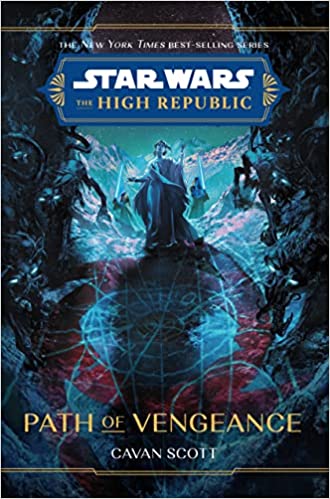
Path of Vengeance, by Cavan Scott. This is the companion Young Adult novel to Cataclysm, and here we get to see more closely the machinations of the Path of the Open Hand through its mysterious leader the Mother, as well as what happens with Marda and Yanna Ro, ancestors of Marchion Ro of the villainous Nihil. We see the Battle of Dalna from multiple viewpoints, both Jedi and Path members, and witness the Mother’s unleashing of the terrifying Nameless–creatures that can turn Force-users into ash. Marda’s story, in particular, is of interest, as it’s she who sows the seeds of the future Nihil. Her path from sweet, gentle believer in the Path to a cold, ruthless leader is chilling.

The Battle of Jedha (Script), by George Mann. I’m generally not into audiobooks. I know some people love them, but I have to read a book rather than listen to it to fully absorb its story. I’d much rather read the script than listen to it, and that’s what I did with the Battle of Jedha, since I didn’t want to miss the story it tells. Representatives from the warring planets of Eiram and E’ronoh have gathered on Jedha to sign a peace treaty, but it’s sabotaged by the Path of the Open Hand with an explosion. The two enemies blame each other, and their forces begin fighting in the streets. To add to the confusion, a Nameless creature has escaped and is destroying many Force-users present in the Holy City. Jedi Master Creighton Sun and Jedi Knight Aida Forte, with the help of the Guardians of the Whills, try to stop the battling armies as well as investigate who caused the explosion in the first place. This is my first audiobook script, and I enjoyed reading it; it’s like reading the script of a play, that’s all.

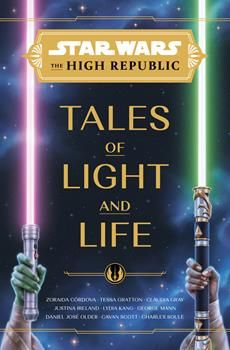
Tales of Light and Life, by various authors. This is a book of short stories taking place in the High Republic. Some occur during Phase 2, and some are “prequels,” of sorts, to Phase 3. I liked all of them, though some were better than others. The most important, from a plot standpoint, is “After the Fall,” by Claudia Gray, which tells a story about Bell Zettifar soon after the fall of Starlight Beacon in Phase 3, and which reveals the fate of the Wookiee Jedi Burryaga. My favorite story, though, is “A Closed Fist Has No Claws,” by Tessa Gratton, which is about what Mardo Ro is up to after the events of Phase 2, and how she sets the remnants of the Path toward their destiny as the Nihil.

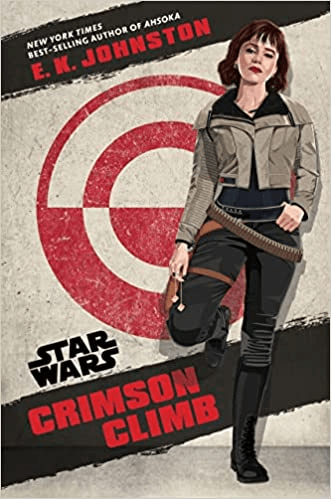
Crimson Climb, by E.K. Johnston. This book is about Q’ira from the movie Solo: A Star Wars Story. I wrote about it here in one of my Updates if you’d like to read it, but basically, it’s about what happens to Q’ira after Han escapes from Corellia, but she doesn’t. It chronicles her rise through the Crimson Dawn ranks and how she becomes Dryden Vos’ lieutenant. I enjoyed the book, but it wasn’t as if I tore through it eagerly. I do think it might be the first part of a trilogy, which would be great and I’d be here for. Despite all the stories of Q’ira taking place in the comic world, I think there’s more room for her in novels, as well.

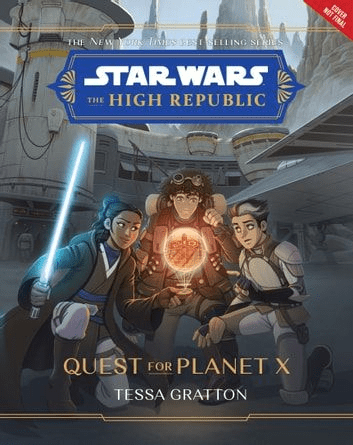
Quest for Planet X, by Tessa Gratton. The middle-grade books of the High Republic have been consistently good, nearly on par with at least the young adult entries. This one is pretty good, but not one of my favorites. It takes place during Phase 2 concurrently with the young adult book Path of Vengeance; as is often the case, it focuses on some Jedi Padawans or other young people and their stories. This one stars Jedi Padawan Rooper Natani; Skye Graf, a young member of the powerful Graf prospecting family; and Dass Leffbruck, the son of an independent prospector. Dass and Sky recruit Rooper to help them on a race between the Grafs and the San Tekkas to chart new hyperspace lanes; however, their real mission is to find the mysterious Planet X (where, incidentally, the Nameless creatures are from). However, they run into some members of The Path of the Open Hand and must decide if they’re going to help the Jedi during their fight on Dalna.

Jedi: Battle Scars, by Sam Maggs. This one excited me at first; I’m not a gamer, and so felt like I was missing out on some important Star Wars lore with Cal Kestis and his crew. I so badly wanted a novel with these characters, so I, too, could participate in their coolness, lol. But this book falls short of what I was hoping for. It wasn’t terrible; it just wasn’t that great. The romance between Merrin and the female Imperial deserter was cringe-worthy at best. I’m all for romance in Star Wars, but this was like really bad fan-fiction (and I’ve written fan-fiction, lol). The rest of the plot was fine, I suppose, but I guess I was hoping for more characterization of the main characters, probably because I don’t play the games and didn’t really know them that well. Cere, in particular, really interested me, but I was left wanting. Very much my least favorite book of the year.

So these were the Star Wars novels that came out in 2023 and my thoughts on them. Did you read any of these books? Which was your favorite? Let me know in the comments and we’ll talk about it!
What I’m looking forward to in Star Wars in 2024

Now that I’ve talked about what I loved in 2023, let’s talk about what’s coming up in 2024.

The Bad Batch S3. Again, no surprises here if you know me. The Batch’s third and final season still has no release date, but at some point I heard maybe April, so we’ll see. It can’t come fast enough! How will Crosshair and Omega escape Tantiss? Who will the rest of the Batch recruit to help find them? Phee? Rex? Fennec Shand? Benny? How will the story of the clones in general wrap up? And of course–is our favorite goggled clone still alive?

The Acolyte. I’m pretty psyched about this one. It takes place near the end of the High Republic, perhaps fifty years before the prequel era. Here’s a plot blurb from The Nerdist:

“The Acolyte is a mystery-thriller that will take viewers into a galaxy of shadowy secrets and emerging dark-side powers in the final days of the High Republic era. A former Padawan reunites with her Jedi Master to investigate a series of crimes, but the forces they confront are more sinister than they ever anticipated.”

Oh my word, I am so there, lol. I’m guessing it’s going to hint at the Sith planning their return, which of course leads to Palpatine and his devastating coup d’etat. One of my favorite High Republic characters, Vernestra Rwoh, is presumably going to make an appearance, and will be near one hundred years old (which is prime for a Mirialan). I’m eager to see what kind of role she’ll play in the series. As far as I know, there is no release date as of yet.

Tales of the Jedi S2. I really enjoyed Season One of this little animated series, which focused on Ahsoka and Count Dooku in three 10-15 minute shorts for each character. I’m looking forward to seeing which Jedi Season Two will focus on, and when it will drop (all the episodes of Season One dropped at once, and I assume this one will do the same).

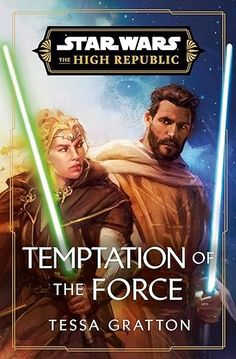
Phase Three High Republic books. I’m including books in this list as well as streaming content, since I’m a huge Star Wars book reader. Phase Three (Trials of the Jedi) began in late 2023 with George Mann’s Adult Novel The Eye of Darkness in November. The Phase continues this year with the Middle Grade book Escape from Valo at the end of January and the Young Adult book Defy the Storm in March. That’s Wave One of this Phase, and waves two and three will continue throughout the rest of the year, wrapping up the Phase, as well as the entire series, in early 2025. The High Republic has really been a highlight of my Star Wars love since it began three years ago with the release of Light of the Jedi.

Other Canon Books: The Living Force, by John Jackson Miller, and The Glass Abyss, by Steve Barnes. There seems to be a pattern to Star Wars publishing lately, namely that early in the year we get the latest High Republic, then in the spring a standalone canon novel, another standalone at the end of the summer, and then the High Republic again in the fall and winter. The Living Force, about the Jedi High Council on a mission in the Outer Rim, will release in April, while The Glass Abyss, about Mace Windu, will be out in August. I’m looking forward to both books.

Skeleton Crew. This show has been talked about for a long time now, but because of the writer’s strike (which I absolutely supported), it looks like this one won’t be out until the end of the year. I’m okay with that, as it’s the thing this year that I’m the least excited about, but I will certainly be happy to watch it. It’s about a bunch of kids going on adventures in the galaxy, to put it very basically. It stars Jude Law as a Force-sensitive who looks after these lost children; the show is being billed as a fun family adventure. Perfect for Christmastime.

As of this writing, Andor Season Two is not on the roster for 2024 and seems to be slated for release in 2025.

What about you? What Star Wars projects are you most excited about? Let me know in the comments and we’ll talk about it!

My Favorite Dystopian/Apocalyptic Books

I’m a fan of dystopian fiction, but I’m a bit finicky about it. I tend to stay away from Young Adult dystopian (no Hunger Games or Divergent series, thank you). I usually like more literary-minded picks, but there are exceptions. I’ve been reading Octavia Butler, so I started thinking about my favorite dystopian novels. Here they are, in no particular order:

The Stand, by Stephen King (1978).

How it all ends: Accidental release of deadly bio-weapon

Basic premise/plot: A superflu kills 99% of the population; the survivors must choose between the powers of good and evil for the fate of humankind, following either Mother Abigail (good) or Randall Flagg (evil).

My thoughts: One of my first Stephen King reads, and one of my favorites. It’s a huge book with a ton of characters, but gripping for the most part. It’s been years since I’ve read it, but there are memorable characters I’ll never forget: Trashcan Man, in particular, who likes to set garbage (or anything, really) on fire–and even sets a whole empty city on fire; Tom Cullen, the mentally-challenged guy who is always spelling moon (“M-O-O-N, that spells moon.”) King is always entertaining.

Adaptations: I’ve seen the 1994 miniseries with Gary Sinise as Stu Redman and Molly Ringwald as Frannie. I liked it, for the most part. I haven’t watched the 2020 version, but maybe I’ll put it on my list.

The Handmaid’s Tale, by Margaret Atwood (1985).

How it all ends: Subjugation of women through theocracy take-over.

Basic premise/plot: In the near future, America has been taken over by a theocracy and renamed The Republic of Gilead; in a world of dwindling birthrates, women of child-bearing age have become property with no rights and used by wealthy couples to have children.

My thoughts: I read this book years ago, and it outraged me. Not the book itself, which is brilliant, but what happens in the book. I was young and couldn’t imagine such a thing coming to pass, couldn’t imagine women’s rights being so eradicated and reduced to basically medieval status. Ah, the naivete of youth. Now, it not only outrages me, but scares the hell out of me. Because it absolutely could happen, as far-fetched as it sounds. I won’t get into politics here, but let’s just say I’m not too optimistic about women’s rights just about now.

Adaptations: There was a 1990 film that I never saw (and I heard it wasn’t very good), but I’ve watched the first season of the series on Hulu in 2017. It’s fairly true to the book with a few smart changes, and was sobering and upsetting to watch. In fact, I decided not to watch the following seasons because I just couldn’t bear it, lol. I’m someone who can get through every brutal season of Game of Thrones, but this show just hit a nerve for me and I couldn’t continue.

Station Eleven, by Emily St. John Mandel (2014).

How it all ends: Worldwide Deadly Pandemic

Basic premise/plot: A worldwide pandemic has nearly destroyed the human population; a group of actors and musicians travel the countryside in the Great Lakes region to entertain the survivors with Shakespeare and classical music, as they believe “Survival isn’t enough.”

My Thoughts: I adored this book. I mean, it’s tragic that the flu happened, but the story and the writing is wonderful. If you’re looking for a Mad Max kind of post-apocalyptic world here, you won’t find it–it’s too quiet. There’s just not enough people. But those who are left behind find a way to survive, and this particular group–actors and musicians–try to bring a little joy back into life through art. It makes you think about what makes life worth living, beyond survival. It’s about art and memory and what lasts. There’s a bit of danger from a religious zealot (of course), but it’s the connections between past and present that’s really interesting to me.

Adaptations: HBO Max has a miniseries adaptation, but I haven’t seen it. It sounds like a lot of changes have been made, and I love the book so much, I don’t want to experience that.

The Road, by Cormac McCarthy (2006).

How it all ends: Unknown; landscape destruction and societal breakdown.

Basic premise/plot: An unidentified disaster has reduced civilization to rubble and anarchy. A man and his ten year old son travel the dangerous landscape, heading south along the east coast for warmer weather and hope.

My Thoughts: This is a very difficult book to read. I’m not talking about the language; it’s simple and clear. But the subject matter is so damn heavy. There’s been some vague disaster (I think it’s clever that we, the readers, don’t know what it is, because it puts us in the characters’ shoes–they don’t know, either.) It doesn’t really matter what happened, only that it destroyed life as we know it. A nameless man and his ten year old son traverse an ash-covered wasteland, heading south along the Atlantic coast in search of warmer weather. They must find food and shelter along the way, and avoid those who would steal from them or kill them. Cannibalism is a very real thing (there’s a few scenes concerning this that traumatized me, lol). The man is determined to keep his son alive and safe, though he knows he himself his dying. His son, a sweet, good boy despite the horrors he’s seen, “carries the fire,” which I interpret as the light of civilization, the hope for humankind. It’s a very dark read, but does offer some hope.

Adaptations: There’s a 2009 movie with Viggo Mortensen as the Man and Kodi Smit-McPhee as the Boy. I thought it was a great adaptation, and not just because I love Viggo.

The Passage/The Twelve/City of Mirrors, by Justin Cronin (2010-2016).

How it all ends: Accidental release of scientific experiment that turns humans into vampire-like creatures.

Basic premise/plot: A scientific experiment intending to make humans stronger goes awry; it instead turns the test subjects into vampire-like creatures who escape and either kill or transform the rest of the human population into more of them. The key to saving humankind resides in a little girl named Amy.

My Thoughts: I was totally mesmerized by this trilogy of books. It was recommended to me by my sister, who had read the first book, and I instantly fell into it. My sister ended up not reading the next two books, lol, but I tore into them eagerly. It alternates between past and present, from just before the experiment destroys the population, to a hundred years into the future with people trying to deal with the aftermath. Each book gets closer to the origin of the experiment and how it all went wrong, and how those in the future will begin a new era.

Parable of the Sower/Parable of the Talents, by Octavia E. Butler (1994, 1998).

How it all ends: Societal breakdown and anarchy; theocracy take-over.

Basic premise/plot: In the 2020’s, society has broken down into violence, illiteracy, drug addiction, and corporate slavery. Precocious 15-year-old Lauren Olamina sees the direction her world is going in. After her walled neighborhood is attacked and destroyed, she heads north from LA to northern California with a group of survivors, traversing the dangerous roads, determined to survive and start a new way of living.

In Talents, Olamina and her people have been living in their new community, Acorn, for five years, and it’s beginning to grow and thrive; she and her husband have a baby, Larkin. But disaster strikes–the community is raided by Jarrett’s Crusaders, an extremist group from Christian America; the men and women are enslaved and the children abducted. They live in abject slavery and horror for seventeen months. When they’re finally free, Olamina must decide how to rebuild her life, and Earthseed. Her husband was killed and her two month old baby taken, while her passion about Earthseed is stronger than ever.

My Thoughts: I really wish Butler had been able to write her intended third book in this series, because I did not want to say goodbye to these characters and this story. Talents ended in 2090, with Earthseed flourishing and fulfilling their Destiny, but Olamina and her daughter, finally reunited years after the disaster, have a strained relationship. The ending was fairly rushed, and I think Butler intended to write more about Olamina’s final years, and her struggles with establishing Earthseed and her relationship with both her daughter and her brother, in the third book, which she was going to call Parable of the Trickster. But alas, we will never know that story. These books will stay with me for a long while.

Adaptations: I’ve heard that an adaptation is in the works; A24 has bought the rights and slated to be directed by Garret Bradley, but no other details as of yet.

I’m sure I’ve overlooked other dystopian books that I’ve read over the years, but these are the ones that come to mind and I loved the most.

What are your favorite dystopian stories? Let me know in the comments and we’ll talk about it!
My December Entertainment Update

Hello friends! Time to talk about what’s been entertaining me lately.

Quest of the Jedi Book 1: The Way of the Apprentice, by Jude Watson. I needed an e-book to read, and after not finishing the series The Last of the Jedi, lol, I decided to try this one. It’s the first in a series chronicling the adventures of a young Anakin and Obi-Wan. Like the other series, these are short junior novels, quick, fun reads. This one has Obi-Wan and Anakin sent to a planet in trouble with two sets of other Padawan/Masters that includes Siri and Ferus Olin (I’ve finally gone back far enough to meet him as a Padawan). The planet has been devasted by some kind of bio-weapon disaster, and the Jedi are supposed to help the planet evacuate. Of course, the story becomes more complicated than that, and it’s essentially a story about Anakin learning (or not learning) how to work with other Padawans. I’ve started Book 2, but got distracted by If It Bleeds, by Stephen King. I’ll get back to it.

Ahsoka Rewatch. I decided to rewatch Ahsoka since a friend of mine at work said he was going to watch it, so we could discuss. But he’s been so obsessed with Loki, he hasn’t even gotten past Part 2. Sigh. Oh well, I enjoyed the rewatch, and like it even better on the second watch. It all seems to come together better when you can binge it rather than waiting a week between episodes, idk. Part 5, Shadow Warrior, remains my favorite episode, but I also just adore Ezra, too. And Baylan continues to intrigue. So many great moving parts to this series, though it comes off a little clunky as a whole.

Parable of the Talents, by Octavia E. Butler. In Progress. I’m about halfway done with this book, and I’m totally engrossed. The sequel to Parable of the Sower, it tells of Lauren Olamina and her Earthseed group finally finding safety and relative peace at Acorn, the community they build together in northern California. But disaster and tragedy strike when The Children of Christian America, a fanatical religious group, descends on the community, enslaves the adults, and steals their children. Very difficult part to read, but Lauren finally escapes and is trying to find her infant daughter. I’m eager to see how this one ends. Butler had planned on a third book but unfortunately she died of a stroke in 2005 before she could write it.

If It Bleeds, by Stephen King. In Progress. I was feeling in a bit of a King mood lately, so I thought I’d check this one out. I’ve always enjoyed his shorter fiction, sometimes more than his novels. I’ve only just started the first story, so not much to report on this one. More next month.

Timeless Heroes: Indiana Jones and Harrison Ford. Saw this a few weeks ago and of course watched it. Harrison Ford and Indiana Jones are intrinsically linked, obviously, and this documentary was about both. I’ve always been an Indy fan but I have my favorites (Raiders and The Last Crusade). And I’ve followed Ford’s career but have by no means seen all his films. I also have favorites of those (Blade Runner, Witness and Regarding Henry are top notch). This doc follows Ford’s career, but particularly focuses on the evolution of the Indiana Jones franchise. I did like the interviews with Ford and I decided I like him a little bit better, as in the past few years he just seemed like an ungrateful jerk, lol. Perhaps just misunderstood, but in these interviews he really radiated a warmth concerning these films that redeemed him a bit for me.

New book announced: The Glass Abyss, by Stephen Barnes. I always get excited when new Star Wars canon books are announced, and this one is no exception. I’m really hopeful about this one, because, as you may know, I’ve never been a big Mace Windu fan. He’s just unlikable, lol. I want to like him, though, and in the past have tried to read the Legends Mace book, Shatterpoint, in the hopes of understanding why people love him so much. But I just couldn’t get into it at all. Maybe a canon book will do better for me, as I prefer canon to Legends. Anyway, this one comes out in August of 2024, so not for awhile. Steven Barnes wrote the Legends book The Cestus Deception, which I have on my shelf but haven’t read yet, lol.

Anyway, this is the plot summary:

The Jedi are reeling from Qui-Gon Jinn’s sudden death at the hands of a Sith. Jedi Master Mace Windu’s feelings about Qui-Gon have always been complicated, and have not been made any simpler in death. While they often disagreed, Mace valued Qui-Gon’s unique perspective, and their shared dedication to the Force made them allies. Without Qui-Gon and his unorthodox views, Mace feels out of balance.
 
While considering his fallen friend’s legacy, Mace is surprised to receive a final message from Qui-Gon, marked to be delivered to Mace on the event of Qui-Gon’s death. The message contains a last request: a plea to help the Outer Rim planet of Metagos.  
 
Many years ago, a violent solar flare transformed the surface of the desert planet into a landscape of irradiated glass—as beautiful as it is dangerous. Now most of the surviving inhabitants live underground, where rival clans fight to control the planet’s limited resources. As a young Jedi, Qui-Gon protected the Sa’ad farming clan from the planet’s less scrupulous factions. The Sa’ad practice the art of dream-weaving, retaining their waking minds upon sleep in order to communicate and coexist with the wild creatures around them. Qui-Gon vowed to return if they ever required his aid, but now it falls to Mace to fulfill that promise. The Sa’ad’s leader, KinShan Nightbird, has begged for the Jedi’s help in freeing Metagos from the crime lords who threaten to eradicate her people’s way of life.   
 
Intent on fulfilling Qui-Gon’s final wishes, Mace travels to Metagos and infiltrates the enemies of the Sa’ad. But as the Jedi Master investigates the intricate web of adversaries and allies, Mace finds himself pushed to the boundaries of the Jedi code, challenging his beliefs and his relationship to the Force itself.

Amazon

Sounds good to me.

So that’s it this month. What’s been entertaining you? Let me know in the comments and we’ll talk about it!

My Entertainment Update for November

Hello friends! As I was busy in November doing my NaBloPoMo (National Blog Posting Month) Challenge, I waited until the end of the month to post my Entertainment Update, instead of mid-month. There’s a few things to talk about, so I’ll be as brief and to the point as possible.

Crimson Climb, by E.K. Johnston. At the beginning of the movie Solo, a young Han Solo attempts to escape the White Worm gang on Corellia with Qi’ra. He succeeds; she doesn’t. She gets dragged back to the White Worm lair and faces the consequences. This book covers the first year after her failed escape attempt: Lady Proxima punishes her and sells her to a violent criminal; she’s then plucked from him by an associate of Dryden Vos, and becomes a member of Crimson Dawn. The book tells of her rise in that criminal organization to Vos’ lieutenant, the Qi’ra we see later in Solo when Han meets up with her again. I enjoyed the book, though it wasn’t a page-turner for me. I get the feeling we’re going to get a Qi’ra trilogy from Johnston, in the same way we got a Padme trilogy from her. I do like this idea. I wouldn’t say I like Qi’ra; she’s done some pretty bad stuff. But I do admire her smarts and her drive to survive. I was going to do a post on other Qi’ra-related content (comics and books, etc) but got side-tracked by the Chat Pack, so maybe I’ll do that next.

The Eye of Darkness, by George Mann. The long-awaited first book of Phase 3 of the High Republic released this month, and I tore through it pretty quickly. After a detour into the past with Phase 2, we now go back to the Phase 1 characters we know and love: Avar Kriss, Elzar Mann, Bell Zettifar and Burryaga. I was particularly happy to see Avar Kriss as a main protagonist; after meeting and really liking the character in Light of the Jedi, the first High Republic novel, she then retreated mostly to the comics for the rest of the saga so far. I loved seeing her in action again in a novel. Another character I haven’t seen in a novel since LOTJ and whose been in the comics is Porter Engle, who is also one of the main characters here. Both he and Avar are trapped behind the Stormwall, an impenetrable barrier put up by Marchion Ro, leader of the Nihil. Ro has claimed a large portion of the galaxy, calling it the Occlusion Zone, and the people who live within it are at his mercy. Boiling it down, Avar and Porter are trying to find a way out, while Elzar Mann, and Bell and Burryaga, are trying to find a way in, but of course it’s much more than that. This book really deserves its own post, because it’s fantastic and I loved every minute of it.

Star Wars Myths and Fables, by George Mann. I downloaded this to my Kindle because I needed something to read there, and it was free through Prime, lol. And I’d just read George Mann’s High Republic novel and loved it, so why not read him again? This was very different from that, of course, as it’s set up as a telling of, well, myths and fables. These stories are straight exposition, as if told around a campfire or as a bedtime story. They’re fairly entertaining, and Mann does a good job here, but not my favorite type of story. Just something to read between the major Star Wars reads. I love the cover and wouldn’t mind having the hardcover on my shelf, though.

Parable of the Sower, by Octavia E. Butler. This is a dystopian novel published in 1993, but remains relevant and frighteningly prescient, considering the events of the book take place in 2024-2027. Lauren Olamina is a precocious 15 year old who lives with her family in a walled community in the suburbs of Los Angeles. It’s walled to keep out the thieves, beggars, homeless, drug addicts, and other desperate people who are willing to kill to survive. It’s not easy living within the walls, but it’s a death sentence outside them. Society has broken down to a point where there aren’t many jobs that pay decent money, or money at all, for that matter; some work for food and board. Some flee to corporate-owned towns and cities and basically become slaves to the corporations. Lauren’s father is a preacher, and teaches at the local college (who he’s teaching, I have no idea; illiteracy is running rampant), though it’s precarious travelling to and from work. One day he just doesn’t come home. That’s after her 14 year old brother runs away and decides to try to make it outside the walls; he’s found dead later, horribly mutilated. The police and fire fighters charge fees for their services, which most people can’t afford. Their community is destroyed by “pyro” addicts, who smash through the gate and set fire to the houses, killing people and stealing their things. Lauren, whose remaining family is killed, is set on her journey north on foot, with a few survivors, to try to find a new, safer life. She’s been preparing for this, and has ideas about a new way of living, a kind of new religion called Earthseed, in which “God is Change.” Life on the road is dangerous and heartbreaking, but she meets people willing to join the group and protect each other. I found this book engrossing and terrifying, mostly because it has elements that we already see in our society, but on a larger scale. I can totally see it happening if we’re not careful, if we don’t pay attention and take action. Anyway, there’s a sequel called Parable of the Talents, which I want to read, but I don’t know how much more human suffering and tragedy I can take right now, lol.

Loki Season 2. I’m going to be honest and say I didn’t enjoy this season as much as I did Season One. I started out with “I’m so happy to see these characters again!” to “I have no idea what’s going on” to “This is okay but not great” to “All right, this is pretty good” to “I have no idea what’s going on” again, to “This is really good but now I’m sad.” In other words, it was uneven for me. However, I loved the character arc that Loki went on during the entirety of Seasons One and Two. He’s come full circle, from his arrogant proclamation of “I am burdened with glorious purpose,” to his acceptance of the actual burden of his glorious purpose. In finding that purpose, he had to understand himself, find his heart, make some friends, and realize he needed to give up the people he loved in order to save them. To see him transform like that was very satisfying; I love a good redemption arc. But I was kind of hoping he was going to lead the TVA, not have to sit on that throne all by himself for eternity. But he’s doing what gods do, I guess. Or what they’re supposed to do. At any rate, I have mixed emotions: I’m glad he’s found his glorious purpose, but I’m sad by how lonely it must be. Will this be the last we see of Loki? It seems that way, but I wouldn’t count on it. I also watched Assembled: The Making of Loki S2, which I always enjoy watching.

Snowpiercer. I’ve had this in my Amazon Prime queue for a while now, and decided to finally watch it at the beginning of the month. The premise is this: the world has frozen solid from some last-ditch experiment of launching something into the sky that presumably would “fix” climate change. Instead, it turned the world to ice. The last fragments of humanity are travelling around this ice globe on a train that never stops, circling the world on an endless track for years and years. The problem is, the train is divided into the haves and have-nots. At the front of the train are the haves, I’m guessing the people who originally paid for a spot on the train at the beginning; while the end of the train is for the have-nots, who I’m guessing were desperate people who fought their way onto the train when things went south (or should I say north?). These poor souls are locked in the back cars, cramped and nearly starving, at the mercy of the will of the creator of the train, Wilford. Chris Evans is great as Curtis, who decides to lead a rebellion and bust his way through the train cars to the very front, where Wilford, and the engine, are. It’s quite a journey, and very violent, which I suppose makes sense. Interesting premise, and entertaining.

Whew! It seems like a lot, but I’ve been reading and watching these things since mid-October. What’s been entertaining you lately? Let me know in the comments and we’ll talk about it!

Upcoming High Republic Books I’m Excited For

The time is upon us, dear readers, when Phase 3 of the High Republic is near. And I don’t know about you, but I’m super excited! Here’s what we’ve got coming up:

Eye of Darkness, by George Mann, November 14th, 2023. Wave 1 of Phase 3 starts with the adult book The Eye of Darkness by George Mann. After the fall of Starlight Beacon, Marchion Ro has erected a Stormwall around a portion of the Outer Rim, called the Occlusion Zone, which he rules. All worlds within that section are subject to the whims of the Nihil leader. Those Jedi caught behind the Stormwall, like Avar Kriss, must fight to protect these worlds. Outside the Wall, Jedi like Elzar Mann and Bell Zettifar must find a way to tear down the wall and free those behind it from Ro’s reign of terror; all the while enduring the threat of the Nameless, creatures that feed off of Force-users and drain the very life from them.

Escape from Valo, by Daniel Jose Older and Alyssa Wong, January 30th 2024. This is the middle-grade book that focuses on Padawan Ram Jamoram and others, trapped behind the Stormwall in NIhil-controlled space.

Defy the Storm, by Tessa Gratton and Justina Ireland, March 5th, 2024. This young adult novel focuses on Jedi Knight Vernestra Rwoh and her scientist friend Avon Starros. They work to find a way through the Stormwall to save those trapped on the other side.

I’m looking forward to getting back to these Phase 1 characters after backtracking a hundred or so years in Phase 2.

And now for something completely different….there’s a pre-Phantom Menace novel coming out by John Jackson Miller in April of next year:

The Living Force, by John Jackson Miller, April 9th 2024. This one sounds really interesting; I’m just going to copy and paste Amazon’s blurb about it:

“In the year before The Phantom Menace, Yoda, Mace Windu, and the entire Jedi Council confront a galaxy on the brink of change.
 
The Jedi have always traveled the stars, defending peace and justice across the galaxy. But the galaxy is changing, and the Jedi Order along with it. More and more, the Order finds itself focused on the future of the Republic, secluded on Coruscant, where the twelve members of the Jedi Council weigh crises on a galactic scale.

As yet another Jedi Outpost left over from the Republic’s golden age is set to be decommissioned on the planet Kwenn, Qui-Gon Jinn challenges the Council about the Order’s increasing isolation. Mace Windu suggests a bold response: All twelve Jedi Masters will embark on a goodwill mission to help the planet and to remind the people of the galaxy that the Jedi remain as stalwart and present as they have been across the ages.

But the arrival of the Jedi leadership is not seen by all as a cause for celebration. In the increasing absence of the Jedi, warring pirate factions have infested the sector. To maintain their dominance, the pirates unite, intent on assassinating the Council members. And they are willing to destroy countless innocent lives to secure their power.

Cut off from Coruscant, the Jedi Masters must reckon with an unwelcome truth: While no one thinks more about the future than the Jedi Council, nobody needs their help more than those living in the present.”

As always, some great-sounding canon books coming up in the months ahead, and I’m totally there for it.

Are you planning on reading any of these books? Let me know in the comments and we’ll talk about it!

Liked Ahsoka? (Or need more context?) Try these.

Star Wars is an intricately connected universe, for the most part. There’s just no getting around it. There’s so much canon content out there (not to mention a gargantuan Legends collection), it can be downright intimidating or confusing. If you’re just getting into Star Wars, or just watch the movies and live-action shows, there may be some gaps that leave you scratching your head a little bit. The Ahsoka series was supposed to be “non-Rebels fan-friendly,” but let’s be honest: it’s a much richer experience if you know a little bit about these characters. Or a lot. Here’s some content you may want to explore for further enrichment:

Ahsoka, by E.K. Johnston. This book came out a few years ago and details what Ahsoka did in the year after Order 66. Basically, she tried to keep a low profile (duh), worked on a farm planet and met two sisters and their friends who get mixed up in some Imperial trouble, and of course tries to help them. She also confronts an Inquisitor, and meets up with Bail Organa, who convinces her to help in the early formation of the Rebellion. It also shows how she got her two white lightsabers. An abbreviated version of these events happen in the animated series Tales of the Jedi (see below).

Tales of the Jedi. This animated series came out this past year and focuses on two characters: Ahsoka and Count Dooku. Each character gets three short stories (about ten minutes each) dedicated to them at crucial points in their lives. The Count Dooku episodes are great, and since we don’t see much of him (besides the audio drama Dooku: Lost, and as a baddie in Clone Wars), it’s worth watching just for those. But the Ahsoka shorts are pretty good, too. The first one is about baby Ahsoka and how her family found out she was Force-sensitive; the second is the abbreviated version of the Ahsoka book I mentioned above; and the third is how Anakin (inadvertently) trained her, along with Captain Rex’s help, to survive Order 66. Pretty good stuff.

Rebels. Okay, so the Ahsoka series has been described as “Rebels Season 5” and I can’t argue with that. If you want to know more about not just Ahsoka (who really only appears in a handful of episodes here) but Sabine, Hera, Ezra, and Thrawn (as well as Kanan Jarrus, Jacen Syndulla’s Jedi father), this is the series to watch. It takes place in the years before A New Hope and chronicles a Rebel cell consisting of the Ghost crew. As I’ve mentioned before in talking about Rebels, the first season is the hardest to get through–as most of these animated shows are, they’re targeted, at least initially, to younger viewers, and the first season attests to that. But they’re also designed to grow with its audience, getting more mature, complex, and a bit darker as it goes on. It truly has some of the best Star Wars out there. The finale shows how Ezra and Thrawn got stranded on Peridea in the first place.

Obi-Wan, Anakin and Ahsoka meet the Daughter

Clone Wars, specifically the Mortis and Dathomir arcs (but almost all of it is worth watching). This one’s kind of a monster, because it’s seven seasons with 15-22 episodes each. It took me longer to get into this one, as again, it starts out kind of kiddie, but does grow with its audience. By the last four episodes of season seven, it’s outstanding. But for Ahsoka-series purposes, if you want more on the Nightsisters, or need more context for the Mortis gods, check out these episodes:

For Dathomir and the Nightsisters:

Season 3 Episodes 12-14: Nightsisters, Monster, and Witches of the Mist

Season 4 Episode 19: Massacre

(The witches also make an appearance in Rebels–Season 3 Episode 11: Visions and Voices)

For Mortis and the Father, Son and Daughter: Season 3 Episodes 15-17: Overlords, Alter of Mortis, and Ghosts of Mortis.

Ahoska herself is in a lot of the episodes, obviously, as she is Anakin’s padawan, so if you want to get to know her better and her relationship with her master, this is the one to watch.

A New Dawn, by John Jackson Miller. This is a little further afield, but if you’re interested in early rebel Hera and how she met Kanan, this book tells that story. It’s a good book about Kanan and Hera working together and with others against an Imperial villain named Vidian, but they hadn’t met the rest of the ghost crew yet, so I was a little disappointed in that. But overall, a good read.

Any number of Thrawn books by Timothy Zahn. I think there’s well over a dozen Thrawn books, counting canon and Legends. Of course, there’s the original Legends books Heir to the Empire, Dark Force Rising, and The Last Command, as well as Outbound Flight and Spectre of the Past. I read the Legends trilogy ages ago when they first came out, but they didn’t particularly wow me and I never much got into Legends. I tried reading the first canon novel (pictured above) but could only get halfway through it, lol. I don’t know, I just can’t get into “book Thrawn.” It’s very Sherlock Holmesy, with Thrawn lecturing his underlings about how he understand his enemies and why he’s doing what he’s doing. I just don’t care for it. But plenty of people adore the books and how Thrawn is portrayed in them. There are currently two trilogies: Thrawn, Alliances, and Treason; and then a prequel trilogy comprised of Chaos Rising, Greater Good, and Ascendency. I haven’t read any of the books, but from what I understand, Thrawn joined the Empire to help his people, the Chiss, fend off an invasive alien species called the Grysk. Some people see Thrawn as a hero for this; and while I understand that as a protagonist, he needs to have some redeeming qualities, he still does evil things in the name of his goal. He’s still a bad guy, and that’s okay, because at least he’s an interesting one. I prefer the Rebels version of Thrawn, but you might enjoy getting to know him better in these books.

Marvel Kanan comic. Kanan is not even in Ahsoka, so this is another reach, but if you’ve watched Rebels and you’re interested in Kanan, there’s a comic that shows him as a Padawan (with his original name, Caleb Dume) with his Master, Depa Billaba, during Order 66. The first episode of The Bad Batch begins with them on the planet Kaller when the order comes through, like in the comic, but it does change it a little bit, from what I understand. I’m not a comics person, and I haven’t read it, but it’s another connection you might be interested in.

Speaking of The Bad Batch, we also meet a young Hera in Season 1 Episodes 11 and12; her father is Cham Syndulla, the freedom fighter on Ryloth, who we meet in the Clone Wars. If you’re a completionist, here you go, lol.

There’s one other small thing I’d like to mention, and that’s concerning Senator Hamatsu Xiono. You know, that slimeball Senator that Hera trades barbs with, and who seems to be a secret Imperial sympathizer (and may well be). He’s the father of Kazuda Xiono, the young Resistance pilot in the animated series Resistance. The Senator himself only makes a brief appearance, and the show truly is targeted to younger viewers (I watched and liked it, anyway), so it may not be for you. Just one other connection I wanted to mention.

That’s about all I can think of, and that’s plenty to chew on if you decide to investigate. Some people don’t like having to watch other things or read books to understand a show or movie in Star Wars, and I get that, but it’s kind of what I love about it: the interconnectedness. Anyway, hope this list is helpful to you if you want more out of Ahsoka.

Entertainment Update for October

Hello friends! Here’s an update on what’s been entertaining me lately.

Ahsoka. The Ahsoka series finished up a couple weeks ago to mixed reviews, from what I could see. I enjoyed it, but it certainly wasn’t perfect. I put forth my thoughts on it in my last post, which you can check out here.

Loki S2. After two long years, we finally got Season Two of Loki, and I was super-excited. I couldn’t wait to see what happened next, after Sylvie pushed Loki through the time door and back to the TVA, only for him to find it changed–with Mobius not recognizing him and a Kang statue where the Timekeepers used to be.

The first episode “Ouroboros” was pretty good, with Loki running around time-slipping (something I didn’t completely understand, but okay); the introduction of Ouroboros, who is weird and adorable and a nice new addition; and the Time Council, who we hadn’t seen before, and who are dead set on finding Sylvie, who is now living happily in 1982 Oklahoma working at McDonald’s and doesn’t want to be bothered, thank you very much. A lot happened in this episode but I felt hopeful it was going to be a good season.

Episode Two, “Breaking Brad” kind of erased that, with Loki and Mobius finding and interrogating an AWOL TVA operative named Brad, who was living his best life being a famous actor and promoting his new movie “Zaniac.” They’re trying to find Sylvie, too, but Brad is being uncooperative and just generally a jerk, because….I don’t know why, really. But they find Sylvie, and she’s not happy and not willing to help with….something, I don’t know, I was really confused with this episode. Turns out the Time Council is trying to destroy the rogue time branches that have been popping up since Sylvie killed He Who Remains, and Loki, Mobius and Sylvie manage to stop them but not before they blow up quite a few. Anyway, Loki and Sylvie are, not exactly enemies again, but definitely not on the same page.

The first two episodes were entertaining, but not grabbing me the way the first season did. Season One was much more streamlined, with a clear story arc; this season seemed all over the place. I was feeling a little disappointed.

But Episode Three “1893” restored hope. Loki and Mobius are trying to fix the Temporal Loom, and for that they need Miss Minutes, who they assume is with Ravonna Renslayer. They find Renslayer in 1893 Chicago at the World’s Fair. She herself is trying to find a variant of He Who Remains, following the advice of Miss Minutes, who claims she knows his grand plans. They all find him in Victor Timely, a Kang variant who is displaying some time technology at the Fair (after receiving the TVA Guidebook as a kid from Renslayer anonymously at Miss Minute’s direction). The guy is just as strange as He Who Remains, a man with big dreams but without the technology needed to bring them to life. Basically he’s a con artist, but he does believe in his work. I feel kind of bad for this guy, with all these weirdos from the future showing up and wanting him for something or other. He seems innocent, but there are clues that his ambition will always come first, as seen when he throws Renslayer off the boat because he doesn’t do partnerships. Anyway, Loki and Sylvie are at odds again, fighting over the life of this variant; they all find him at his workshop and go at it again. This is after that wily Miss Minutes gets all creepy on him and declares her love for him. Sylvie nearly kills him, but Victor begs for his life (something He Who Remains didn’t do), and she decides to spare him. She tells Loki “Don’t make me regret this.” And oh, I think that’s where we’re headed. Victor goes with Loki and Mobius to the TVA to help with the Temporal Loom, and I think something Bad is going to happen, lol.

Anyway, faith restored in the series, and looking forward to the next episode.

Crimson Climb. I’ve been reading Crimson Climb by E.K. Johnston, a book about Qi’ra and how she became enmeshed in Crimson Dawn. In the movie Solo, we get Han’s story about what happened to him after they were caught in the spaceport, where he escaped and she didn’t. In this book we pick up there and see what happened to Qi’ra as she’s led back to the White Worms. It’s not pretty, and we see how she becomes the person we see later in the movie. She relies on no one anymore except herself, never trusting anyone, and always does what is best for her. Sounds like an awful person, but it’s what she needs to do to survive. She’s also very, very smart, and we see that in this book: how she rises in the ranks of Crimson Dawn. I’m not finished with the book, and it’s kind of stalled for me in the middle, but I’ll get back to it. I’ll give my thoughts on it, in a post I have planned outlining other Qi’ra-related content.

Octavia Butler books. I found these books at a favorite used bookstore the other day and decided to give them a go. Octavia Butler is a kind of pioneer in “Afrofuturism,” a popular genre of fantasy/science fiction written mostly by black women. I was first introduced to it in the book “Who Fears Death?” by Nnedi Okorafor, which knocked me off my feet. I then discovered N.K. Jemisin’s Broken Earth Trilogy, which really opened my eyes to what fantasy/science fiction can be, as well as getting a different perspective other than white male/medieval-based fantasy, or even white female/goddess stuff, which was getting a bit boring, to be honest.

Here’s a summary of Parable of the Sower from Amazon:

When global climate change and economic crises lead to social chaos in the early 2020s, California becomes full of dangers, from pervasive water shortage to masses of vagabonds who will do anything to live to see another day. Fifteen-year-old Lauren Olamina lives inside a gated community with her preacher father, family, and neighbors, sheltered from the surrounding anarchy. In a society where any vulnerability is a risk, she suffers from hyperempathy, a debilitating sensitivity to others’ emotions.
Precocious and clear-eyed, Lauren must make her voice heard in order to protect her loved ones from the imminent disasters her small community stubbornly ignores. But what begins as a fight for survival soon leads to something much more: the birth of a new faith . . . and a startling vision of human destiny.

Parable of the Talents is the sequel; I haven’t started reading them yet, but I’m going to try to get the first one in after Crimson Dawn and before The Eye of Darkness, the first High Republic novel of Phase 3 (I have a post planned for those books, too).

I’ve been on vacation this week and had some extra time, so I have several posts planned for the next week or so. Stay tuned.

What’s been entertaining you? Let me know in the comments and we’ll talk about it!

My Entertainment Update For September

Hello friends! Here’s my now-monthly check in with all the things that have been entertaining me.

Ahsoka. I’m going to wait until the end of the series to give my thoughts on this as a whole, but here at the midpoint, all I can say is WOW! It took its time to get going, bring us up to speed on characters and where they are now, and introducing new villains (and can I add that I NEED MORE BAYLAN SKOLL RIGHT NOW, lol). But each successive episode just got better and better, until we got the truly epic Episode 5. It was just so wonderful to see Hayden Christensen back as Anakin Skywalker in a truly satisfying way, and in a way that further develops Ahsoka’s character. Now we’re off to a distant galaxy via Purgill (awesome!) to hopefully find Ezra. And oh, yeah, Thrawn, whatever, lol. Jumping out of my seat in anticipation!

Last of the Jedi Book 4 (Death on Naboo) and 5 (A Tangled Web), by Jude Watson. I’ve finished Book 4 and am working on Book 5. Four had Ferus Olin following Inquisitor Malorum to Naboo, who is investigating Padme’s death. Ferus, at the behest of Obi-Wan, must keep Malorum from finding out Padme’s secret, without knowing himself just what the secret is. Five has Ferus summoned to Coruscant by Palpatine himself to figure out a systems breakdown on the planet Sath; if he doesn’t comply, his friends Roan and Dona will suffer the consequences. These little books are always fun to read; I really like the character of Ferus Olin, who had left the Jedi Order as a Padawan (and I believe that story is told in the junior novel series Jedi Quest, also by Jude Watson, which I’ll probably read after this series).

Tales of Light and Life, by various High Republic authors. In the lead-up to Phase 3 of the High Republic, this short story collection was recently released on September 5th. There are several stories with characters from Phase 2, but most are from Phase 1, with some serving to set us up for Phase 3. I enjoyed most of these stories; the one I was least impressed with was the one by Daniel Jose Older, whose writing I don’t particularly enjoy. It was a sweet story about Padawan Ram Jamoram, but its sin was being extremely boring. The best out of the bunch was the Phase 2 story about Marda Ro by Tessa Gratton (A Closed Fist Has No Claws). It shows what happens to her after the events of Phase 2, how she has changed, and how she plants the seeds of the Nihil, the villains of Phase 1. If you like the High Republic, I highly recommend reading this collection.

Out of the Shadows, by Justina Ireland. Also in preparation for Phase 3 (coming in November), I’m rereading a few Phase 1 novels. The first reread was The Fallen Star, the adult novel by Claudia Gray; and now I’m rereading this YA installment by Justina Ireland. When I first read it, I wasn’t too impressed and thought it was a little boring. But on this reread, I’ve done a total 180 and think it’s not only interesting, but super important for going into Phase 3. From what I understand, in Phase 3 the Nihil have separated a whole sector of the galaxy for themselves called The Occlusion Zone, like a big wall they put up in space. Part of how they did that, I presume, is through a contraption called the Gravity’s Heart, which is the brainchild of and built by Chancey Yarrow in this book. It’s got a lot of Vernestra Rwoh in it, too, a favorite Jedi of mine in this period (I’ve got a lot of favorite High Republic Jedi, though, lol). Anyway, I’m enjoying this second reading.

So as always I’ve been busy reading and watching Star Wars, but I’ve also been working on something else I’d like to tell you about. I’ve been creating a new blog that will have some fiction by me, including original fiction and some Star Wars fan fiction. I’m actually quite terrified of sharing my stories, which simply means that I have to do it, lol. (Do what terrifies you, all the self-help books say). I’m maybe a week or two away from launching it, but I’ll mention it here when I do in case any of you are interested.

That’s about it this time around. What’s been entertaining you? Let me know in the comments and we’ll talk about it!