My Entertainment Update for May 2024

Hello friends! May was a busy Star Wars month, so let’s get right to it. 🙂

The Bad Batch series finale. Although this is the first thing listed, it’s the last thing I wrote because I don’t even know where to begin with this, lol, and summing it up in a few paragraphs is impossible. I’ve been very emotionally involved in this series since it began, and having it come to an end has been bittersweet. I’m not going to go into details of the show here (I’m assuming you’ve watched), just feel all my feelings, lol.

First off, I feel that Season 3 has been pretty solid, particularly Crosshair’s character arc and redemption. There are lots of characters I would have liked to see return or at least know what happened to them (Cody? Cid? Wolfe? More Rex and the clones? I definitely would have liked more Phee, too) but the season focuses on the Batch and their mission, as it should.

The whole “Is Tech still alive?” thing was really up in the air for me; at the beginning of the season I thought there might be a possibility, and there seemed to be some clues planted here and there. But by the last few episodes I concluded he was truly gone and subsequently had to grieve for him all over again, but also feel relieved that he didn’t come back as some awful brainwashed assassin like the CX’s, Winter Soldier-style, which is the only way I feel he could have come back. But now I can at least move on and know that his sacrifice allowed the happy ending for his family that we got. (There’s always my alternate-universe fan-fiction, where he does survive, and I can live there simultaneously with the canon version, lol).

Anyway, there were so many doom-sayers that were convinced that everybody was going to die at the end in Rogue One style and I just wanted to say to them: um, shutup? I suppose it was one possibility, but I really didn’t think the series would go that route. At most, I thought we’d lose maybe one more member, but I think Tech was enough to make the point that not everyone gets out alive and that there are stakes. The fact that they all survived and got to live out their lives on Pabu pretty much made me over-the-moon happy (At least this part of my fan-fiction was validated! As well as Omega eventually going off to fight in the Rebellion). Even Emerie survived, who I thought for sure would sacrifice herself to help the children escape. I’m glad she lived, too.

Like I said, there’s so much I could touch on here but I’ll just say that I loved every minute of this last season and the finale was everything I hoped for. The tears didn’t start until the credits rolled, because it was then I knew it was over, and that made me sad; but the Batch were allowed to get old on beautiful Pabu and be whatever they wanted to be, and that made me happy. I like to think that they not only helped Rex find the kids’ parents, but also helped out with the Hidden Path in some way, helping Force sensitives evade the Empire. Not fighting anymore, just doing their little part, helping where they could. A good life with purpose.

I’m hoping to see Rex, Echo, Emerie and the other clones in some future project, as well as Omega during her Rebellion adventures. I dream of her and Hera reuniting and giving the Empire hell! And maybe a cameo by the Batch in any of these stories. A girl can dream, lol.

Tales of the Empire. So this show was part of the May 4th festivities, and I couldn’t wait to watch it. I really liked it, for the most part. I think I like Tales of the Jedi better, but this one gave us some insight into Morgan Elsbeth and the long-awaited return of Barriss Offee. Out of the two characters, I preferred the Barriss episodes. The theme of the shorts was how these two different characters reacted to the rising dark, and how they dealt with the idea of revenge.

Morgan was a young Nightsister on Dathomir when her people were slaughtered by the Separatists, led by General Grievous. She survived, but instead of joining the Mountain clan (which seems to be guided by the Light side of the Force, while the Nightsisters draw from the Dark side), she decides to strike out on her own and seek revenge. At first, I wasn’t sure who she was going to wreak vengeance upon, since the Separatists are no more. But I see now that she’s playing the long game, using the Empire (and Thrawn) to consolidate her own power for Dathomir (as she says in Ahsoka, “For Dathomir” under her breath in response to Thrawn’s “For the Empire.”) Unfortunately, that means hurting others in her quest for power.

Barriss, after Order 66, is offered the opportunity to become an Inquisitor, which is what a lot of us theorized. Even though I did like her shorts better, there’s always been something about Barriss that just didn’t make sense to me. She’d been disillusioned with the Jedi and thought they were becoming more war-like, losing their way, so she…rigged an explosion in the Jedi temple? And framed her “best friend” Ahsoka for it? It didn’t quite make sense, especially since she seemed to be an excellent Padawan in every other way. But okay.

Now, after Order 66, she’s given the opportunity to become an Inquisitor, considering her aforementioned crimes. But every step of the way, she resists the darkness. She kills the other Padawan to survive, not because of any inner ambition. She repeatedly questions their orders and missions and seems naive about their true aims. She doesn’t seem brutal enough to have passed their tests in the first place (having read Rise of the Red Blade, yes, they are terribly brutal, culling any sign of weakness whatsoever.)

Anyway, Barriss decides the Inquisitorious is not for her and saves a Jedi she and the Fourth Sister are supposed to kill (I do like that we get more of her, since she didn’t have much to do in the Obi-Wan series). She goes off and becomes a “Wise Mother,” using her Force healing skills to help others. There’s some evidence she’s a link in the Hidden Path, helping Force-sensitives get away from the Empire. I like this destiny for her; she may have believed the Jedi Order didn’t work, but neither did she think going to the dark side would help anything, either. She just uses her gifts to help others.

I do feel like the Fourth Sister came back to the Light much too quickly, but maybe she was already halfway there after years and years of anger and hate. Honestly, I don’t know how anyone can sustain themselves on those exhausting emotions for so long. She accidentally impales Barriss in the cavern in trying to get out; but we don’t know if she actually died or not. So now we’ll continue to get more questions of “What happened to Barriss?” LOL.

The Acolyte excitement and trailers. I just want to point out that in two weeks, The Acolyte premieres and I’m sooo ready for it! The trailers have been awesome and I can’t wait to sink into this Jedi murder-mystery thriller at the end of the High Republic. Naturally I’ll be talking about it more next month.

The Phantom Menace in the theater. For May the 4th weekend, I caught The Phantom Menace in my local theater. It’s celebrating 25 years since its premiere, which is a little crazy to me, lol. When it first came out, I brought my 8-year-old stepson, who loved Qui Gon Jinn, and Maul’s double-lightsaber. At the time, I wasn’t quite so open-minded as I am now and just didn’t get it. It wasn’t “my” Star Wars. It was so different from the OT that I couldn’t really embrace it at the time. But I did it for the boy, lol. And subsequently brought him to see Attack of the Clones and Revenge of the Sith, when they came out.

Now that boy is thirty-three and brings his own young son to see all the Star Wars (and Marvel) movies. And me? I love them, of course. I’ve since relaxed A LOT and just enjoy them for what they are–fun Star Wars movies. Back then, Jar Jar grated on my nerves, and I thought he was a stupid character; now I just want to give the big goof a hug. Obi-Wan Kenobi as played by Ewan McGregor has become one of my all-time favorite Star Wars characters. Qui Gon is also a favorite Jedi character; they’re all quite interesting, but I think they’ve been improved upon in subsequent material like The Clone Wars, and many other projects like the Obi-Wan Kenobi and Ahsoka series, never mind countless books.

So it was a fun ride watching the film on the big screen again, this time with a lot more appreciation.

In books, I was kind of all over the place this past month. While waiting for the next High Republic book to come out (Temptation of the Force on June 11th), I went back and forth with a few different things, not really sure what I was in the mood for. Here’s a few books I started but haven’t finished yet (and may or may not finish):
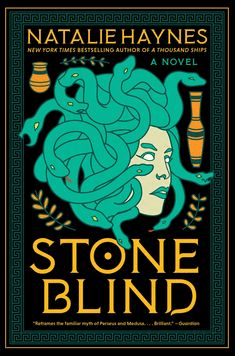
Stone Blind, by Natalie Haynes. I’m often drawn to retellings of ancient mythical stories, especially since modern retellings will often turn them on their heads with different perspectives and interpretations. The Medusa myth has always fascinated me: the story of a goddess who was turned into a monster, and whose gaze turned men to stone. Naturally, when I found out some time ago about the details of the story–that Medusa had been raped by Poseidon, was blamed for the incident and turned into the monster–I felt outrage. Typical “blame the victim” patriarchy, misogyny at its worst; good for her, turning arrogant men who would hunt her into stone, they deserve it, and what have you. Yet I wanted to see what this version would bring to the story.

But I wasn’t too far in when I realized why I haven’t read Greek myth retellings for a while now: the rapes kept adding up, and so did my rage. They weren’t particularly graphic scenes; just the fact that they happened on the regular, by Zeus in particular (what a vile creature he is), just made me sick. In fact, all of the Olympian gods are vile and arrogant and petulant and just plain odious. I suppose that’s the point. But I just couldn’t get through it.

I suspect I’ve been spoiled, in a way, by Star Wars books (and movies and shows). Gender oppression isn’t a thing in these stories, not by a long shot. It doesn’t exist. Rape is never, ever mentioned (this is a PG-rated world, after all), but more than that, in the world itself, women (or transgender persons, for that matter) are simply taken for what they are without question. Good, bad, meek, strong, beautiful, ugly, rulers, peasants, soldiers, parents; gender doesn’t play into the role at all (neither does ethnicity nor sexual orientation). Certainly, there are those in our world who have something to say about this and Star Wars “wokeness;” but I have no patience for any of their nonsense and ridiculous labels.

Anyway, what I’m saying is, I’ve read so much Star Wars and immersed myself in this world so much, that when I encounter misogyny and other bigotry in other books, it’s jarring and upsetting to me. As it should be, but…mental health, lol. So Stone Blind has been set aside for now.

Canto Bight, by various authors. So I retreated into another Star Wars book, one that I haven’t had much interest in but thought I’d finally check out since there didn’t seem to be much else I wanted to read. But…it’s boring, lol. The first story was a bit amusing, but I don’t know or care about these characters at all. And Canto Bight isn’t a setting I’m particularly fascinated by. Set aside for another time, perhaps.

Medstar 1: Battle Surgeons, by Michael Reaves and Steve Perry. So now that I’ve watched Tales of the Empire, I’ve got Barriss Offee on my mind, lol, and want to know more about her besides what we see in the Clone Wars. She’s in a couple of Legends books called Medstar: Book One: Battle Surgeons and Book Two: Jedi Healer. They’re like a Star Wars M*A*S*H, following a group of doctors and nurses on the planet Drongar that sew up and treat clones that are injured in battle. The battle is being waged here for a special substance called bota that’s kind of like bacta, and both sides want it. There’s an arrogant Tera Kasi warrior, an ambitious Republic Admiral, and an unidentified spy in their midst. I like how Barriss is portrayed as a Force healer in these books, as we see in the last short of Tales of the Empire. We don’t see too much of that in canon until Rey in the Sequel Trilogy. I just started the first book, and already I like it better than the other books I’ve tried to read lately. I’ll write more about them next month.

That’s it for this month (that’s plenty!). How did you celebrate May the Fourth? What’s been entertaining you? Let me know in the comments and we’ll talk about it!
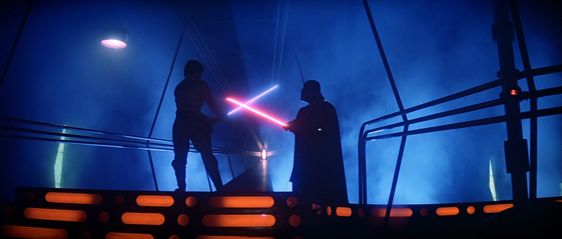
Happy May the Fourth!

Hello friends, and Happy May the Fourth! I’m planning on watching Tales of the Empire tonight, as well as catching The Phantom Menace in the local theater some time this weekend to celebrate.

I also have a special post today: a collaboration post with Jessica Bingham of Storytime Truth. We wrote about the nature of the Force; Jessica described the Light Side and the Jedi, while I explored the Dark Side and the Sith. Enjoy!

The Light Side of the Force, by Jessica Bingham

The Jedi Council

I have always thought of the Jedi Council as the representation of wisdom. The Jedi temple is a place where stillness, peace, and inner consultation resides. Even the structure of the council is one of invitation, that no one Jedi is above another. They sit in circle fashion, conversing. Contrast this to a speaker at a podium, or even Emperor Palpatine addressing the congress during the special session in Episode III. Palpatine speaks at people, the Jedi speak with each other. They each bring their inner stillness and knowledge of the force to bear on a situation. As Yoda says in Episode V, “a Jedi uses the force for knowledge and defense, never for attack.” In the times of the Republic, these sessions were primarily knowledge seeking, with some focus on defense against the dark side.

Common Jedi Force Practices

Meditation

Something you will see Jedi Master Yoda do often is meditate. This is a great way to become inwardly still. Sometimes his meditations are seconds long, other times we are led to believe they are dedicated sessions as part of his routine to remain in a state of enlightenment. He also becomes still before engaging in an action of importance such as lifting Luke’s ship out of the water in Episode V.

Qui-Gon Jinn also does this in Episode I during his fight with Darth Maul. Ultimately he loses the battle, but he gave himself a chance to reconnect with the force through purposeful stillness.

Feeling Before Action

When I say feeling I do not mean giving into impulsive emotions. This is more Sith-like and a sign of the dark side emerging. I mean prioritizing feeling over thinking by letting the heart guide the mind. The heart being the word for wisdom and stillness and the mind being the word for action. Qui-Gon Jinn tells this to young Anakin before his pod race in Episode I and Obi-Wan Kenobi tells this to Luke at the beginning of his training in Episode IV and again at the end of the same episode when Luke successfully destroys the Death Star. Kenobi cautions Luke about the dangers of impulsive feelings in Episode VI. He warns Luke that his fear for his loved ones could be used against him as it was for his father. This does not mean that the Jedi are hostile towards emotions, they just make it a point to distinguish between feeling states that serve them versus those that serve the Emperor (or ego).

Defense and Never Attack

The Jedi do the least amount of response necessary to combat a threat. This is a crucial guideline because it prevents enjoyment when faced with the temptation of ego. We see Anakin succumb to this multiple times in Episode II and Episode III before fully becoming Darth Vader. He takes pleasure in slaughtering the entire community where he mother was held, for example. He attempts to exact revenge on Dooku after the death of his mother and gets electrocuted. He gives into the desire to behead Count Dooku the next time they meet.

We also see Obi-Wan Kenobi flirt with crossing the line in Episode I when he watches his master fall to Darth Maul at the end.

Luke Skywalker has a brief moment in Episode VI where he enters into the domain of attack. He viciously strikes his father’s saber and severs his hand before pulling himself back, sheathing his sword and casting it away. A Jedi must remain in a state of peace, passivity, and calm in order to refrain from the dark side.

Learning About Oneself Through the Force

We see a great deal of Jedi using the force for knowledge in Episode V. Much of this episode is dedicated to Luke’s training with Yoda. In this episode Luke learns that the greatest challenge is to overcome his own mind. He discovers this in the cave when he confronts himself as Darth Vader, reminding all of us that absent knowledge and the accompaniment of wisdom, we are all susceptible to our dark side selves.

Later on in Episode V, Luke loses his connection to the force, to his centeredness and fails to balance the stones in his practice session. He is ambivalent about his ship sinking further into the water and makes the mistake of believing that moving stones is radically different from moving a large-scale object like a ship. This is a crucial lesson of the force for Jedi to learn: its application is the same in all situations. Yoda proves this in the series by being the most enlightened and most powerful Jedi. One of the smallest but the most fierce and powerful. He has the highest midichlorian count of all Jedi, aside from Anakin Skywalker. This is why Anakin’s departure from Jedi to Sith was so catastrophic to the galaxy. He had the deepest, most promising connection to the living force and he fell into darkness. It is also why his one action through knowledge of himself as one with the force and defense of his son at the end of Episode VI was enough to tip the force back into balance. 

The Dark Side, by Tina Williams

The dark side of the Force deals in raw, powerful emotions: anger, fear, passion, hatred, jealousy, greed, bitterness, selfishness. You get the idea. These are emotions that are seductive and easy to access, as Yoda warns Luke in Episode V. Powerful, yes, but also a trap: fear leads to anger, anger leads to hate, hate leads to suffering. One can tap into great power through the dark side, but it’s never enough, and it will never be enough. In the end, it consumes you.

Consider the fate of these prominent dark-side users in the Star Wars universe:

Darth Vader: Ultimate Suffering

“Anakin is gone. I am what remains.” Vader in the Obi-Wan Kenobi series.

Darth Vader is the most iconic dark side figure in Star Wars, and perhaps the most tragic. Once Anakin Skywalker, he was one of the most powerful force-wielders in the Jedi Order. Through the light, he could have done amazing things for the galaxy. Instead, that power became focused through the lens of the dark side.

Anakin falls to the dark through his intense fear of loss: he loses his mother in Episode 2, and in Episode 3 fears he will lose his wife, Padme. Sidious makes sure Anakin believes the only way to save her is through him and the dark side. Because of his emotional attachments, Anakin doesn’t trust in the Force—and literally burns in “hell” on Mustafar as a result of his duel with Obi-Wan.

The suit that encompasses him for the next few decades keeps him alive but in constant pain. His injuries, both physical and emotional, will never fully heal. Vader draws strength in the Force through this pain—anger, grief, hate, as well as self-hatred—but that power will never ease his suffering.

It is only through love for his son, Luke Skywalker, that his pain ends. When Sidious tries to kill Luke with Force-lightning (after Luke had shown Vader compassion, after everything he’d done), it’s Anakin who picks him up and throws him down that shaft. It ends his life, but not before saving his son, and his soul as well.

Darth Sidious: The Emptiness of Hate

Darth Sidious, aka Chancellor, and then Emperor, Palpatine, is the paradigm of the dark side in Star Wars. A Sith Lord who rose to power during the prequel era, he is a master manipulator who orchestrates the Clone Wars to destroy the Jedi Order and becomes Emperor.

Sidious is pure evil, defined by hate and anger. There is no in-between with him, no struggling with who or what he is. He cackles with glee at the suffering of others, taking pleasure in their pain. Clearly, he draws great strength in the Force from all this hatred, Force lightning being one of his favorite weapons. But there’s one thing he does fear: death.

The Sith have a great fear of death, believing it to be the annihilation of the soul; they do not want to give up their physical attachments. Unlike the Jedi, they are denied the opportunity to become force ghosts after death, since its requirements are to face the darkness in themselves and defeat it, give up preconceived notions, and let go of what they fear to lose.

“The dark side of the Force is a pathway to many abilities some consider to be unnatural.” Sidious in The Rise of Skywalker.

Sidious’ obsession with prolonging his own life is evident in the lengths he goes for supposed immortality. We see it in his Project Necromancer in the Bad Batch, as he tries to use cloning technology (and, presumably, Sith magic) to attain that goal. He only partially succeeds in this, as, thirty years later in the Sequel trilogy, he returns, but in a rapidly degrading clone body. Only in his granddaughter Rey does he truly have the opportunity to successfully live on and continue to spread his evil.

Luckily, the galaxy didn’t have to endure that, as, once again, Light defeats the Dark.

Count Dooku: Righteous Anger

Count Dooku (Darth Tyrannus), the Separatist leader during the Clone Wars, and secret apprentice to Darth Sidious, came to the dark side through disillusionment and righteous anger. As a Jedi, he became disappointed with how the Order had become beholden to the Senate and the Republic, moving away from their role as guardians of peace and justice. He eventually leaves the Order, believing they’d become puppets to a corrupt system. Darth Sidious uses this to his advantage, turning him to the dark side and making him the leader of the Separatist forces.

As a young Jedi, Dooku lets his anger get the better of him in Tales of the Jedi.

Dooku, like Sidious, can use Force lightning, and uses it against both Anakin and Yoda in Episode 2. His arrogance causes him to believe that he is indispensable to Sidious, when in fact Sidious orders Anakin to kill him, thus replacing him with a new apprentice. The Sith are governed by the Rule of Two: there is ever only two Sith, a Master and an Apprentice. By the very nature of the dark side, the apprentice will always seek to usurp their master, coveting all the power for themselves. Dooku replaced Maul as Sidious’ apprentice and was then replaced himself by Anakin.

Darth Maul: The Futility of Revenge

Darth Maul, former Sith apprentice to Darth Sidious, is fueled mostly by rage and the need for revenge against Obi-Wan Kenobi. Since Obi-Wan “killed” him in The Phantom Menace, he has relentlessly pursued the Jedi throughout the animated series Clone Wars. His burning need for vengeance consumes him for years, coming to a head in the animated series Rebels, when Ezra Bridger unwittingly leads him to Obi-Wan on Tatooine as he watches over Luke Skywalker.

While Obi-Wan’s trials and his solitude on Tatooine leads to his character’s growth, Darth Maul’s consuming focus on revenge leads him to stagnate; he experiences no growth at all, as he’s been stuck in an endless loop of rage and bitterness. Even as he dies in Obi-Wan’s arms, his mind is still on vengeance, though not against Obi-Wan anymore, but ostensibly against Darth Sidious.

Obi Wan holds a dying Maul in “Twin Suns” from Rebels.

“Is he the Chosen One?” he asks Obi-Wan, referring to who he was protecting on Tatooine.

“He is,” Obi-Wan answers, at this point convinced the Chosen One was not Anakin.

“He will avenge us,” Maul says, referring to the suffering they’d both endured at the hands of Darth Sidious (Order 66 for Obi-Wan, and the death of his brother Savage Opress for Maul).

Even with his dying breath, Maul cannot let go of the idea of vengeance.

Kylo Ren: The Dichotomy of Dark and Light

Born Ben Solo, Kylo Ren is the son of Han Solo and Leia Organa. From birth he is strong in the Force, but Sidious, evil being that he is, influences and manipulates the young boy. He turns Ben to the dark side in retribution for the role his parents played in the fall of the Empire. He does this through a voice in his dreams, as well as through Snoke, who takes young Ben under his wing while his parents are busy rebuilding the Republic. Snoke plants distrust and turns him against his parents and his uncle, Luke Skywalker. After Luke seriously breaks Ben’s trust in him, he leaves Luke’s Jedi training academy and eventually joins the First Order.

After changing his name to Kylo Ren, he becomes obsessed with his grandfather, Darth Vader and wishes to emulate him and his power. But as Rey accuses him in Episode VII, he’s afraid he’ll “never be as powerful as Darth Vader.” This fear goads him to ever more heinous acts, culminating in killing his own father, Han Solo. But afterword, instead of feeling more powerful, he only feels more conflicted.

The interesting thing about Kylo Ren is that he is constantly tempted by the Light, rather than the other way around. It’s as if his natural state is the Light side of the Force and he actively has to work against it to ground himself in the dark side.

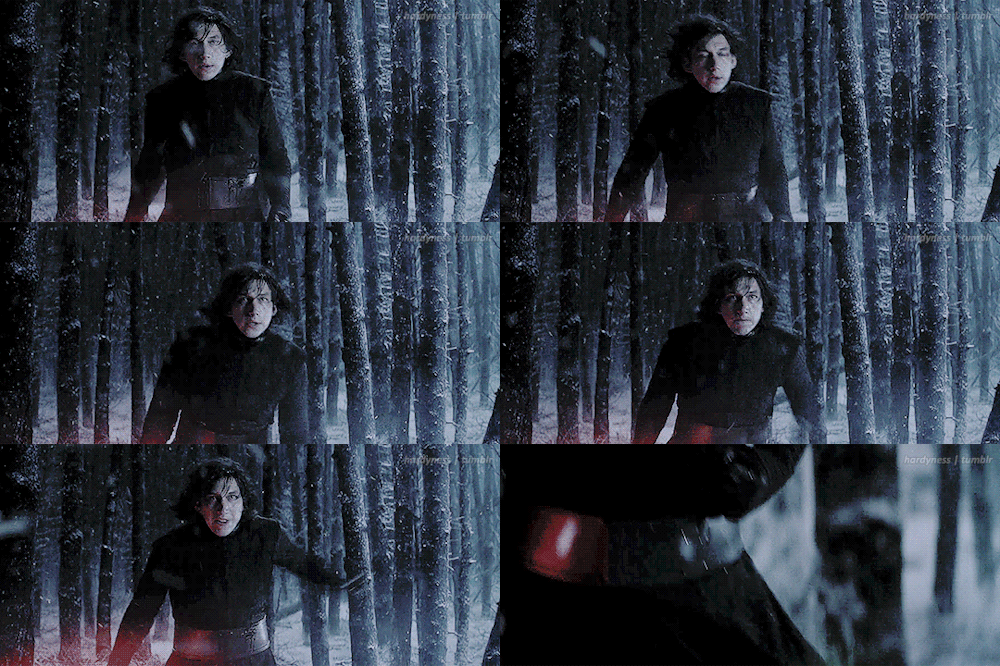
After he kills his father, he’s so emotionally compromised (and also injured by Chewbacca’s bowcaster) that he’s defeated by Rey in the lightsaber battle in the forest on Starkiller Base. To make himself stronger, he punches the wound in his side to feel its pain even more. He wants to feel the pain and rage of the wound in order to draw upon the dark side for strength, similar to how Darth Vader is in constant pain from his suit and draws power from his rage.

Kylo draws upon the dark side in The Force Awakens.

It’s also interesting how, when Kylo turns back to the Light and fights beside Rey against Sidious as Ben Solo in Episode IX, he looks like a completely different person, and holds himself differently, using the Force through the Light side rather than the Dark. He looks and acts lighter, as if a great burden has been lifted from him. As Kylo he seems weighed down, stomping around and slashing his lightsaber with heavy, massive strokes. But as Ben he’s like a dancer, jumping and flipping around with ease. It’s amazing to see.

While not technically a Sith Lord (in fact, he advocates that the Jedi AND the Sith end), he’s an interesting dark side user that I didn’t want to ignore. There are many dark side cults in canon Star Wars, but Kylo Ren is kind of his own thing.

Darkness is a part of life; there must always be balance. But from what I can see, embracing the Light frees you; embracing the Dark enslaves you.

I hope you enjoyed this collaborative post on the Force! How are you celebrating May the Fourth? Let me know in the comments and we’ll talk about it!