Star Wars Legends Reading Challenge-Dawn of the Jedi: Into the Void

Hello friends, and welcome to the first post of my Legends Reading Challenge. The first book in timeline Order is Dawn of the Jedi: Into the Void, by Tim Lebbon. It was published in May of 2013, and ties into a collection of comics called Dawn of the Jedi. (I’m only reading the adult novels, and not any comics or junior novels, etc).

Into the Void takes place about 25,000 years BBY (Before the Battle of Yavin). It has date references such as 3,500 TYA, 7,537 TYA, 10,661 TYA, etc., with chapters starting with a quote from some Master. TYA stand for “Tho Yor Arrival,” which refers to eight ships that arrived in the Tython system long ago, from a mysterious, far away system, and which held Force-sensitive beings. They began the settlement on Tython and eventually became the Jed’aii Order. These ancient Jedi strove to find a balance between Ashla (the Light) and Bogan (the Dark).

I had to look up a few of these things on Wookieepedia, as I didn’t know much about this time period and the book doesn’t exactly spell it out. I have a feeling the comics delved much deeper into the ancient lore. This book tells the story of a particular Jed’aii, Lanoree Brock, that lived about 10,000 years after the Tho Yor appeared. She is a Ranger, akin to a Jedi Knight’s role and responsibilities, travelling the system and helping out in whatever way she can. There is no hyperspace travel at this point, so they’re contained to the Tython system.

Lanoree is called back to Tython to speak with the Jed’aii Council concerning a new mission. They’re concerned about a cult called the Stargazers, who have developed a device that, if detonated near a supposed “hypergate,” will either cause a hyperspace gateway to open up, or cause a black hole that will swallow the entire system. They want Lanoree to find this group and stop them. The twist is that the leader of this group is Dalien Brock, Lanoree’s brother, who has long been thought dead.

The book flips back and forth between the present and the past; it tells of Lanoree and Dal’s relationship and childhood. Their parents are both Jed’aii, and Lanoree has a strong connection to the Force. Everyone expects Dal to have that connection as well, but…he doesn’t. This seems to be something they can’t accept, as they believe he’ll eventually “allow the Force in,” as if he’s actively pushing it away. This kind of confused me–is he Force-sensitive or not? Because if you’re Force-sensitive, why would you actively reject it? Dal seems to hate the Force and everything about it, but I assume it’s because he can’t access it. His parents and sibling don’t seem to accept this and keep encouraging him to continue with his studies. He and Lanoree travel across Tython on their “Great Journey” to different temples where they study different aspects of the Force. Each time, Dal fails miserably. Is it any wonder he becomes bitter and hateful? They keep expecting him to do this thing he cannot do.

Anyway, Dal becomes obsessed with the ancient myth of their ancestors, who they were and where they came from, and is determined to somehow get back there. He finally murders a Jed’aii student and flees to the Old City, which is a ruin built by an ancient race, the Gree. Not much is known about them, but Dal believes there is a hypergate deep in the bowels of the City. Lanoree follows him, hears him scream, and finds his bloodied clothing. Everyone assumes he’s dead.

In the present, it seems her brother is definitely not dead, and Lanoree is instructed to find him and stop him–kill him, if she must. With the help of a Twi’lek Jed’aii contact named Tre Sana, she follows a trail from Khalimar to Nox to Sunspot, playing a game of cat and mouse with Dal, who she believes has gone completely mad. Twice he tries to kill her, and twice she survives. She finally catches up to him back on Tython as he brings his device to the Old City and very nearly initiates the device before Lanoree kills him.

An artist rendering (Albert Umanov) of Greenwood Station on the planet Nox.

It took me a bit to get into the book, but once it got going, it was fine. I found the Jed’aii Order interesting, especially the temples the young learners had to visit on their “Great Journey” to finish their training. Tython itself is described as a planet strong in the Force, and it seems only Force-sensitives can manage to live on the planet. Their code wasn’t as solidified as we see in the later Jedi; these Jed’aii strive for balance between the Light and the Dark. I can see where some fans got the idea for the “Gray Jedi” in this story.

Lanoree herself, though she doesn’t relish killing, separates quite a few heads from bodies in this story, if it serves her mission (with a metal sword; there were no lightsabers yet). She also studied and had a proficiency in Alchemy, a “manipulation of the flesh through use of the Force,” which I thought very weird, to say the least, lol. She conducted experiments on her ship, the Peacemaker, in which she grew living tissue from her own cells, and which she used to heal herself when Dal shot her in the chest at point-blank range. She was always trying to balance the influence of Bogan (the Dark) when she felt pride and power from her accomplishments. She was also tempted to try Dal’s device herself after he was dead, to see what would happen. Just for a minute.

This was a fairly entertaining book, and I learned a lot of Legends Lore about the early incarnation of the Jedi, a good start to my Legends Reading Challenge.

Three out of Five Lightsabers

Up next: The Old Republic: Revan

Why I Love the High Republic

Light of the Jedi kicks of the High Republic.

If you follow this blog, you’ll know that I love the High Republic, the publishing initiative about the Jedi and the Republic at their height that’s been going on for the past couple of years. Besides the fact that there are many talented writers telling this massive story, there are many reasons why I love it, and I thought I’d talk about them here.

  • It’s Jedi-centered. I love pretty much everything about Star Wars, but my favorite thing about it is the Jedi. The Jedi and the Force are what define Star Wars for me. And the High Republic books are very Jedi-centric, telling the story of them at their very best, at a time when the Republic, too, is at its height. The Jedi in the prequels, while still very cool, had fallen down a slippery slope away from their ideals, and allowed themselves to be deceived by Darth Sidious. But what were they like when the Sith were still in hiding, when the Republic was expanding its reach, when they were sure of their place in the galaxy? When they stood for defending the innocent, serving the citizens of the galaxy, and helping those in need? How did they get from these ideal Jedi to the flawed ones we see in the prequels? This is that story.
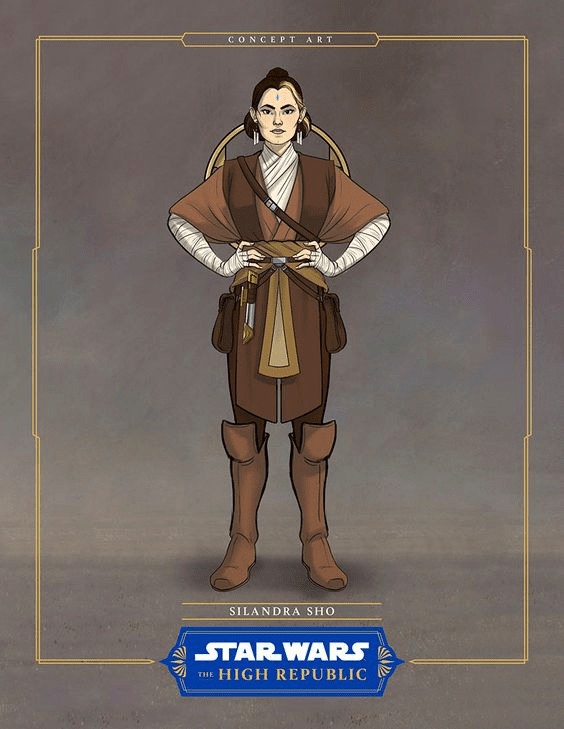
  • The Jedi aren’t so rigid with their beliefs and are more forgiving. The prequel Jedi are presented as celibate monks that forbid attachments. And while this true in a sense for the High Republic Jedi as well, they aren’t so rigid about such things. Or rather, they’re more forgiving in these areas. For example, it’s a known and accepted thing for Padawans to often experiment with sex and relationships before they take the Jedi vow. Avar Kriss and Elzar Mann from Phase 1 had done this as Padawans. The reasoning for this, I believe, is for the Padawans to truly understand what they would be giving up once they take the vow–and decide if that’s what they want to do. Once they are Jedi Knights, they are expected to choose the Force over relationships, to commit to the Jedi Path. (And Elzar, even years later, is still having trouble with his feelings for Avar). If they cannot truly commit, however, they are free to leave the Order for a time to figure it all out. And then come back when they’re ready. Master Kantam Sy did this, leaving for a year, taking on a lover, and travelling with a circus (!). He came back when he decided to choose the Force over anything else. Attachments aren’t forbidden–it’s only natural, as a living being, to form attachments; but as a Jedi, you can’t let such attachments take hold over you. It’s a form of not letting your emotions control you, obviously. When someone–your Master or Padawan, or another Jedi, or anyone you care for–dies, you’re expected to grieve, but you can’t live there. You have to let them go, as they are now a part of the Force. Wayseekers are another interesting aspect of this time. If you feel you need to leave the Order and study the Force on your own, you are allowed to do that, with the Order’s approval. Other things, like fancier robes (and more sober mission robes), more personalized lightsabers (Vernestra Rwoh even has a light-whip, and Master Silandra Sho has a lightsaber and a shield) are characteristics of this time. Flexibility and understanding are hallmarks of the Jedi in the High Republic.
Silandra Sho with her shield on her back.
  • It’s a different time-frame. The first Phase of the High Republic takes place 150 years before the events of The Phantom Menace. Phase 2 takes place another 100 or so years before that. So we see a galaxy that’s a bit different from what we’re familiar with. The Republic is still trying to expand its reach to the Outer Rim, to bring in new worlds and create more hyperspace lanes. We see more of the San Tekkas and Grafs, rival families who are hyperspace prospectors paving new routes throughout the galaxy. Communication lines aren’t perfect; it’s often difficult to contact those in the Outer Rim, due to lack of or malfunctioning communication buoys. Republic Pathfinder teams, made up of a Jedi and their Padawan, a pilot, a medic, and a communications droid, explore the Outer Rim to set up communications with new worlds or help those in need. It feels more Wild West, lol.
  • New and interesting villains. With the Sith still in hiding, the creators had to come up with a new and interesting villain. In Phase 1, it is the Nihil, a sort of space-Viking group that is violent and who take what they want without regard to anyone else. Most of the group are uninteresting thugs, but it is headed by a character named Marchion Ro, who is much more complex. He is very mysterious and raises a lot of questions in Phase 1, especially as to his past and his family’s history with the Jedi. It becomes more clear in Phase 2, with The Path of the Open Hand, a Force-cult (who believe the Force should not be manipulated by the Jedi or anyone else) that is the precursor to the Nihil. The Path is led by the Mother, another mysterious figure who discovers the Leveller, a creature that can strike incredible fear into the Jedi and turn them into husks. The Path, I think, will eventually come under the control of Marda Ro, an ancestor of Marchion. I’m curious to see how things will turn out in Phase 3 and how the Jedi will overcome this formidable foe. Oh, also in Phase 1, the Jedi encounter the Drengir, a meat-eating plant monster, lol.
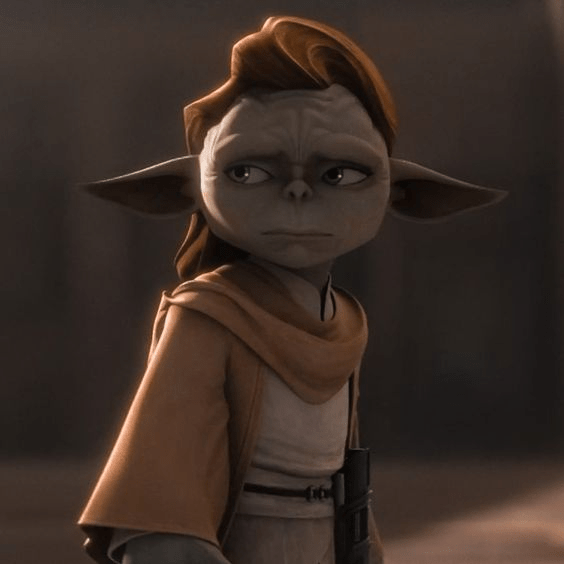
  • Some familiar characters. The High Republic has some familiar characters who are long-lived, like Yoda and Yaddle. Yoda, especially, plays a small role in the books, although he is there at some key moments and is a rather comforting presence. He is much more present in the High Republic comics, only a few of which I have read (I can’t keep up with it all, lol). Yaddle plays a larger role in Cataclysm, and I really enjoyed getting to know her better, especially after her appearance in Tales of the Jedi. It’s nice to have familiar characters show up, to anchor you in the world, which states, “Yes, you are in the world of Star Wars.”
Yaddle in Tales of the Jedi.

These are some of the main reasons I love The High Republic and why it’s been such a satisfying journey so far. There have been books I loved and some I didn’t like as much, but the overall story arc is something I’m totally invested in. Path of Vengeance, the last book of Phase 2 is out now, and then Phase 3 will begin in the fall. I can’t wait!

“We are all the Republic.”

“For Light and Life!”

Have you enjoyed The High Republic? What’s your favorite aspect of it? Let me know in the comments and we’ll talk about it!

High Republic Wednesday: Midnight Horizon Review

Daniel Jose Older’s YA novel Midnight Horizon is the third, and last YA offering in the first phase of the High Republic books, and it was an enjoyable read. It takes place just before and during the events of The Fallen Star, the adult novel by Claudia Gray that tells of the Nihil attack and destruction of Starlight Beacon.

The Nihil are also causing problems on Corellia (Han Solo’s home planet); while the marauders have long plagued the Outer Rim, most of the Inner Rim is complacent that they wouldn’t dare attack a Core world. They also believe that the Jedi and Republic forces have hunted down and destroyed most of the Nihil and that they’re not that big a problem anymore. Oh, how wrong they are.

Padawan Reath Silas

Corellia is famous for its shipyards, and it makes sense that the Nihil would want to attempt to steal some ships for their own nefarious purposes. Their plan is surprisingly sophisticated, but it’s interrupted by a group of young people that include Jedi Padawans Reath Silas and Ram Jamoram (and their masters, Cohmac Vitus and Kantam Sy), and a young native with pink hair named Crash who runs a protection agency.

Most of the book is a slow burn of character development and setting up of events that lead to a huge, rather exciting climax in the last part of the book. I will admit that I wasn’t particularly wowed by the first part of the book, and Crash was not a character I found interesting in any way. I’m a little tired of brilliant adolescents who vacillate between teen angst and impossible feats of valor and wisdom. But that’s YA for you–I’m not the ideal reader.

Master Cohmac Vitus

The Jedi, of course, are exceptions to this very biased opinion of mine, lol. Reath Silas is my favorite High Republic Padawan, precisely because he originally was the bookish, studious type who, while quite skilled with the lightsaber, hoped that he never had to use it. He didn’t want adventures. He wanted to live in the Jedi Archives. And I could totally relate. But, over the course of several YA novels, he’s been forced into living a life of war with the Nihil, and it’s rather poignant to see him struggling with that transition. And I love seeing him mentor the younger Padawan Ram, who is also struggling with the transition. He just wants to tinker with machines.

Mostly I preferred the scenes with the older Jedi, Cohmac and Kantam. Until the very end of the book, they took a backseat to the younger characters, but they, too, had their own emotional struggles to deal with. Since Into the Dark, Cohmac has struggled with his emotions and the Jedi Order’s stance on how to deal with them (though the High Republic Jedi are still much more open with attachment and emotions than the prequel Jedi). Kantam Sy (a non-binary character) had even left the Order for a time when they were young, to explore their burgeoning need to explore life outside of the Jedi. They tell this story to Cohmac during some of their down times.

Padawan Ram Jamoram

All the Jedi, Masters and Padawans alike, struggle with their emotions and their attachments to each other and others, as the story unfolds. Especially as they find out what’s happening to Starlight Beacon; they worry for their friends and struggle with rage against the Nihil.

Even Crash, who lost a good friend at the beginning of the book, struggles with attachment–she decides to distance herself from her other friends in order to prevent being hurt again in that way.

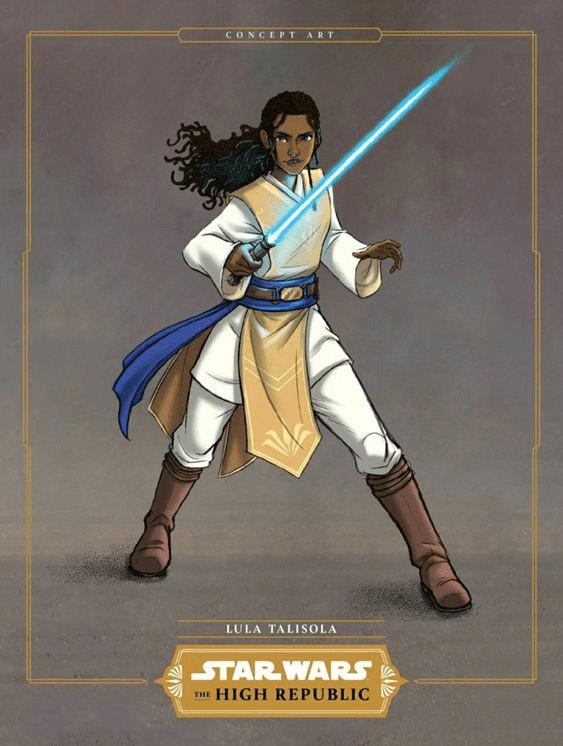
Padawan Lula Talisola

The end of the book was inarguably the best part, as it climaxes into a battle between the Jedi and their allies and the Nihil in the shipyards. And we get a surprise appearance from a familiar green friend, who has also figured into some of Kantam’s memories in the book.

In the end, this was a pretty good book, but I do prefer Claudia Gray’s Into the Dark, as far as YA High Republic novels go. I do like how we get to know Corellia a bit more during the High Republic, its politics and inner workings (and we get to see the Grindalids, the White Worm gangs that rule the sewers and underground passageways that we see in Solo: A Star Wars Story, and the book Most Wanted). And I finally got to see some of the characters from the comics, like Lula Talisola, Zeen Mrala, Krix, and others that Older created for his High Republic Adventures comics.

I would give Midnight Horizon 3.5 out of 5 lightsabers.

Have you read Midnight Horizon? If so, what did you think? Let me know in the comments and we’ll talk about it!