Book Review: Rebel Rising

If you’re a fan of Rogue One, and of Jyn Erso in particular, you might want to get your hands on Rebel Rising, by Beth Revis.

This book chronicles the events of Jyn’s life from the time Krennic came for her father at eight years old, until the Alliance breaks her out of the Wobani prison camp. The narrative flashes back and forth between Jyn’s time with Saw (and other events after he abandoned her) and her time at the prison.

The first third of the book tells of her time with Saw, and we get a better picture of their relationship. When he rescues her from the cave, he tells her “I don’t know what to do with you, kid.” What he ends up doing is training her to fight, which is all to the good. But, although he becomes a sort of father-figure to Jyn, he’s not particularly good at it. He doesn’t coddle her. But it’s clear he cares for her.

Jyn’s time with Saw Gerrera paints a clearer picture of the man. He seems cold and unfeeling, but we learn that he once had a sister. She died years ago fighting against the Empire, but Saw was the one who had inadvertently caused her death. Since then, he’s closed himself off to any emotion except rage and a laser-focus commitment on destroying the Empire no matter what the cost. Instead of joining with others in a concerted effort to defeat the Empire, he’s become a terrorist.

Jyn is loyal to Saw (he came for her, after all), but even she internally questions his tactics. Still, he’s all she’s got, and his abandonment of her during a mission gone wrong is a traumatic blow. Saw knew that Jyn’s real identity as Galen Erso’s daughter would forever follow them, and put their various missions in danger. Turns out, even though Saw cared for her, he cared more for his crusade against the Empire.

After Saw’s abandonment, Jyn finds herself on a planet called Skuhl, where she comes to live with a woman named Akshaya and her son, Hadder. She comes to know a brief year of peace and happiness, and even has a little romance with Hadder, before both the Empire and her past shows up to ruin things once again.

After that, she becomes a wanderer, taking on jobs where she can as a codebreaker, not caring whether she works for the Imperials or for anyone who works against them. This proves to be her undoing, however, as she often gets caught between the two. She tries to remain neutral, while still following her conscience, which is a tricky thing in the galaxy just then.

Eventually, she gets double-crossed by the Imperials she’s working for, and gets sent to Wobani. The Wobani prison scenes gives us more insight into the conditions she lived under there, which is to say, soul-crushing. At one point, Jyn loses all hope, but it’s the memories of her mother (of whom she’s reminded of by the kyber crystal around her neck) that gets her through.

“Trust in the Force,” her mother had told her before she died, and Jyn interprets that as meaning, don’t give up hope. When the Alliance breaks her out of the prison, and presents their ultimatum (help us find your father or we’ll send you back to prison), she agrees. Obviously she doesn’t want to go back to Wobani, but it’s not necessarily to find her father at that point, either, or to help the Alliance. Her mother didn’t want her to give up hope. The last few paragraphs of the book sums up her decision:

“The last thing Papa had said was to trust him.

The last thing Mama had said was to trust the Force.

She wasn’t sure she could do either of those things, but for the first time since she was eight years old, she was willing to try.

…She looked out at the faces of the people around her. Expectant. She recognized something in their expressions that she had never expected to see again.

Hope.

She had thought her hope had died on Wobani. Snuffed out like a flame deprived of oxygen…But seeing these people, the way they still believed they had a chance–a chance hinged on her–rekindled that spark inside her she had thought died long ago.

She wouldn’t go down again for doing nothing.

They were giving her a chance. It wouldn’t change what had happened in the past. But maybe it would help change the future.” (Pgs 409-410).

Rebel Rising is a good story of Jyn Erso’s formative years, creating the person we see at the beginning of Rogue One. I think it may have been marketed as a YA novel, so the story is fairly straightforward, but still interesting enough to hold an adult fan’s interest. I will admit it’s a bit depressing; this girl just doesn’t get any breaks. Her life is hard, short, and ultimately tragic; but also triumphant. Recommended.

Star Wars Books, Here I Come

Yikes. Where to begin?

For something different, I thought I’d delve into the world of Star Wars books.

I love to read, and on previous blogs, I’ve done book reviews and really enjoyed writing them. And since the SW films are complete, and we’re waiting on Season 2 of the Mandalorian, as well as future series like the Kenobi and Cassian Andor series, I need more Star Wars (I haven’t gotten into the Clone Wars yet; that may be a future project).

What better way to get more Star Wars than through the many, many books that are out there in that galaxy far, far away? I’ve read all the sequel trilogy novelizations, as well as the stand-alone (Rogue One and Solo) novelizations, and loved all of them. Now what?

After looking into it, I found that it’s very easy to get confused about which books to read, where to start, what are the best, etc. There are literally hundreds of books. Most are comprised of the Expanded Universe or Legends books (books written over the years before Disney took over Lucasfilm and deemed them non-canon).

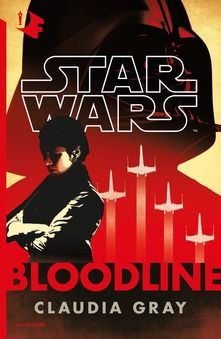
Then there are the newer, Disney-approved “canon” novels. I’ve already read one such book, Bloodline, by Claudia Gray, and loved it. Encouraged by this, I thought I’d start with some of the newer canon novels, and then backtrack into some of the EU novels. Each book I choose will be based solely on what appeals to me.

The only other Star Wars books I’ve read were the original Thrawn books by Timothy Zahn 35 years or so ago. I may re-read these, and then also the new Thrawn canon books that Zahn recently wrote. But not for a while since I’ve got a stack of books in front of me for my reading pleasure. These include:

  • Rebel Rising, by Beth Revis.
  • Phasma, by Delilah S. Dawson
  • Catalyst, by James Luceno
  • Heir to the Jedi, by Kevin Hearne
  • Kenobi, by John Jackson Miller

This is pretty much the order I’ll be reading them in.

I did start to read Last Shot, a Han and Lando story which I was really looking forward to, by Daniel Jose Older, but I couldn’t finish it. This rarely happens, that I find a book so bad I can’t finish. I hate to say it, but it was a terrible mess. Three different timelines flashing back and forth, aimless meandering of the characters that slowed down the action, a non-traditional gender character referred to as “they” (which is fine, but it just confused the hell out of me), and, most egregiously, dialogue that did not reflect the characters of Han and Lando. It was frustrating, and disappointing.

Other than that, I’m hoping to have a blast reading these further adventures of our favorite heroes, and I’ll tell you what I think in future posts.

Have you read any Star Wars novels? Which are your favorites? Comment below and we’ll talk about it!

Book Review: Bloodline

This is the first Star Wars canon novel I’ve read (besides the film novelizations), and I have to say, I’m impressed. I wasn’t sure what to expect, but this book sucked me in like the sinking sands of Pasaana.

If you’ve ever wondered how the First Order came to power, how the New Republic failed and Leia came to lead the Resistance, this is the book for you.

It begins a few years before the events of The Force Awakens. Leia is a Senator in the New Republic at the capitol of Hosnian Prime. Han is running a ship-racing event in another system, and Ben is a teenager training with Luke at his Jedi Academy.

Mon Mothma is the Chancellor of the New Republic, but she’s absent due to illness and may never return. Without her clear guidance, the Senate has divided into two factions: the Populists, of which Leia is a member, and who believe individual worlds should mostly govern themselves; and the Centrists, who believe in a stronger galactic goverment and military.

These two factions bicker and blame each other in a way that is easily familiar to us, and just as frustrating. Leia stresses compromise to both factions, but no one wants to listen. The heroes of the Rebellion are still honored, but most have forgotten the pain and bloodshed of war; a great many weren’t even alive at the time, and tend to romanticize it. Leia senses trouble for the New Republic if they can’t bridge their differences.

After a statue dedication to Bail Organa, a Ryloth ambassador addresses the Senate and tells them that, after the fall of the Hutts, his people are now threatened by a new crime cartel led by the Niktos, led by Rinnrivin Di. Leia is concerned and volunteers to investigate the situation on Bastatha, but the Centrists decide to send one of their own with her, a young Senator named Ransolm Casterfo.

When she meets with him, Leia is horrified to find that Casterfo actually admires the Empire, and has a personal collection of artifacts in his office. Casterfo claims that he only admires the structure of the Empire, and not the Emperor who led it. As a Centrist, he believes in a strong central government, and that the “chaos” of a Populist government can help no one. They get into a testy debate, and she angrily leaves his office, convinced that their mission will be acutely uncomfortable.

She isn’t wrong, at first. But as they investigate the cartel and Rinnrivin Di, their mutual animosity turns to grudging respect, and as the book goes on, understanding and even friendship. That friendship, however, is tested, not only by politics, but by Leia’s very personal secret she’s kept from everyone for decades: that Vader is her father.

I love that this book explores Leia’s thoughts and feelings about her parentage, which we don’t hear too much about anywhere else. Not only about Anakin/Vader and Padme, but her adoptive parents, Bail and Breha Organa.

I love that, even though we don’t see Han Solo too much in the book, they share sweet intergalactic phone calls, with no hint of the bickering they’re famous for, or the eventual split caused by Ben’s turn. By this point, they have a mutual understanding of how their marriage works best, and the love between them is clear.

I love the references to past events, like Leia’s killing of Jabba (which turns out to be an important plot point here), or when Vader held her prisoner on the first Death Star and tortured her.

I love that, no matter which galaxy you’re in, politics and government are proven to be pretty much the same: a predictable shit-show.

Basically, I loved everything about this book. I would have loved to see and hear more of Ben, but I suppose that wasn’t the purpose of the book. Both Ben and Han are out of her reach most of the time, and it’s Leia’s story all the way.

Claudia Gray is a wonderful writer, and I highly recommend this book to any Star Wars fan who wants a little more insight into Leia and pre-TFA events.

Monday Musings: Rogue One Novelization (Or, Jyn Part 2)

Star Wars : Rogue One

I just finished reading the Rogue One novelization by Alexander Freed, and I have to say, though I enjoyed it, I’m not sure if “book Jyn” is the same person as “movie Jyn.”

Here’s what I mean. The same events happen to her as in the movie, the same origins, and the same end. Everything’s the same on the outside. On the inside of Jyn’s mind and heart, however, I saw a different person than I saw onscreen.

In the movie, Jyn is an emotionally distant criminal with no allegiances. She’s hurt and bewildered by her mother’s death and her father’s and Saw’s abandonment. It makes her bitter and hardened, distrustful.

A mother’s gift

In the book, Jyn is not merely bitter–she’s a raging inferno of hate. She hates everyone and everything, but especially her father, Galen Erso. Seriously, if Jyn was a Force user, she’d have turned to the Dark Side almost immediately. She spits anger and hatred and distrust almost constantly, a tensed animal ready to spring into violence.

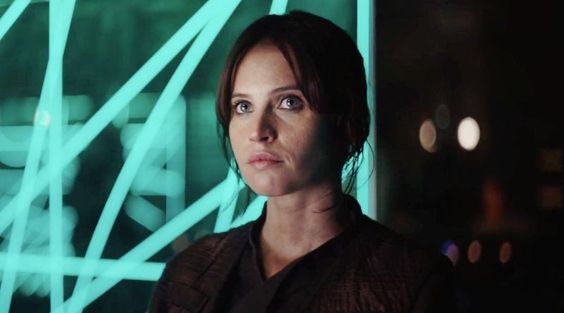
I was a little unsettled by this version of Jyn. While I perfectly understood it, it was at odds with the Jyn I saw portrayed by Felicity Jones onscreen. Maybe it’s Jones’ lovely face that made me feel there was more hurt and loneliness behind her heart than hatred. A silly tendency, maybe; but Jones is a wonderful actress, and I seriously doubt she misunderstood the character.

That means the author decided to go deep into Jyn’s psyche to tell the story, and what he apparently found there caused him to create a character that constantly wanted to blow things up. Kind of like an unhinged, female Poe Dameron.

I’m not saying Alexander Freed is a bad writer, or did the wrong thing. On the contrary, he created a pretty convincing psychology of Jyn based on what he knew of the character. In the book, Jyn is not only damaged by her past experiences, but traumatized. He thought about a sweet 8-year-old girl who watched her mother get murdered, her father leave with the Imperials, and who was then delivered into the hands of a violent guerilla extremist who had no interest in coddling her, despite his love for her–or even because of it. What kind of person does that create?

Someone who compartmentalizes her pain to survive, and stuffs all her emotions into a “dark cave” that she rarely explores. It’s the cave she hid inside as a child, waiting for someone to find her. Over the course of the book, that cave keeps opening up to her little by little, a bit of light here and there to illuminate everything she’s trying to deny or forget. When she sees the holographic message from her father, it puts her into a tailspin; she doesn’t know what to think of her father anymore:

My father is alive. My father is a traitor. My father is building a weapon to destroy worlds. My father is a hero. My father is a coward. My father is a bastard. Galen Erso is not my father. Galen Erso didn’t raise me…

Mads Mikkelsen as Galen Erso
Galen Erso: hero, coward, bastard, father

The girl’s a tad messed up. Who can blame her? However, over the course of the book, that dark cave of emotions keeps getting pried open more and more, until, at the end of the story, when she and Cassian and the Rogue One crew are on their way to get the Death Star plans come hell or high water, it’s wide open and illuminated. She’s accepted everything that’s in there, is at peace with it, and herself–she’s now a woman with a purpose, doing what she’s meant to do. When the end comes,

…The world grew brighter, emerald at first and then a clean, purifying white. In Jyn’s mind, the cave below the broken hatch was illuminated with the strength of a sun, and then the walls turned to dust and there was no longer a cave but only her spirit and heart and everything she had ever been: the daughter of Galen and Lyra and Saw, the angry fighter and the shattered prisoner and the champion and the friend.

Soon all those things, too, burned away, and Jyn Erso–finally at peace–became one with the Force.

At the end, book Jyn and movie Jyn are the same, and the differences don’t seem to matter too much.

I always enjoy reading the novelizations of the movies, because it gives us a chance to see into a character’s mind a little bit more than a movie can do. This one was more uncomfortable than most, but still worth a read.

Check out my Women of Star Wars post on Jyn Erso here.

Did you read the Rogue One novelization? What did you think? Comment below and we’ll talk about it!