
Hello friends! I hope your summer (or winter, if you’re in the southern hemisphere) is going well. There’s been a lot of rain and steamy weather where I am (New England), so a lot of time for reading, watching, writing, and a bit of drawing. Let’s get started! (As usual, SPOILERS!!! ahead).
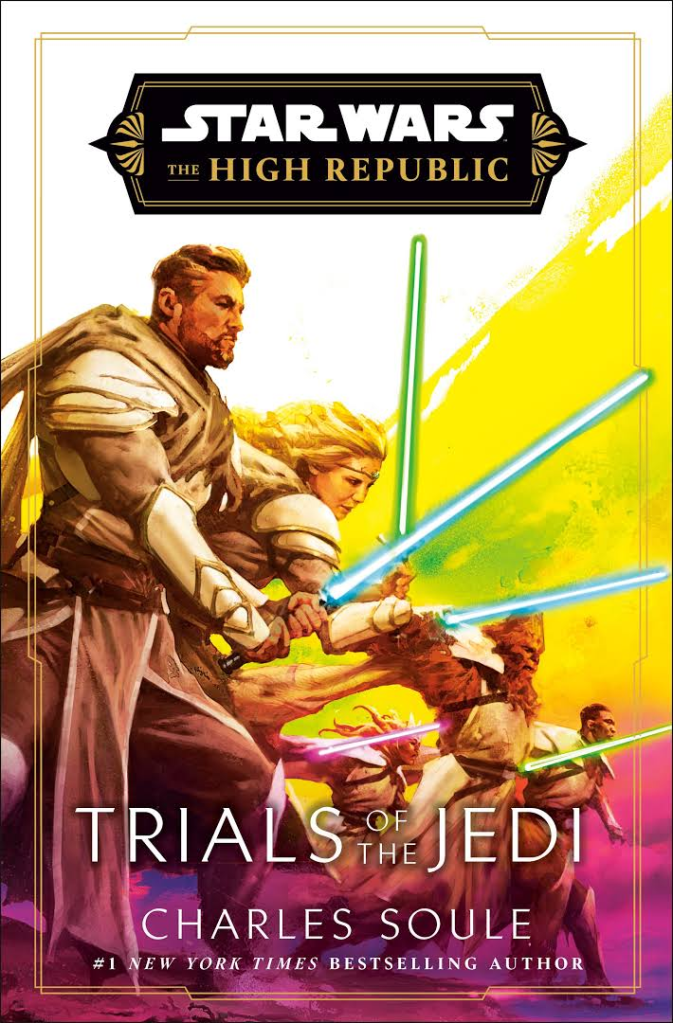
Trials of the Jedi, by Charles Soule. This is the last novel of the ambitious High Republic project (initially called Project Luminous) and it is luminous, indeed. It’s not perfect–I had my nitpicks–but it brought all the multiple threads of this vast story to a satisfying conclusion.
One of my nitpicks (and not just about this particular book, but the High Republic as a whole) is that a lot of the story is told through comics. I tried to read the comics from the first phase, but there were so many I knew I’d never keep up. And oftentimes, elements or storylines or characters from the comics cropped up in the books, and whenever I ran across this I was left wondering, Okay, where did that come from? What does this mean? Who is this person? Etc., etc. The authors try to catch you up within the book, but it’s still disorienting.
So anyway, In Trials, a group of Jedi that comes to be known as The Nine (it’s got a Lord of the Rings kind of ring to it, doesn’t it?) must travel to Planet X, the Nameless home world, so they can release some Nameless creatures that they’ve captured. Their hope is that by bringing them home, it will stop the Blight that is ravaging the galaxy and bring balance back to the Force. With them, they have an ancient relic called The Rod of Ages. I had no idea what that thing was or where it came from, but apparently, it’s super important in controlling another relic Marchion Ro has–the Rod of Power, which I also have no idea how he got or where it came from–which controls the Nameless. Ah, the comics, I thought. Whatever, I’ll just roll with it.
So of course, the mission goes south almost immediately. The Veil they must pass through is vicious and they crash land. Some native creatures immediately attack them. The Nameless escape their cargo hold. And naturally, Marchion Ro has followed them. And he’s determined to not just kill the Jedi or defeat the Republic–he wants to end all life in the galaxy (he’s fundamentally nihilistic, get it?), and he’s in a pretty good position to do it.
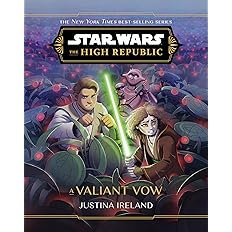
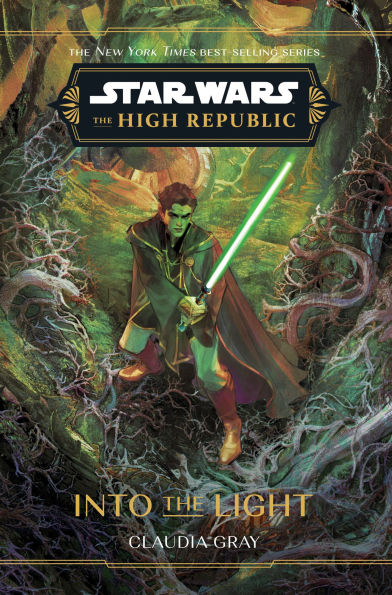
While the Nine (Avar Kriss, Elzar Mann, Reath Silas, Bell Zettifar, Burryaga, Terec, Torban Buck, Ty Yorick, and Azlin Rell) fight to save the galaxy on Planet X, a battle with the Nihil has been raging on the planet Eriadu. The RDC (Republic Defense Coalition) and the Eriaduans (led by several noble houses, one of which is Tarkin) fight off the Nihil once the Stormwall comes down. This happens when Marchion Ro blows up his own ship the Gaze Electric, from which the Stormwall is held up. This is another weird inconsistency–in the YA and middle grade books that came before Trials (Into the Light, A Valiant Vow) the Stormwall was down, but it was never explained how it happened. It was a bit confusing.
Anyway, a few threads are wrapped up outside of the Planet X storyline: Jedi Knight Porter Engle finally kills the Mirialan Nihil General Viess, the woman who was responsible for his sister taking the Barash Vow and disappearing centuries ago. I don’t know the whole story (again, the comics–The Blade of Bardotta), but Viess has been his nemesis all this time and he finally killed her, realizing that he could have done it a long time ago; but that would have meant letting go of the memory of his sister.
On X, Bell confronts Marchion and defeats him, getting justice (revenge?) for his master Loden Greatstorm’s death (he doesn’t kill him but he REALLY wants to); Reath, Ty, and Azlin use the Rod of Ages to stop Marchion’s Rod of Power from destroying the Nameless; And Azar and Elzar figure out how to save the galaxy and bring balance back to the Force: they both must stay on X until the planet heals itself, which will take many decades (and with no way off the planet and its existence a secret, even then they can never leave). It’s kind of weird and complicated, but Avar will be the Light to the darkness, and Elzar will be the darkness to the light. Like this:

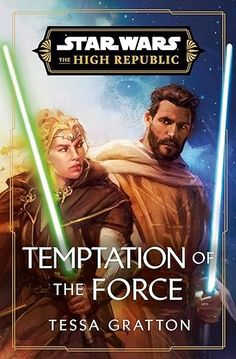
They will be separated, with Avar down below ground in the darkness, and Elzar on a mountaintop. I had feared their relationship (which they finally accepted and consummated in Temptation of the Force) would end in tragedy. This isn’t so much tragedy, as them sacrificing their love and their lives together for the galaxy. Because in the end, they are Jedi.
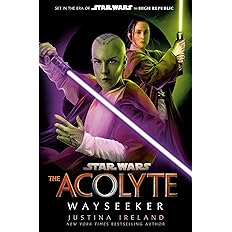
The back-up team, which includes Vernestrah Rwoh (who was mostly absent in this book, but it’s okay since she got her own book in Wayseeker last month), picks everybody else up and brings them home. Marchion Ro stands trial and is sentenced to life in solitary confinement, alone in a prison cell on an asteroid. He spends the rest of his natural life alone, unable to hurt, manipulate, postulate to, or lord over anyone else, and this, above all things, is what defeats him. He dies an old, sick, pathetic being whose actions in the galaxy ended up meaning nothing. Or did it mean nothing? I think it’s safe to say that the Nihil conflict was the beginning of the end of the Jedi–it changed the Jedi, it changed the Order’s relationship with the Republic and allowed it to weaken enough for the Sith to destroy them. I think perhaps Marchion Ro, if he had known, would be triumphant at their eventual downfall. But he didn’t know, and that’s his personal tragedy.
Reath takes off to search for Azlin Rell, who had slipped away from Planet X on an old, abandoned ship where he finds a lightsaber. It belonged to a Jedi named Barnabas Vim, a name that sounds familiar to me and I’m sure he was in Phase 2 at some point, but I can’t quite remember, lol. Anyway, Rell bleeds the crystal, and he has a red lightsaber. I think at this point it doesn’t mean he’s a Sith or anything, just a rogue darksider, and Reath feels responsible for him. I hope we get a story later about what happens with these two.
And Chancellor Lina Soh makes a speech about the Republic and mentally ruminates on its relationship with the Jedi moving forward. She understands that the Jedi just saved the entire galaxy and is therefore very powerful indeed. The Republic and the Jedi up to this point were partners in a peaceful galaxy; now, after the Nihil conflict, the balance of power has changed, fundamentally if not openly. It sets the stage for the Republic getting into Jedi affairs and vice versa as the prequel era looms ahead.
So this High Republic initiative has ended, and I have to say it’s awesome and I loved every minute of it. I’m sad to see it end, but it ended satisfactorily, with the hope of more High Republic stories to come. In the meantime, I can maybe read all the other High Republic stuff I skipped (those darned comics!), some manga, and a few audio dramas. It’s not goodbye forever, thank the Force.

Gifts, by Ursula K. LeGuin. I read LeGuin’s Earthsea Trilogy many years ago and really enjoyed them but haven’t read anything by her since then. I came across this book at a used bookstore and decided it was time to revisit this author. This is a YA book, but this old person thought it was great anyway. Here’s a blurb from Amazon:
In this beautifully crafted novel, the first of the Annals of the Western Shore trilogy, Ursula K. Le Guin writes of the proud cruelty of power, of how hard it is to grow up, and of how much harder still it is to find, in the world’s darkness, gifts of light.
Scattered among poor, desolate farms, the clans of the Uplands possess gifts. Wondrous gifts: the ability—with a glance, a gesture, a word—to summon animals, bring forth fire, move the land. Fearsome gifts: They can twist a limb, chain a mind, inflict a wasting illness.
The Uplanders live in constant fear that one family might unleash its gift against another. Two young people, friends since childhood, decide not to use their gifts. One, a girl, refuses to bring animals to their death in the hunt. The other, a boy, wears a blindfold lest his eyes and his anger kill.
LeGuin is a wonderful writer and I’m glad I revisited her, but now I have to get the other two books of the trilogy: Voices and Powers. The TBR list grows!
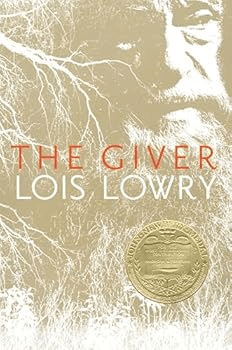
The Giver, by Lois Lowry. My daughter read this book several years ago in middle school, and I thought it sounded like a good read. I put it on my mental list, and when I saw it at a library book sale recently, I picked it up and decided to read it. Here’s a synopsis from Amazon:
In Lois Lowry’s Newbery Medal–winning classic, twelve-year-old Jonas lives in a seemingly ideal world. Not until he is given his life assignment as the Receiver does he begin to understand the dark secrets behind his fragile community.
Life in the community where Jonas lives is idyllic. Designated birthmothers produce newchildren, who are assigned to appropriate family units. Citizens are assigned their partners and their jobs. No one thinks to ask questions. Everyone obeys. Everyone is the same. Except Jonas.
Not until he is given his life assignment as the Receiver of Memory does he begin to understand the dark, complex secrets behind his fragile community. Gradually Jonas learns that power lies in feelings. But when his own power is put to the test—when he must try to save someone he loves—he may not be ready. Is it too soon? Or too late?
Told with deceptive simplicity, this is the provocative story of a boy who experiences something incredible and undertakes something impossible. In the telling it questions every value we have taken for granted and reexamines our most deeply held beliefs.
Would you give up true emotions, choices, even color, for peace? When I look around at the world right now, the hellish mess it’s in, and all the hell humanity has gone through, it’s tempting. Some freaking peace wouldn’t be a bad thing. But of course, I don’t mean it. What’s life without love? Without art, without true relationships, without joy? It would be a stale affair. The problem is, we have to accept the bad with the good–the differing points of view, the crimes of passion. Hatred and war. It’s the quintessential conundrum of being human, and this book explores it simply but effectively. There are three other books by Lowry in the “quartet” and I have them on my shelf, but I won’t get to them for a bit. Looking forward to them.
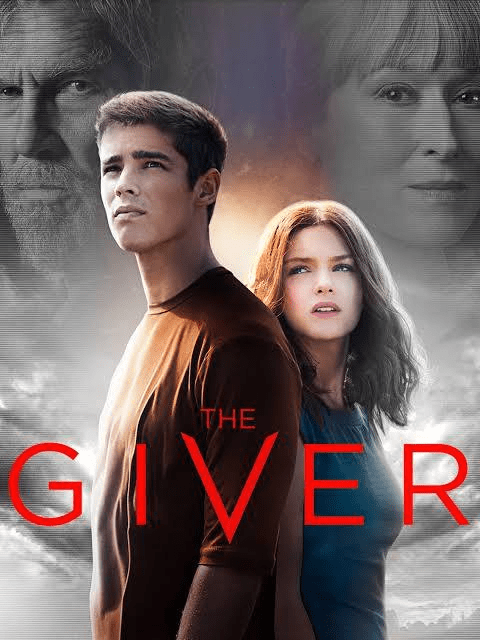
The Giver, Movie (2014). So of course, I wanted to watch the movie version of the book. The movie was…fine. It changed a few things, naturally, but I’m fairly flexible about that as long as it works. The cool thing was seeing a young Cameron Monaghan in it as Jonas’ friend Asher (our very own Cal Kestis of Jedi: Fallen Order fame. See? Monaghan is obviously a screen actor, so let’s get him in a Star Wars show or something!)

Station Eleven, Series on HBO Max. Station Eleven, the novel by Hilary St. John Mandel, is one of my favorite books of all time, so I was excited to see some time ago that there was an adaptation of it. However, when reading about it, I was put off by what I saw as major deviations from the book and so didn’t bother trying to get the channel to watch it. But once I got Max to watch The Last of Us, I saw it there and decided to give it a try.
And I’m glad I did. Yes, there are some major changes to the book, but once I started watching, it drew me in anyway. And I decided that I actually liked the biggest change, which puts two characters together that only met briefly in the book. In fact, I never knew I wanted that until I saw it onscreen, and I ended up loving this show.
The premise is that humanity is depopulated by a super-flu-type virus. Kirsten, one of the survivors, is a member of The Traveling Symphony, a group of musicians and actors who travel “the Wheel,” an area around Upper Michigan near Chicago (though they never go into the city). Their motto is “Survival Isn’t Enough,” and they put on concerts and Shakespeare plays for the few small settlements that are left. The “present” of the story takes place twenty years after the flu, and there are flashbacks to the beginning of the flu and various characters that are central to the plot.
Kirsten was eight years old and playing young Goneril in King Lear when the flu struck. Lear is played by Arthur Leander, a character that dies of a heart attack on stage the night the flu exploded, and one that ties all the other characters together. When Arthur collapses on stage, Jeevan Choudhary, who is in the audience, leaps onstage to help, though it’s too late. He meets Kirsten and decides to get her home, as no one else is around.
Jeevan gets a call from his sister, a doctor, who warns him about the flu and insists he go to their brother, Frank. When Kirsten’s parents are nowhere to be found, he takes her to Frank’s with them. (This is where it deviates from the book; in it, he meets Kirsten at the theater but goes to Frank’s alone. He ends up somewhere in Virginia with a family and never meets any of these other characters). These three–Jeevan, Frank, and Kirsten–spend the next several months together in Frank’s apartment as the flu ravages the population. Kirsten has with her a special comic book called Station Eleven, which was written and drawn by Arthur’s first ex-wife Miranda. There are only two copies; Kirsten has one, given to her by Arthur, and Arthur’s young son Tyler has the other. The two children become obsessed by the comic book, which is about an astronaut who finds himself on a space station (Station Eleven) after Earth has been invaded by aliens and has become uninhabitable. There’s some war going on within the station between factions, and it’s kind of vague and confusing, lol. But the theme is that of damage, isolation, of not belonging. Of trying to find home.
In the meantime, Arthur’s friend Clarke ends up stuck in the Severn City airport, as he was traveling from England to go to Arthur’s funeral, but the flu grounded the plane. Arthur’s second ex-wife Elizabeth was on the plane as well, with their son Tyler. The people on the plane end up forming a community there, and Clarke starts a “Museum of Human History,” putting cell phones and driver’s licenses and what not from the time before, as a sort of homage. The problem is, Tyler is a troubled boy and causes trouble, and ends up leaving the group, faking his own death in a fire. But he shows up later as “The Prophet,” someone the Traveling Symphony must deal with years later.
There’s a lot of complicated threads and intertwined characters, so it’s hard to succintly summarize. This post would go on forever if I wrote about all of them, but trust me, it’s a great show and I enjoyed it, in a different way than the book. I loved the book because its themes of art, memory, grief and connection spoke to me. It was different than any other “apocalyptic” book I’d ever read, and the show did a good job translating those themes, even if they changed some things to make it work onscreen.
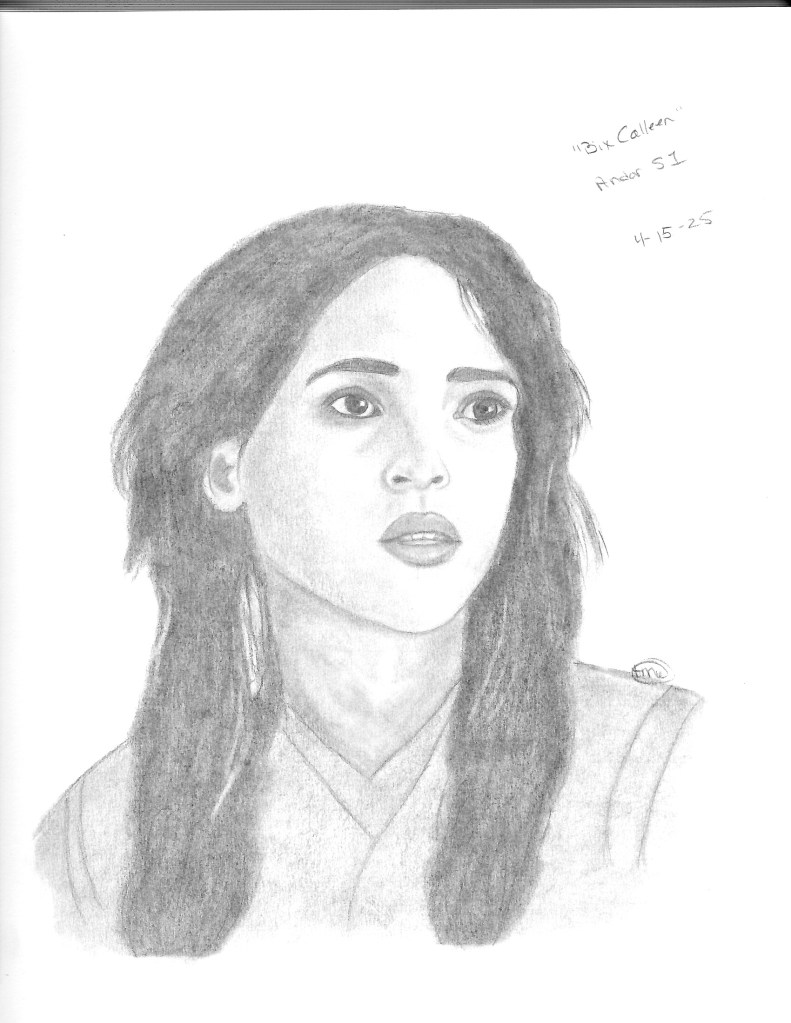
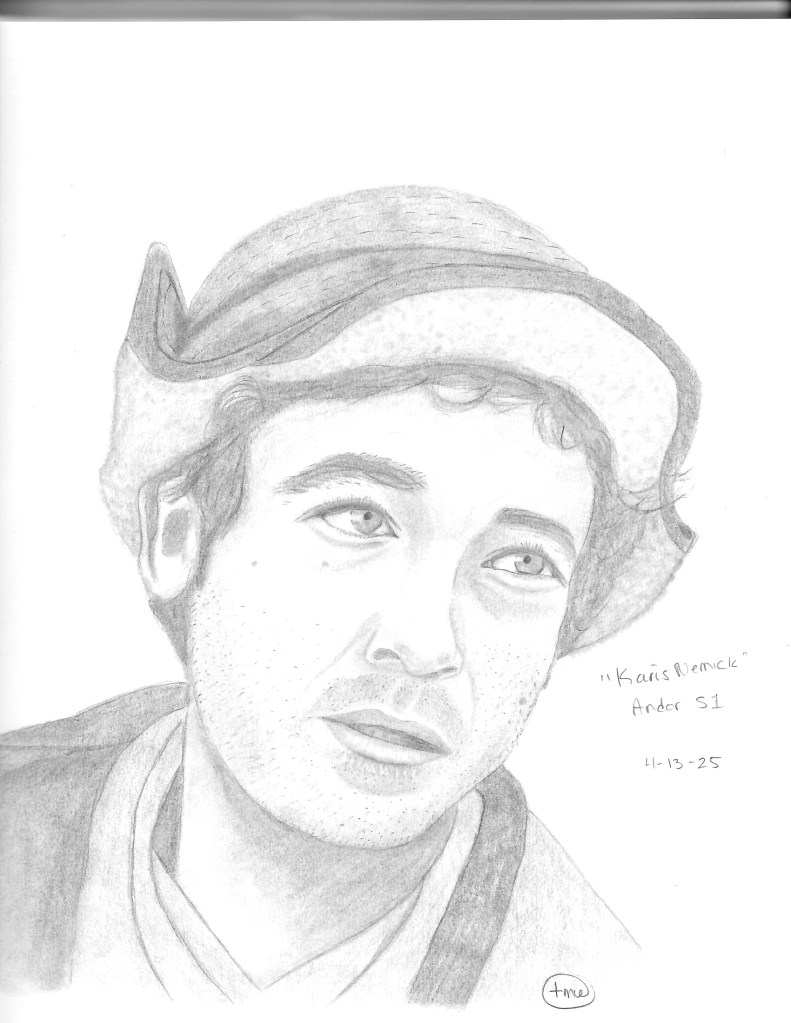
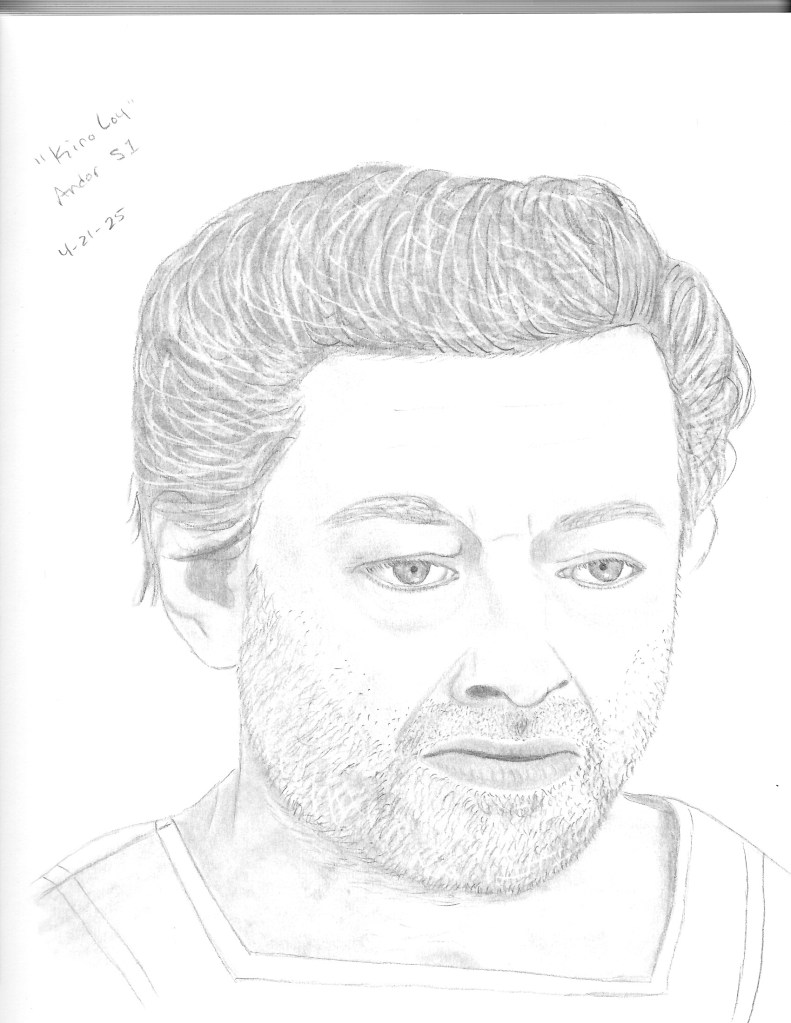
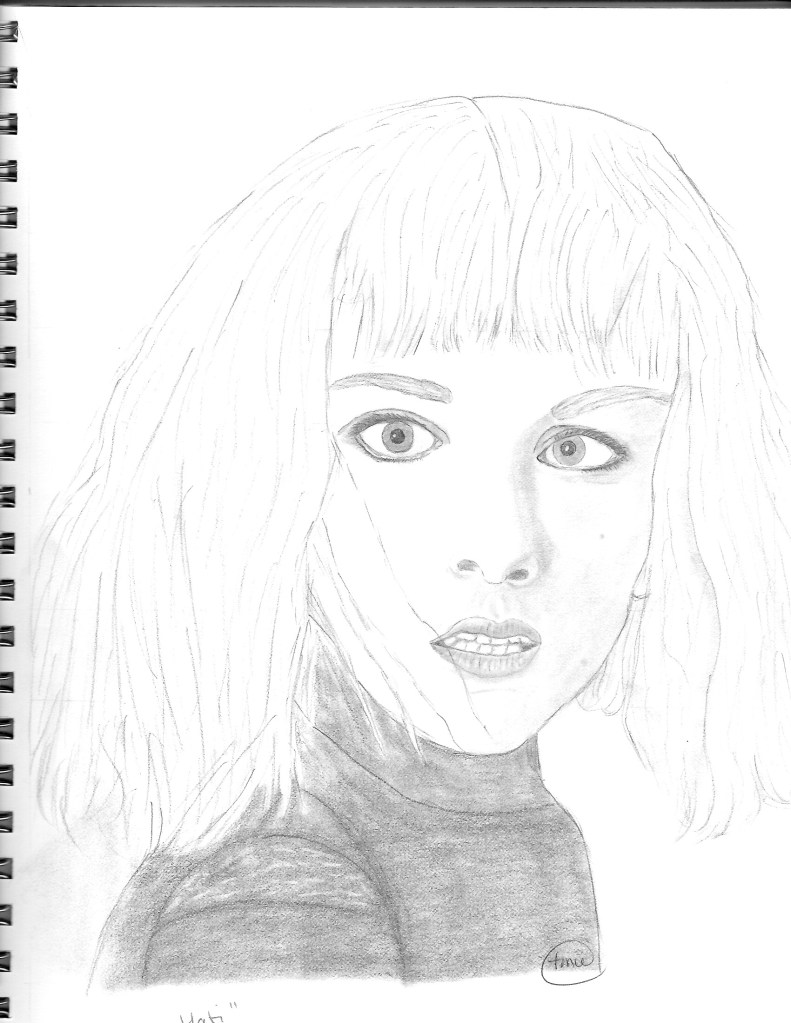
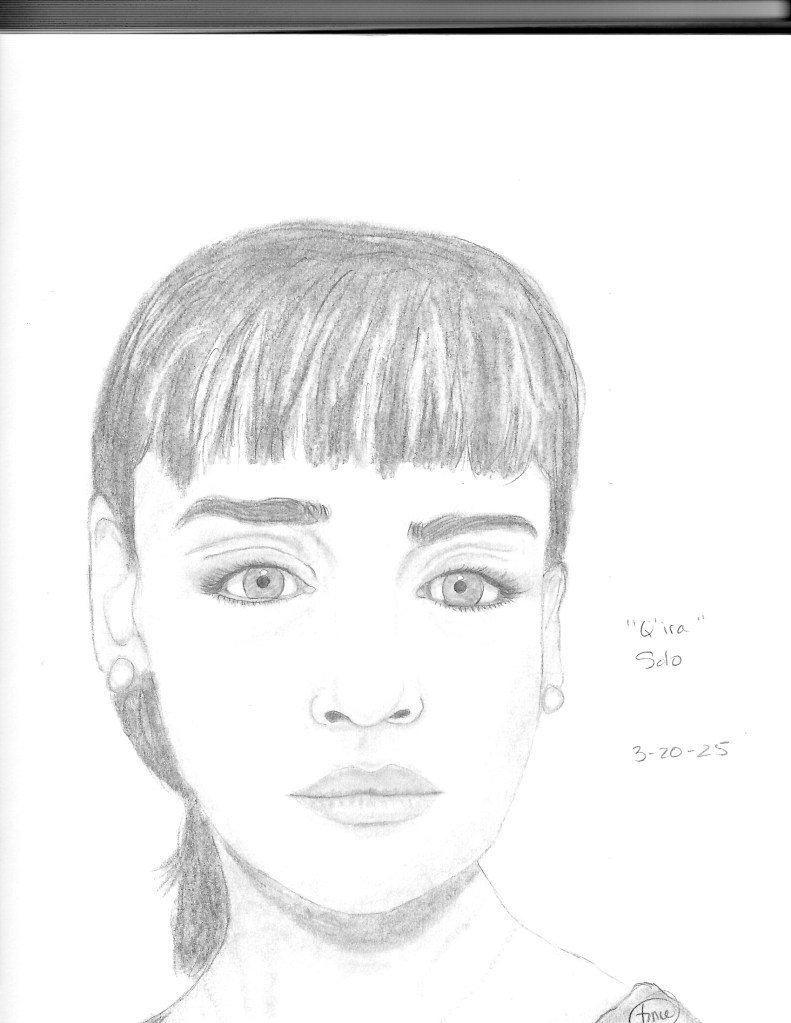
My drawing of the month:
Sadly, I’ve only done one drawing since last month, as I’ve been busy with the blog, shows, and reading. But it’s a good one, I think!
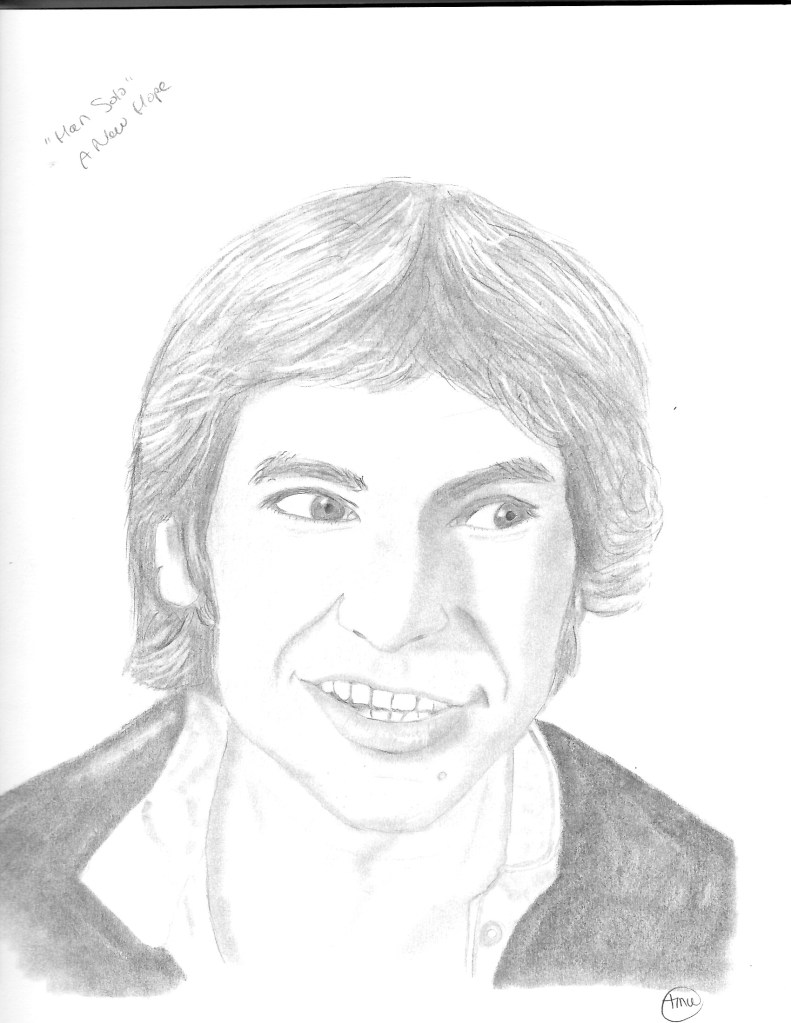
I intend on continuing to draw, but at a lesser pace right now, as I get back to writing in various forms for the time being. I’m hoping for at least one with each monthly update.
So that’s it this month. What’s been entertaining you lately? Let me know in the comments, and we’ll talk about it!




















 Star Wars and Other Obsessions